
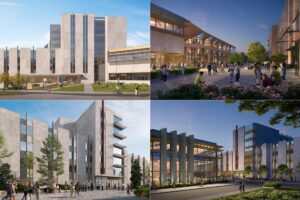




Mississauga, Ontario, has put a one-year pause on new artificial intelligence data centers, responding to community concerns as officials evaluate a proposed hyperscale facility that’s set to be built close to homes, according to .
What happened?
By passing the measure unanimously, the city went against a broader trend seen in Ontario.
Some municipalities have rejected similar moratorium attempts, while others continue with major developments.
The vote on Wednesday followed increasing scrutiny of a planned hyperscale development in Mississauga’s northwest. described the project as a 50- to 100-megawatt facility located at Tenth Line West and Argentia Road.
This site is less than 300 meters (984 feet) from a residential area.
Data centers are already present in Mississauga and across Ontario, but this one would stand out due to its size, marking it as one of the province’s first hyperscale AI facilities.
Since these facilities require significantly more electricity than smaller centers, they raise concerns about grid capacity, noise levels, heat output, and water usage.
Mayor Carolyn Parrish did not cast a vote since there was no tie. Before the council’s decision, she mentioned that Mississauga could lose millions in tax revenue but also acknowledged residents’ fears and labeled them as a “fear of the unknown,” according to .
As it stands now, the future of this project remains uncertain, and the moratorium is likely to extend beyond just this proposal.
Why does it matter?
This issue goes beyond just discussing new technology – it’s about what kind of large infrastructure can be built near homes and whether adequate quality-of-life protections are established before construction begins.
Dr. Mili Roy from the University of Toronto expressed to the council that rising electricity demands might lead to increased gas-fired power use which could cause further environmental damage, as per .
Roy also highlighted research connecting water demands from data centers with local water insecurity and possible drinking water contamination.
As AI continues to grow, more communities find themselves being asked to support the physical infrastructure necessary for it.
Meanwhile, those opposing the pause argue that data centers play an essential role in boosting Canada’s economy and any delays might impact cities’ tax income.
This topic may become increasingly significant during Ontario’s upcoming municipal elections.
What’s being done?
The moratorium is temporary rather than permanent.
City staff have been tasked with drafting an interim control bylaw that will halt new data-center constructions for one year while Mississauga reviews how future proposals should be assessed.
Local leaders aim to establish guidelines before permitting this new category of high-demand facilities to proceed.
The review framework will consider power consumption, noise reduction strategies, water effects, and proximity of these projects to residential areas.
City councilor and mayoral hopeful Alvin Tedjo pointed out that such reviews aren’t currently included in proposal processes according to .
Former mayor Bonnie Crombie is seeking re-election and voiced her intent before voting; she aims to create an expert advisory panel that would return with review guidelines for data-center applications.
The pause provides time for community feedback and allows for crafting protections for neighborhoods while still keeping avenues open for future investment.
” Right now there are no regulations,” Tedjo stated according to . p >
” There’s no guardrails that would ensure what we’re looking for is what we get. We want to make sure there are safeguards so that the quality of life of residents isn’t affected by this in a negative way.” p >
Get TCD’s free newsletters for easy tips , smart advice , and a chance to earn $5 ,000 toward home upgrades. To see more stories like this one , change your Google preferences here. p >
Source link