




For the third summer in a row, the federal government is facing an airline labor dispute that’s disrupting travel plans for Canadians – and this time, it’s uncertain whether its labor code powers will be effective in resolving the strike.
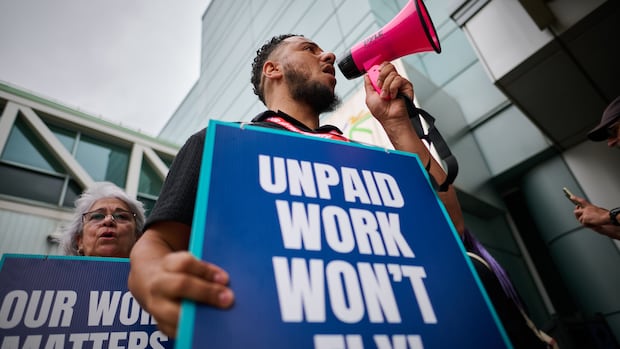
On Sunday morning, West Jet flight attendants officially began their strike after negotiations between their union and the airline fell through over a new contract.
The Canadian Union of Public Employees (CUPE) issued a 72-hour strike notice last Thursday, which prompted West Jet to respond with its own 72-hour lockout notice. Now, many Canadians are experiencing flight cancellations during one of the busiest travel weekends of the year.
Cross Country Checkup is asking: How is the West Jet strike affecting you? Leave your comment here and our team may get in touch or read your comment on air.
The federal government has several options available. The quickest option – but one that unions have opposed in recent years – is invoking Section 107 of the Canada Labour Code.
This provision gives the federal labor minister unilateral authority to order an end to a work stoppage in order to “maintain or secure industrial peace.” Section 107 has been part of the Canada Labour Code for over 40 years.
WATCH | West Jet flight attendants strike after airline, union fail to reach a deal: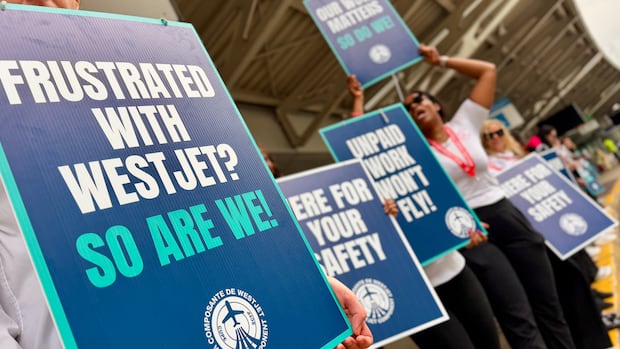
West Jet flight attendants strike after airline, union fail to reach a deal
West Jet flight attendants went on strike early Sunday after their union and West Jet failed to come to an agreement. This job action will likely lead to numerous flight cancellations during one of the busiest travel weekends this year. The airline advises passengers to check their flight status before heading to the airport.
Since 2023, the federal government has invoked Section 107 ten times; in several instances, it used this power to halt strikes or lockouts and mandate binding arbitration.
Union representatives have argued that such heavy-handed tactics from Liberals undermine their bargaining power with employers since companies might delay negotiations hoping Ottawa will step in before things get too disruptive.
This frustration peaked last summer when the federal government invoked Section 107 during a dispute between Air Canada and its flight attendants by having the Canadian Industrial Relations Board (CIRB) intervene and arbitrate.
However, the union representing Air Canada’s 10,000 flight attendants defied CIRB’s decision and insisted its members would remain on strike until Air Canada agreed to return for further talks.
The two sides reached an agreement just hours after this defiance occurred. Following that incident, Canadian Labour Congress president Bea Bruske told that such defiance “means that Section 107 effectively is dead.”
No indication has emerged thus far suggesting that Ottawa plans on invoking Section 107 again. On Sunday morning, Jobs Minister Patty Hadju stated “the federal government will always maintain that the strongest deals happen at the table.”
When asked by if they would invoke Section 107 or enact legislation requiring flight attendants return to work, a spokesperson for Hadju confirmed her statement stands as made on Sunday morning.
Other options at Ottawa’s disposal
If not invoking Section 107, another possibility for Ottawa could be introducing back-to-work legislation; however, doing so would likely take time since MPs aren’t scheduled back in session until Sept. 21 unless they’re called back sooner.
A news release from Wednesday showed NDP urging Liberal officials not to interfere if a strike occurs.
“Collective bargaining has always been the best way for workers to bring home a fair, livable wage,” NDP MP and labor critic Don Davies said in their news release. “When government steps in with unfair tactics against striking workers, it tips things toward big corporations rather than helping those who are struggling.”
Travellers look for guidance by West Jet departure gates on Sunday while company’s flight attendants picket outside Pearson International Airport. (Sammy Kogan/The Canadian Press)
Conservative MP and labor critic Kyle Seeback wrote a letter this week addressed to Hajdu stating collective bargaining works most effectively when both sides can negotiate freely without interference from authorities.</P
This intervention last year during Air Canada’s strike “undermined confidence in collective bargaining processes and denied workers full rights under Canada Labour Code,” he noted.
The federal government also retains authority over appointing mediators-something it did on July 13-followed quickly by naming an additional special mediator two days later.
Source link