




Ontario Construction News staff writer
Ontario and Alberta are putting forward a plan for a 3,300-kilometre pipeline that will move oilsands crude to Sarnia, Ontario, aimed at boosting access to Alberta oil within Canada.
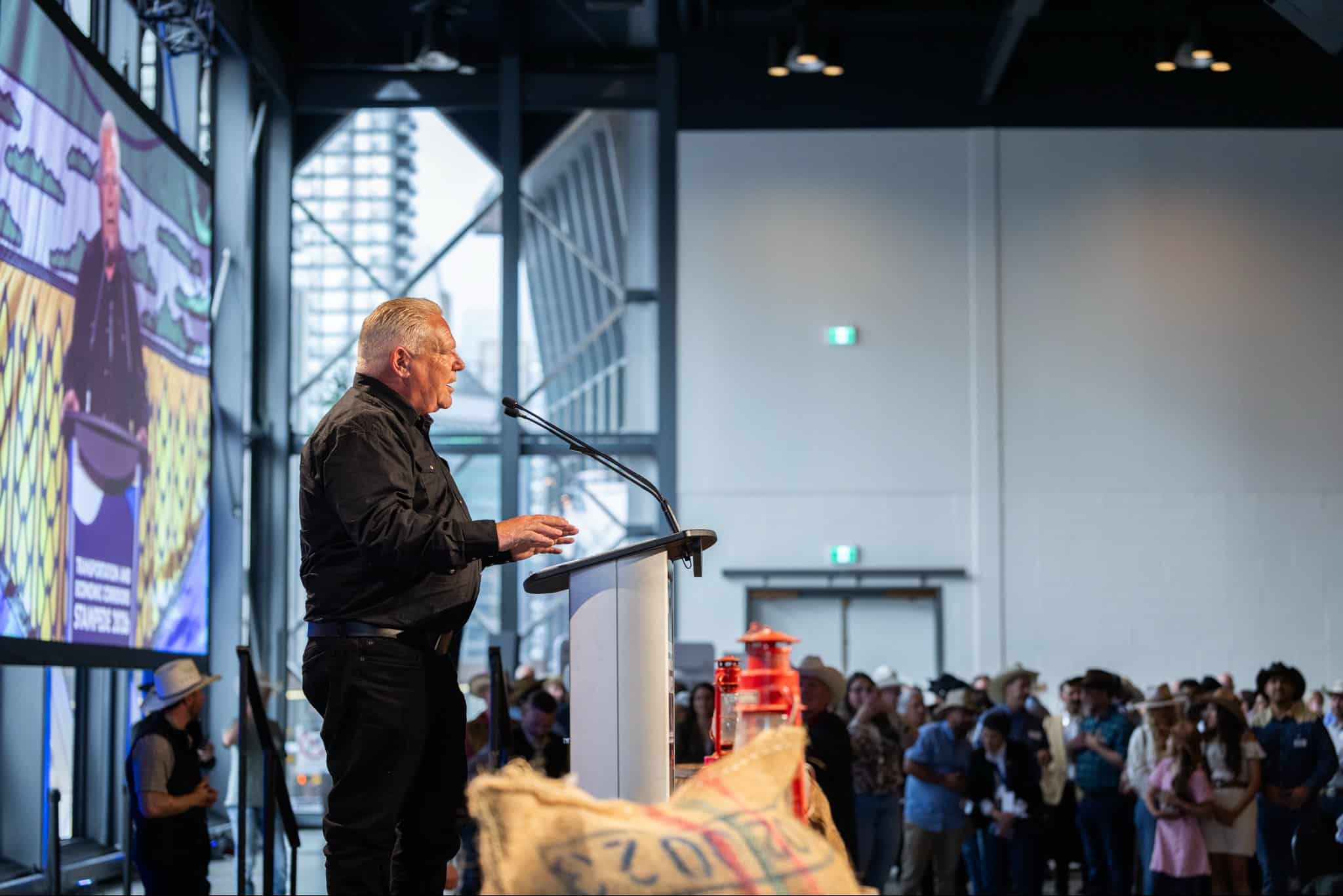
On Monday, Ontario Premier Doug Ford and Alberta Premier Danielle Smith introduced the suggested Northern Shield Energy Corridor, stating that this project would enhance Canada’s energy framework and open new markets for producers in Alberta.
“It’s a win-win-win; a win for Ontario, a win for Alberta, and a win for all of Canada,” Ford said.
The planned pipeline would begin in Hardisty, Alberta, and is expected to initially transport 500,000 barrels of oil each day to Sarnia, which is home to three operating refineries and serves as a key petroleum and petrochemical hub. There’s potential to expand the capacity up to 800,000 barrels per day in the future.
This route is reminiscent of the cancelled Energy East pipeline from 2017 that faced various regulatory and political hurdles. However, unlike that proposal, the Northern Shield path would bypass Quebec entirely and head southwest toward Sarnia.
The pipeline won’t connect directly to any ocean port; thus it will mainly supply petroleum products to markets across Ontario, Quebec, and the Maritimes instead of facilitating immediate exports overseas.
“Wouldn’t it be great if we could bring this pipeline right across the country?” Ford said. “I think that would be absolutely beautiful for the East Coast provinces and the people of Quebec. But that’s up to them.”
“Everyone talks about the auto sector, but without plastics, carbon black, gas and all those things, (there is no auto sector),” said Sarnia Mayor Mike Bradley.
Sarnia has long pushed for keeping Enbridge’s Line 5 operational since it provides essential oil products to both Ontario and Quebec. This line has encountered opposition from Michigan officials who are worried about potential spills affecting the Great Lakes.
The proposal still needs backing from Saskatchewan and Manitoba. Saskatchewan Premier Scott Moe previously signed an agreement with Ontario and Alberta focusing on energy cooperation while Manitoba Premier Wab Kinew did not participate.
Ontario and Alberta mentioned that this project might eventually reach out toward the Port of Churchill in northern Manitoba which could open doors to international markets.
The province of Ontario is currently working on a feasibility study related to costs involved as well as construction timelines. They’ve also begun conversations with Indigenous communities regarding this initiative.
“We will reach out to the private sector, but we won’t hesitate to do what Alberta and the Government of Canada are doing. Let’s explore all options,” Ford said.
Smith noted that even public investment might be beneficial since tolls paid by oil companies could create revenue streams.
This proposed pipeline emerges as discussions surrounding Canada’s energy future continue among governments; supporters emphasize economic gains along with energy security while environmental groups express worries over emissions linked with increased fossil fuel infrastructure.
The Northern Shield Energy Corridor is still in its planning phases requiring further approvals before any construction can commence.
Source link
Source link