



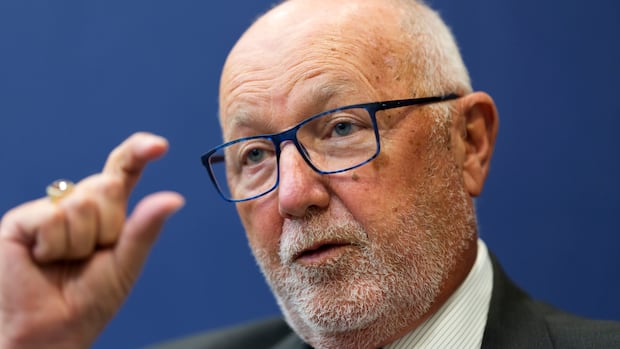
The U. S. representative to Canada states that after 14 months of trade discussions between Canada and the Trump administration, not many issues have been resolved. However, he emphasizes that the U. S. will continue conversations in hopes of reaching an agreement on CUSMA’s future and addressing other matters.
U. S. Ambassador to Canada Pete Hoekstra shared these thoughts on CBC’s Ottawa Morning when host Rebecca Zandbergen asked how far apart he thinks Canada and the United States are regarding trade disagreements that are complicating a renewal of CUSMA.
“I think we have a ways to go yet,” he noted. President Donald Trump and Trade Representative Jamieson Greer have “said that we’re going to continue talking in July and August and we’ll just keep going through the process and see if we can iron these things out.”
“If not, then, we’ll keep talking. Hopefully on a number of these issues we reach resolution sooner rather than later, but it’s already taken 14 months and we haven’t seen significant progress,” Hoekstra said.
WATCH | Hoekstra says Canada-U. S. negotiations have ‘a ways to go yet’: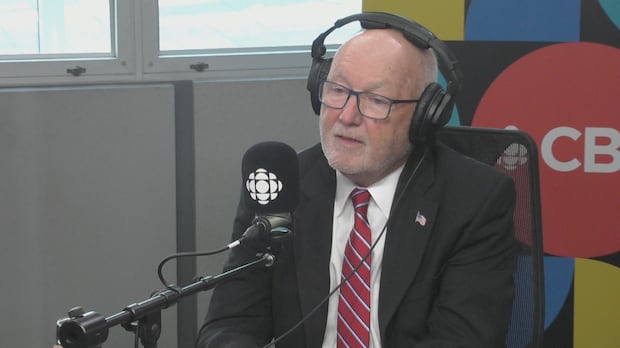 CUSMA negotiations ‘have a ways to go yet’: U. S. ambassador
U. S. Ambassador to Canada Pete Hoekstra mentioned that while there hasn’t been ‘significant progress’ in CUSMA talks over the past 14 months, he’s optimistic about reaching an agreement in July. The current U. S. administration has decided not to extend the existing agreement with Canada and Mexico.
The Trump administration announced Wednesday that the U. S. will not participate with Canada and Mexico in extending the free trade deal signed during Trump’s first term.
Despite this announcement, the deal continues as negotiations among the countries proceed because it remains valid for another 10 years with annual reviews.
This could change if the U. S. gives an official six-month notice of withdrawal, something Trump has avoided threatening so far.
CUSMA negotiations ‘have a ways to go yet’: U. S. ambassador
U. S. Ambassador to Canada Pete Hoekstra mentioned that while there hasn’t been ‘significant progress’ in CUSMA talks over the past 14 months, he’s optimistic about reaching an agreement in July. The current U. S. administration has decided not to extend the existing agreement with Canada and Mexico.
The Trump administration announced Wednesday that the U. S. will not participate with Canada and Mexico in extending the free trade deal signed during Trump’s first term.
Despite this announcement, the deal continues as negotiations among the countries proceed because it remains valid for another 10 years with annual reviews.
This could change if the U. S. gives an official six-month notice of withdrawal, something Trump has avoided threatening so far.
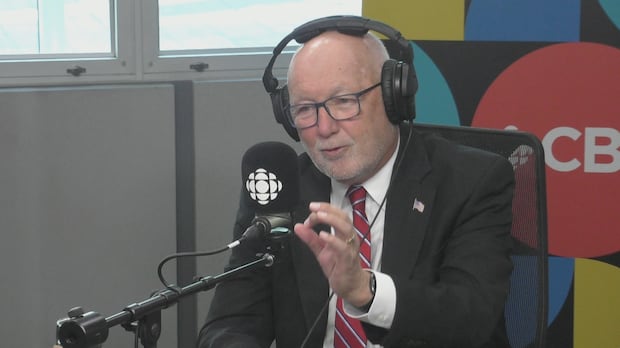 Ambassador Hoekstra says U. S. could ‘find other sources’ if no oil deal with Alberta
U. S. Ambassador Pete Hoekstra told CBC Radio that although Canada is a ‘logical supplier’ for America’s demand for three to four million barrels of oil daily, if Alberta can’t supply it, his country will look elsewhere.
<p That said, Hoekstra stated his government has no problem with Canada trying to enhance its trading ties globally.
“We’ve always said that if Canada can diversify its markets for extraction and those types of things , fine ,” he said.
The U. S. understands how extensive Alberta’s oil reserves are. Hoekstra remarked that even if pipelines were built east , west , or north , there would still be enough oil available for export south.
“We’re looking and we’ve made it clear that we’re in the market for three to four million more barrels of oil per day. Canada is a logical supplier for that.”
He emphasized Canada’s position as ideal due to existing infrastructure between both countries but noted other options exist for sourcing oil too.
“We think Alberta might be the ideal place to fill those requirements , fulfill those needs that we believe we have. But at the same time , if we can’t strike a deal with Alberta , we will go to other places in the world and we’ll find other sources of oil.”
Hoekstra did not mention specific locations from where they would acquire additional oil.
Ambassador Hoekstra says U. S. could ‘find other sources’ if no oil deal with Alberta
U. S. Ambassador Pete Hoekstra told CBC Radio that although Canada is a ‘logical supplier’ for America’s demand for three to four million barrels of oil daily, if Alberta can’t supply it, his country will look elsewhere.
<p That said, Hoekstra stated his government has no problem with Canada trying to enhance its trading ties globally.
“We’ve always said that if Canada can diversify its markets for extraction and those types of things , fine ,” he said.
The U. S. understands how extensive Alberta’s oil reserves are. Hoekstra remarked that even if pipelines were built east , west , or north , there would still be enough oil available for export south.
“We’re looking and we’ve made it clear that we’re in the market for three to four million more barrels of oil per day. Canada is a logical supplier for that.”
He emphasized Canada’s position as ideal due to existing infrastructure between both countries but noted other options exist for sourcing oil too.
“We think Alberta might be the ideal place to fill those requirements , fulfill those needs that we believe we have. But at the same time , if we can’t strike a deal with Alberta , we will go to other places in the world and we’ll find other sources of oil.”
Hoekstra did not mention specific locations from where they would acquire additional oil.
Source link
CUSMA negotiations ‘have a ways to go yet’: U. S. ambassador
U. S. Ambassador to Canada Pete Hoekstra mentioned that while there hasn’t been ‘significant progress’ in CUSMA talks over the past 14 months, he’s optimistic about reaching an agreement in July. The current U. S. administration has decided not to extend the existing agreement with Canada and Mexico.
The Trump administration announced Wednesday that the U. S. will not participate with Canada and Mexico in extending the free trade deal signed during Trump’s first term.
Despite this announcement, the deal continues as negotiations among the countries proceed because it remains valid for another 10 years with annual reviews.
This could change if the U. S. gives an official six-month notice of withdrawal, something Trump has avoided threatening so far.
U. S. wants Canada’s oil, envoy says
When asked if he sees that happening, Hoekstra stated that the shape and timing of trade discussions between both nations will depend on Trump and Prime Minister Mark Carney. Zandbergen questioned whether Hoekstra understood Canada’s intent to seek trading partners elsewhere due to uncertainty in its relationship with the U. S., prompting him to respond firmly. Hoekstra explained that 85 percent of trade under CUSMA continues without tariffs, making it a predictable arrangement. He added that while tariffs are being applied by the U. S. on items outside CUSMA’s scope, it shows how predictably the Trump administration is adhering to existing deal rules. WATCH | Ambassador Hoekstra says U. S. could ‘find other sources’ if no oil deal with Alberta:
Ambassador Hoekstra says U. S. could ‘find other sources’ if no oil deal with Alberta
U. S. Ambassador Pete Hoekstra told CBC Radio that although Canada is a ‘logical supplier’ for America’s demand for three to four million barrels of oil daily, if Alberta can’t supply it, his country will look elsewhere.
<p That said, Hoekstra stated his government has no problem with Canada trying to enhance its trading ties globally.
“We’ve always said that if Canada can diversify its markets for extraction and those types of things , fine ,” he said.
The U. S. understands how extensive Alberta’s oil reserves are. Hoekstra remarked that even if pipelines were built east , west , or north , there would still be enough oil available for export south.
“We’re looking and we’ve made it clear that we’re in the market for three to four million more barrels of oil per day. Canada is a logical supplier for that.”
He emphasized Canada’s position as ideal due to existing infrastructure between both countries but noted other options exist for sourcing oil too.
“We think Alberta might be the ideal place to fill those requirements , fulfill those needs that we believe we have. But at the same time , if we can’t strike a deal with Alberta , we will go to other places in the world and we’ll find other sources of oil.”
Hoekstra did not mention specific locations from where they would acquire additional oil.Source link