





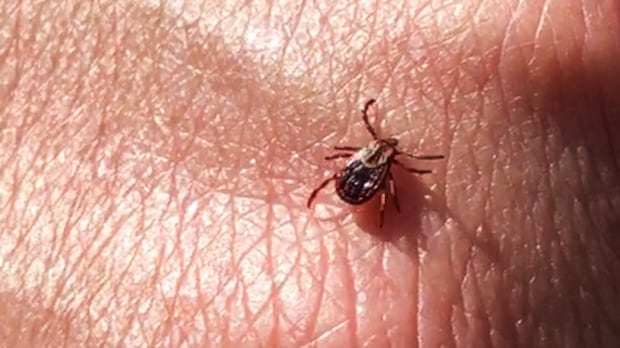
It used to be believed that ticks were mostly a summer issue, especially in places with tall grass.
However, new advice from Wellington-Dufferin-Guelph Public Health states that people should check for ticks after spending any time outdoors when temperatures rise above 0 C.
Phil Wong is the director of operations for health protection at the health unit. He explains that through a surveillance program where individuals submit photos and details about their tick encounters, they’ve noticed these pests are appearing in more areas than just wooded paths.
According to him, there are three main locations where ticks are commonly found:
Out in parks and trails and while camping where there’s long grass. At people’s homes on private property. Occupational exposures for those who work outdoors.
“A lot of people are finding ticks while they’re at home, on their own properties,” he mentioned.
“When they’re gardening, not necessarily in tall grass, but certainly they’re discovering ticks while doing yard work or raking leaves.”
Wong said parents don’t need to worry about ticks on playgrounds, even those covered with wood chips; however, they should still check their children for ticks once they come indoors.
Ticks “prefer damp areas and aren’t fond of direct sunlight much. So the likelihood of finding them on playgrounds is low,” Wong explained.
“But if kids are running around, rolling in the grass or near wooded areas, then it’s definitely something to keep an eye on – I wouldn’t say be overly concerned – but as long as you’re checking them when they get home at the end of the day, that’s perfectly fine.”
WATCH | Ticks a growing concern in Canada: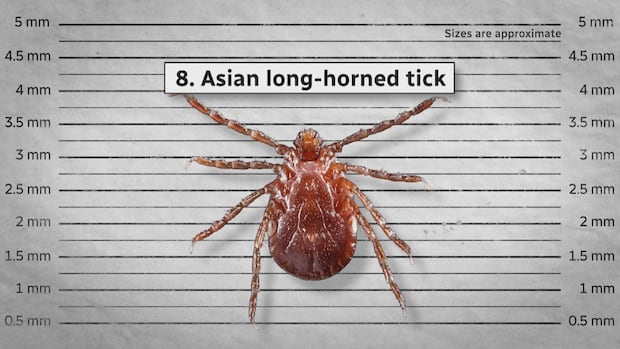
Tick invasion: New species bring new risks to Canada
There are currently over 40 types of ticks identified in Canada, with more species expected to migrate northward. For The National, CBC’s Tom Murphy visits the Canadian Tick Research and Innovation Centre (CTRIC) to learn more about this evolving risk.
More than 40 types of ticks in Canada
Wellington-Dufferin-Guelph Public Health has revised its tick guidelines due to the increasing local tick population and heightened encounters among residents.
This update comes as experts warn Canadians to prepare for a consistent influx of ticks coming up from the U. S.
The website from Health Canada indicates that there are over 40 different kinds of ticks found across Canada. Some have already established themselves here while others might arrive via hosts like birds or deer.
Certain types carry diseases. For instance, the Western blacklegged tick can transmit various bacteria and viruses including Lyme disease. Another example is the lone star tick which may cause an allergy to meat.
A new Canadian Tick Research and Innovation Centre recently opened at Acadia University in Wolfville, N. S., aimed at enhancing research on ticks and tick-related diseases.
There’s also the G Magnotta Lyme Disease Research Lab located at the University of Guelph.
Justin Wood is both founder and CEO of Geneticks-a company focused on testing ticks for Lyme disease-and a scientist at this lab. He himself was diagnosed with Lyme disease back in 2011 after years without answers. p>
“I wasn’t able to walk or take care of myself or spend time with friends or be active or anything like that. I bounced around the medical system for probably close to four years, seeing 20 to 30 doctors before I finally got a diagnosis,” he recalled. p>
Now he says people tend to receive quicker diagnoses nowadays; “early interventions are absolutely critical.” p>
“If we know that someone has been infected early and catch it within those first couple weeks, we can effectively treat it,” he noted. p>
Wood mentioned most folks hope cold winters will wipe out ticks-but that’s not really how it works during snowy seasons like what just happened in Guelph and surrounding areas. p>
“The reality is during these winters most often what happens is that ticks go into leaf litter where they’re insulated; they enter a sort of hibernation state. Overall die-off rates during winter don’t differ much from other times throughout the year,” he added. p>LISTEN | Tick researcher Justin Wood on how bad this year could be:
The Morning Edition – K-W7:57It could be a bad tick season for Ontario this year p>Warmer weather is starting now-meaning it’s officially tick season too! Tick-borne illnesses continue becoming more common throughout Ontario. Justin Wood shares what we might face ahead along with advice on staying safe outdoors.
Report ticks online
The health unit encourages everyone report any found ticks online so tracking can happen effectively. There’s a specific website designed for uploading photos along with detailed information about your encounters.
Even though encountering ticks poses an increased risk now compared t o previous years , Wong emphasizes people shouldn’t shy away from outdoor activities.
“We don’t want discourage anyone from enjoying nature! Our area offers beautiful parks , lovely trails , all sorts great outdoor spaces. Get outside enjoy yourself! The weather keeps improving,” Wong expressed.
“At day’s end though just make sure you do regular checks look out them when returning home…that’s all you need do.”
Source link