





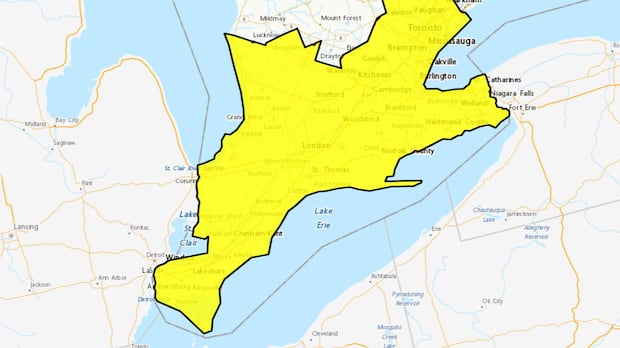
Environment Canada has issued a yellow heat warning for Windsor-Essex and much of southwestern Ontario to start the week.
The first heat wave of the season began Monday afternoon and is expected to last through Tuesday with daytime highs ranging from 30 to 32 C – though humidex values could reach between 36 and 38 C – with overnight lows around 20 C.
The weather agency warns that extreme heat can be harmful to everyone’s health, so it’s important to take steps to protect yourself and others, especially if you or someone nearby may be more vulnerable to heat-related illnesses.
Environment Canada suggests checking on older adults, those living alone, and anyone else at risk of heat-related issues several times a day either in person or by phone during this period.
Signs of Heat Exhaustion and Heat Stroke
The national agency advises being alert for early signs of heat exhaustion, which might include headaches, nausea, dizziness, thirst, dark urine, and severe fatigue. If these symptoms arise, it’s best to stop any activity and hydrate.
If symptoms like red hot skin, dizziness, nausea, confusion, or changes in consciousness develop, call 911 or your emergency healthcare provider right away.
“While you wait for medical attention, try to cool the person by moving them to a cool place, removing extra clothing, applying cold water or ice packs around the body,” the forecaster mentioned in a Monday morning news release.
“Drink water regularly even before you feel thirsty to replenish fluids. Close blinds or shades and open windows if it’s cooler outside.”

Southwestern Ontario is in a heat wave. Here’s how Windsorites are trying to beat the heat
Windsor-Essex is set for some scorching days ahead as temperatures are predicted to hit the mid-30s – and that’s before factoring in humidity which will make it feel even hotter. CBC’s Jennifer La Grassa ventured out into the heat to see how residents are managing their comfort.
If someone’s home gets too warm, they should find shelter in a cooler public area such as a cooling center, community center, library, or shaded park according to the release. Residents affected by this advisory can follow advice from their local public health authority.
It’s also recommended that outdoor activities be planned during cooler times of day; this helps reduce direct exposure to sun and heat.
“Never leave people-especially children-or pets inside a parked vehicle. Always check your vehicle before locking it up just in case someone was left behind,” Environment Canada cautioned in its release.
Predictions for Summer Ahead
The weather conditions experienced this week in southwestern Ontario may give an indication of what temperatures could look like throughout summer according to Robert Mc Leman, professor of environmental studies at Wilfred Laurier University.
He indicates that we’re likely facing a hot humid summer with plenty of rainfall ahead.
With heat waves becoming more frequent earlier in May and June across southwestern Ontario now becoming common occurrences residents may forget that such weather used not be typical for this region.
“I mean it’s quite usual for us to get frost in southwestern Ontario in May,” Mc Leman said.
“What we’re observing across Canada-and particularly here in southern Ontario-is that winters have been getting shorter and milder with less snowfall while spring seems more condensed.”
Additionally he notes that similar high temperatures could become standard for May seasons coming up.
Mclleman pointed out that Monday’s temperature remains below Windsor’s record high for May 18 which stands at 34 C set back in 1962.
Source link