





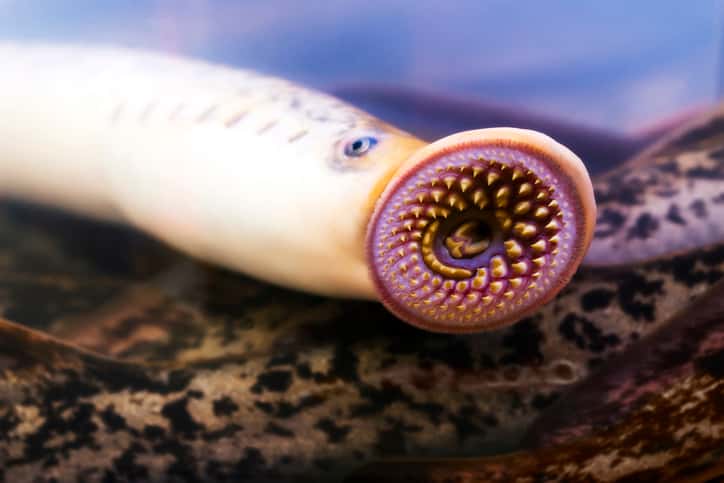
There’s steady progress being made to lower the Sea Lamprey population in the Great Lakes.
The Great Lakes Fishery Commission announced on Monday that populations in Lakes Superior, Michigan, Huron, and Ontario decreased in 2026, while Lake Erie and Lake Ontario stayed below the target level.
“Sea lamprey control remains one of the Great Lakes’ greatest fisheries management success stories,” said commission chair Earl Provost. “This year’s results demonstrate that continued investment in control is reducing sea lamprey abundance and protecting fish populations across the basin.”
Sea lampreys are invasive fish that prey on local species by feeding on their blood and body fluids.
The commission currently uses lampricides and barriers for control, but they’re also looking into new methods.
The most recent data about the Sea Lamprey population for each Great Lake is as follows:
Lake Erie
Management target – 3,263
2025 level – 803
2026 level – 923
Lake Huron
Management target – 31,274
2025 level – 44,591
2026 level – 29,602
Lake Ontario
Management target – 14,065
2025 level – 11,584
2026 level – 7,281 p >
Lake Michigan p >
Management target – 20,526 p >
2025 level – 21,273 p >
2026 level – 20,211 p >
Lake Superior p >
Management target – 10,421 p >
2025 level – 40,610 p >
2026 level – 29,767 p >
< The Great Lakes Fishery Commission was set up by Canada and the United States over seven decades ago to promote fisheries research, manage invasive species, and enable cross-border cooperation.
Source link