



Lambton Warden Kevin Marriott is feeling hopeful about the future after representing the county in a recent meeting at Queen’s Park.
He shared his thoughts as he and other members of the Western Ontario Wardens’ Caucus (WOWC) had discussions with provincial leaders on Monday.
The caucus met with key figures from the provincial government, including Minister of Municipal Affairs and Housing Rob Flack, Minister of Rural Affairs Lisa Thompson, Acting Minister of Infrastructure Todd Mc Carthy and Associate Minister of Energy-Intensive Industries Sam Oosterhoff.
Marriott, who is also the Vice Chair of WOWC, mentioned that a significant focus was on the Canada-Ontario Partnership to Build Program (COBP).
“That was announced a few weeks ago, and unfortunately we don’t have a lot of new details for that, but we wanted to make sure that we got our say in as far as having access to some of those funds,” said Marriott. “But unfortunately, a lot of the details haven’t been released yet, so we’re hoping that advances our build coming down the line as far as housing goes.”
Marriott noted both provincial and federal governments are aiming for reductions in development charges, but some questions still linger.
“So, the more municipalities decrease their development charges, the better their chances are of accessing those funds down the road,” he said. “It’s mostly in the City of Sarnia where they have development charges. So, we’re going to have to figure out how that relates to Lambton County because the county doesn’t actually have development charges. So, one of the questions was what if we have none now and so we can’t decrease them? Are we going to be at a disadvantage compared to those cities that have high ones that can cut them in half? We didn’t get a very clear answer; just a lot of stay tuned because more details are coming.”
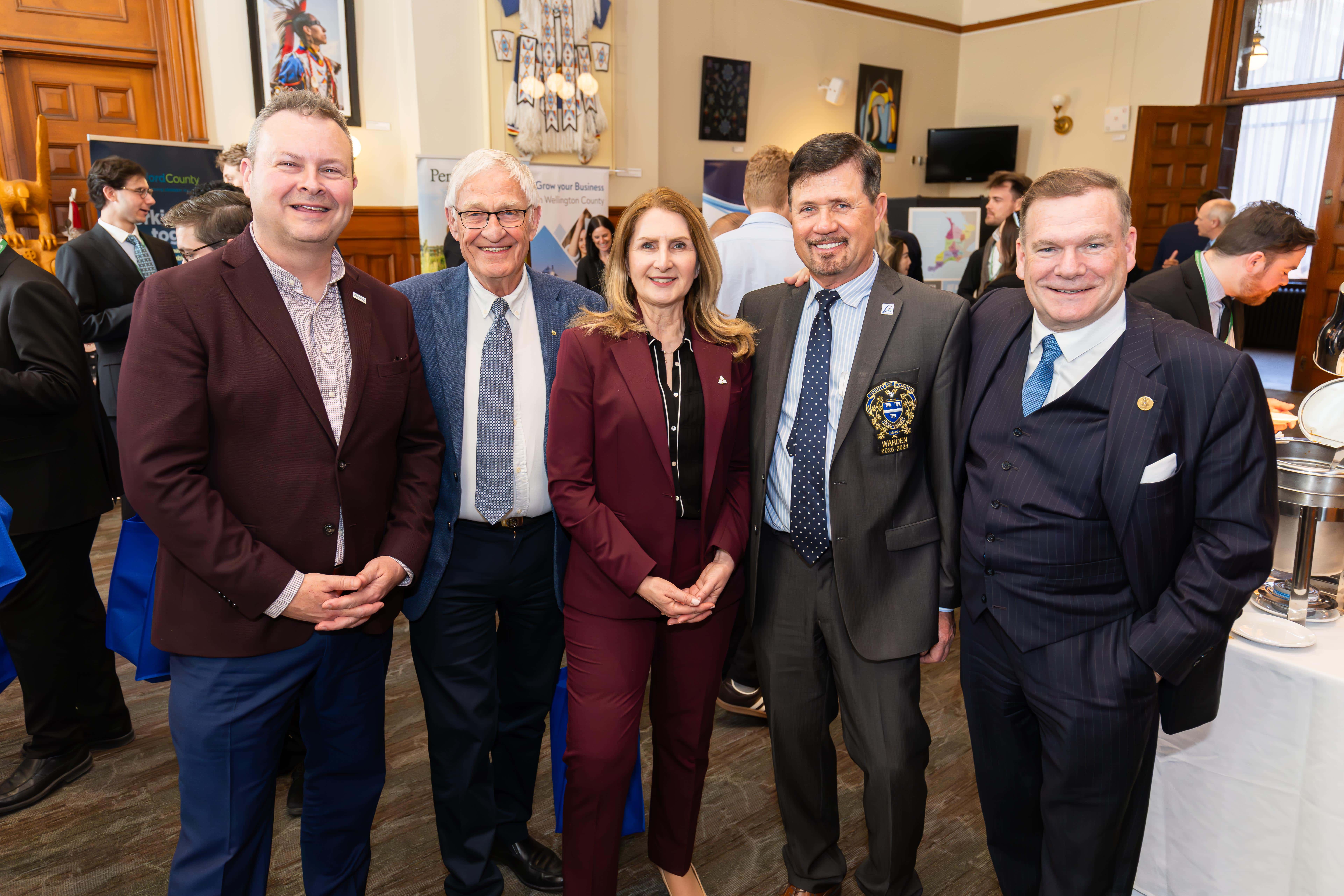
Group photo of Western Ontario Wardens Caucus and Members of Provincial Parliament (Photo courtesy of WOWC)
Marriott mentioned they are exploring creating a Regional Rural Transit Authority aimed at improving equitable transit access for jobs, healthcare, and education across Western Ontario.
“We asked and some counties showed interest in rural regional transit,” he said. “So we asked if there would be support for considering a feasibility study or pilot program for this rural and small urban transit regional authority model. As you know we’ve already started with one that runs from Sarnia to Grand Bend over to London. But this request aims for more southwestern Ontario access. So Minister Flack was open to looking into doing a feasibility study to see if regional transit would make sense.”
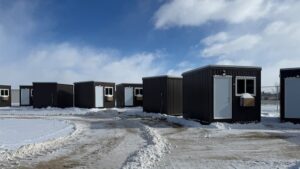
Marriott added other major priorities included possibly starting up a Homelessness Prevention Program (HPP) that would better align funding with rural service delivery while supporting sustainable community services.
<p"They let us know they're spending $1.7 billion each year on this issue already," said Marriott. "I had no idea it cost so much but they reminded us how much they've increased that funding over time. It's quite an amount every year for something that hardly existed just a few years back."
He also expressed hope for more infrastructure dollars in next year’s budget focusing on issues like crumbling roads and bridges.
The province has promised action on gaps in high-speed internet service in areas like Plympton-Wyoming and Lambton Shores.
WOWC emphasized how vital it is for rural and small urban communities to be fully considered when designing provincial programs.
Marriott stated their concerns and priorities are being reviewed by the province but nothing has been promised or finalized yet.
These discussions are viewed as “an important step in ongoing efforts to align provincial programs with local realities,” and WOWC will continue advocating practical perspectives informed by regional needs to support effective program design.
Source link
Source link