





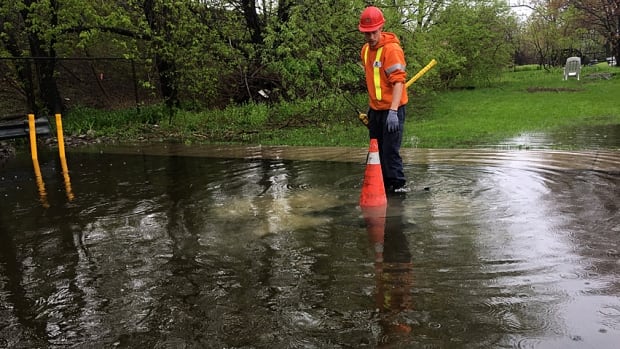
A City of Hamilton wastewater collection system inspector checks a manhole on Bayside Avenue on the beach strip in 2017. (Samantha Craggs/CBC – image credit)
The City of Hamilton is alerting residents in Beach Boulevard and nearby areas to get ready for possible flooding and take steps to protect their properties due to rising Lake Ontario levels.
In a news release sent out Wednesday, the city recommended that people consider “moving basement furniture, electronics and valuables to higher levels,” and temporarily sealing basement floor drains.
When asked if this warning includes homes beyond the beach area, city spokesperson Lauren Vastano didn’t clarify how far the flood risk reaches.
“It is absolutely important information for everyone to know – but as we mention, those in the Beach Boulevard and surrounding area should take caution,” she said in an email.
Jonathan Bastien, manager of water resources engineering at the Hamilton Conservation Authority (HCA), noted that the lake is approximately 35 centimeters above average for this time of year, but still significantly lower than record highs seen in 2017 and 2019.
Residents worried about possible flooding should ensure their sump pumps are functioning properly and not discharging water into a drain or sink since that could heighten the risk of sewer backup, according to the city’s announcement.
Downspouts should ideally be directed onto lawns and gardens whenever possible, but can also be aimed at the road in the Beach Boulevard area “due to the unique exposure to fluctuating lake levels,” as stated by the city.
“To help protect residents from flooding, the city has increased inspections at pump stations affected by high water levels. Additionally, drainage assets, including catch basins and ditches are being inspected and cleared to reduce impacts to residents, properties and communities.”
According to the city, individuals experiencing flooding should take pictures of damaged areas and belongings, contact their insurance company right away, and avoid any places with potential electrical hazards. Those facing sewer backup or flooding should call the city at 905-546-2489.
Some areas more prone to overflows: city
previously reportedthat most flooding within the municipality happens in Wards 1, 2 and 13 – downtown, west end , and Dundas.
Most ofthe lower cityanda sectionofthe Mountain ,northof Mohawk Road ,have combined sewerand stormwater infrastructure ,meaning”these sewer systems have one pipe that collects both wastewater from our homes. The systems collect wastewater from homes.
The systems are more likelysue overflow than separated sewers , which exist in newer parts.
The city says it’s crucial directing rainwater / sump pumps into spots where water can seep into ground instead draining. “In cases with lots rain or melted snow , additional volume may exceed capacity ,” it says noting too much water can lead sewage overflows harbor. “If combined sewers didn’t designed overflow option release into harbor large areas would flood impacting homes businesses public health.” Bastien conservation authority stated creeks HCA watershed well below thresholds trigger inland concerns. “Current creek levels range slightly baseflow elevated but below significant safety concerns ,” he wrote email Wednesday HCA staff monitor closely issue messages required.
Source link
The systems are more likelysue overflow than separated sewers , which exist in newer parts.
The city says it’s crucial directing rainwater / sump pumps into spots where water can seep into ground instead draining. “In cases with lots rain or melted snow , additional volume may exceed capacity ,” it says noting too much water can lead sewage overflows harbor. “If combined sewers didn’t designed overflow option release into harbor large areas would flood impacting homes businesses public health.” Bastien conservation authority stated creeks HCA watershed well below thresholds trigger inland concerns. “Current creek levels range slightly baseflow elevated but below significant safety concerns ,” he wrote email Wednesday HCA staff monitor closely issue messages required.
Source link