


Jim Mc Kellar, wearing a jersey with a red maple leaf, stood under the hot August sun, excited to be one of the first cyclists to ride across the newly opened Gordie Howe International Bridge.
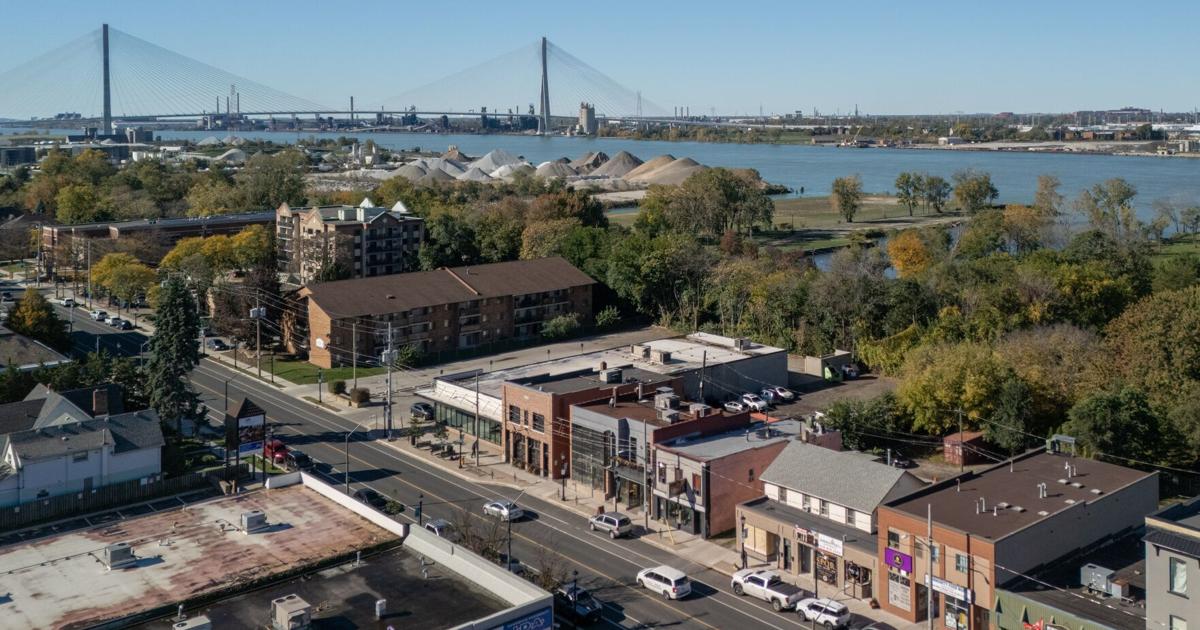
As the 74-year-old retired Ontario Hydro operator pedaled over the bridge, its tall white pylons and sweeping cables towered above the Detroit River. A group of cyclists from the U. S. side approached him, smiling and snapping photos.
“The Americans were all saying, ‘Thank you, Canada,’ and everybody was high-fiving. It was just a big party,” Mc Kellar said with enthusiasm as he reminisced about that day two months later while sitting around a breakfast table at Olde Towne Bake Shoppe with friends.
Dwight Duncan, a former MPP who led the corporation overseeing the bridge’s construction, walked it for his first time.
Dwight Duncan, a former MPP who led the corporation overseeing construction of the bridge, walked it for his first time.
Every Saturday, Mc Kellar and his friends meet at Olde Towne Bake Shoppe in Sandwich Town, located in Windsor near where the new bridge connects to Canada.
This area has historical significance as part of the Underground Railroad; established by British settlers in 1797 as a village, Sandwich provided enslaved individuals their first taste of freedom. Today it serves as an inviting entry point for American cyclists coming into Windsor during challenging times for cross-border relations.
When the multi-use path on the bridge opened on August 5 – just after vehicle lanes – hundreds of pedestrians and cyclists flocked to Sandwich’s main street. Patios at local restaurants were packed, and bicycles filled every rack, spilling over onto lamp posts and fences.
This wasn’t just a one-time event. From August until mid-October, approximately 35,000 people took advantage of the toll-free multi-use path on Gordie Howe Bridge while around 600,000 vehicles crossed over according to figures from Windsor-Detroit Bridge Authority.
A wave of American visitors has revitalized Sandwich Town in Windsor’s west end which had faced years of neglect and avoidance by locals. This influx has rejuvenated an area previously characterized by boarded-up homes connected to plans for another international crossing further upriver at Ambassador Bridge.
New life breathed into Sandwich Town
On one October Saturday recently, Vince La Croix drove his classic navy-blue MG convertible into Sandwich Town. The shiny chrome bumper sparkled in afternoon light while Canadian and American flags waved above his windshield.
This marked La Croix’s first trip across Gordie Howe Bridge since moving from Michigan. He made this drive to meet up with fellow members from Windsor-Detroit MG Club at a local pub celebrating both their friendship and this new connection between nations.
“It’s been nearly a hundred years since we had a new crossing (in this region),” said La Croix who is now retired from teaching school. “If anyone thinks our relationship is outdated or broken down-this is such an encouraging sign looking forward.”
Revitalization efforts
The route leading west along waterfronts from downtown Windsor directs towards towering blue steel-Ambassador Bridge-that has overshadowed this neighborhood since 1929.
As Stephen Hargreaves navigates pothole-ridden Indian Road beneath Ambassador’s structure he points out vacant lots flanking both sides lined with driveways lacking front doors.
Until revitalization efforts began earlier this year thanks partly due funding through ($1M) grants allocated towards restoring three kilometers worth replacing roads creating bike lanes traffic signals lampposts garbage receptacles bus shelters improvements becoming quite visible throughout entire community.
A few months back dilapidated houses stood there boarded shut sealed off rotting away forgotten by many neighborhoods cut off access basic amenities needed lives they deserve including grocery stores banks schools saw mass exodus residents fleeing areas once rich history culture opportunity.
“You start walking this way,” Hargreaves explains gesturing toward surrounding buildings previously neglected during these transitions.”It looks like I’m going into ghetto.”
For decades families living here struggled coping conditions left behind after more than hundred properties acquired private owners tied billionaire Matty Moroun family taking ownership matters cross border expansions competing ones stalled approvals impacting whole community negatively causing alarming decay structures existing long past their prime lifetimes ending up abandoned.
<
“We’re sort ignored by city officials,” said Hargreaves brightening tone.”Things have changed recently alongside completion Gordie Howe project really altering perception surrounding neighborhood.” Starting early last year $1 million invested reconstructing much-needed infrastructure promoting growth bicycle tourism appealing businesses attracted market demand commercial opportunities revitalize interests within cities limits recovering footing restored better place dwellers visit enjoy themselves again bring spirit back town bringing hope future generations ahead too far gone now.”,
Source link