



A new wave of small nuclear reactors is either operational or about to be in the United States, and supporters are calling this a key moment for the industry.
This achievement, fueled by billions in private and government investment, was showcased in the heart of the Idaho desert, where a series of unremarkable hangars could easily go unnoticed.
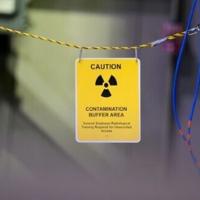
However, the sight of armed soldiers, security checkpoints, and signs warning about radioactivity is anything but typical.
It was at the Idaho National Laboratory (INL) that startup Antares made history on June 4 by becoming the first company to operate a new-design nuclear reactor in the US in nearly half a century.
“This is the first real moment in this new nuclear renaissance,” said Jordan Bramble, CEO of Antares.
Aalo Atomics, another company involved in this initiative launched back in 2025 under President Donald Trump, is expected to follow suit shortly — also here in Idaho, just ahead of a presidential milestone: July 4 and America’s 250th anniversary.
Additionally, on June 18, another startup named Valar Atomics achieved criticality – which means their reactor can maintain its own nuclear chain reaction – over in Utah.
After creating more than 50 reactor prototypes – including the world’s first one that supplied electricity to the grid back in 1951 – INL had taken a step back after incidents at Three Mile Island in America and Chernobyl in present-day Ukraine.
Then came the conflict in Ukraine along with an AI boom that put significant pressure on energy resources. This led both Joe Biden and Donald Trump to push for renewed interest in civilian nuclear power.
– ‘Simpler’ –
Billions have already been mobilized from both private investors and public funds to develop these small modular reactors (SMRs) – so compact that one was transported on-site pulled by a pickup truck.
SMRs promise cheaper and faster-to-build nuclear power plants that can be installed almost anywhere – from remote military bases to energy-hungry data centers. However, they still need to prove their commercial viability as some analysts question if they can compete cost-wise with wind and solar options.
The government has also offered INL’s facilities and experienced staff – who have nearly eight decades of expertise – for use by selected companies working on these projects.
The new reactors utilize different technology compared to traditional plants. This helps prevent cascading disasters like those seen at Three Mile Island and Chernobyl while allowing for much simpler and less expensive construction processes.
“The whole plant can get simpler. We don’t need several feet thick of concrete and steel line containment,” said Yasir Arafat, President and CTO of Aalo Atomics.
– ‘Golden age’ –
Despite how quickly things are moving forward, Tori Shivanandan, President and COO of Radiant Nuclear insists there shouldn’t be any regulatory shortcuts taken.
<p"The team at the lab holds the line; we want them to do so because ultimately if we don't make safe products we'll never sell reactors," she stated.
Achieving criticality doesn’t mean these reactors are ready for commercial operations yet.
The designs still require approval from the US Nuclear Regulatory Commission (NRC), despite being allowed under a special government waiver during prototype operations.
But Energy Secretary Chris Wright expressed optimism about timelines when speaking with AFP during a “celebration of the golden age of nuclear energy” event held recently at Idaho Falls.
“We’ll have hundreds by the end of this decade. In fact our aggressive goal is we will see some reactors producing electricity for beneficial use next year,” he mentioned.
If everything goes smoothly as planned Radiant’s initial SMRs will head towards US military locations just like those from Antares while Aalo aims for data centers.
Nuclear power is also positioning itself as an influential tool internationally since China stands as currently being only other country operating an SMR.
“Every country I visit asks about next-generation American nuclear technology. I tell them.. it’s happening right now,” said Wright.
“This will become massive American export ten years down road,” he added.
tu/arp/dw/lkd/abs
Source link