




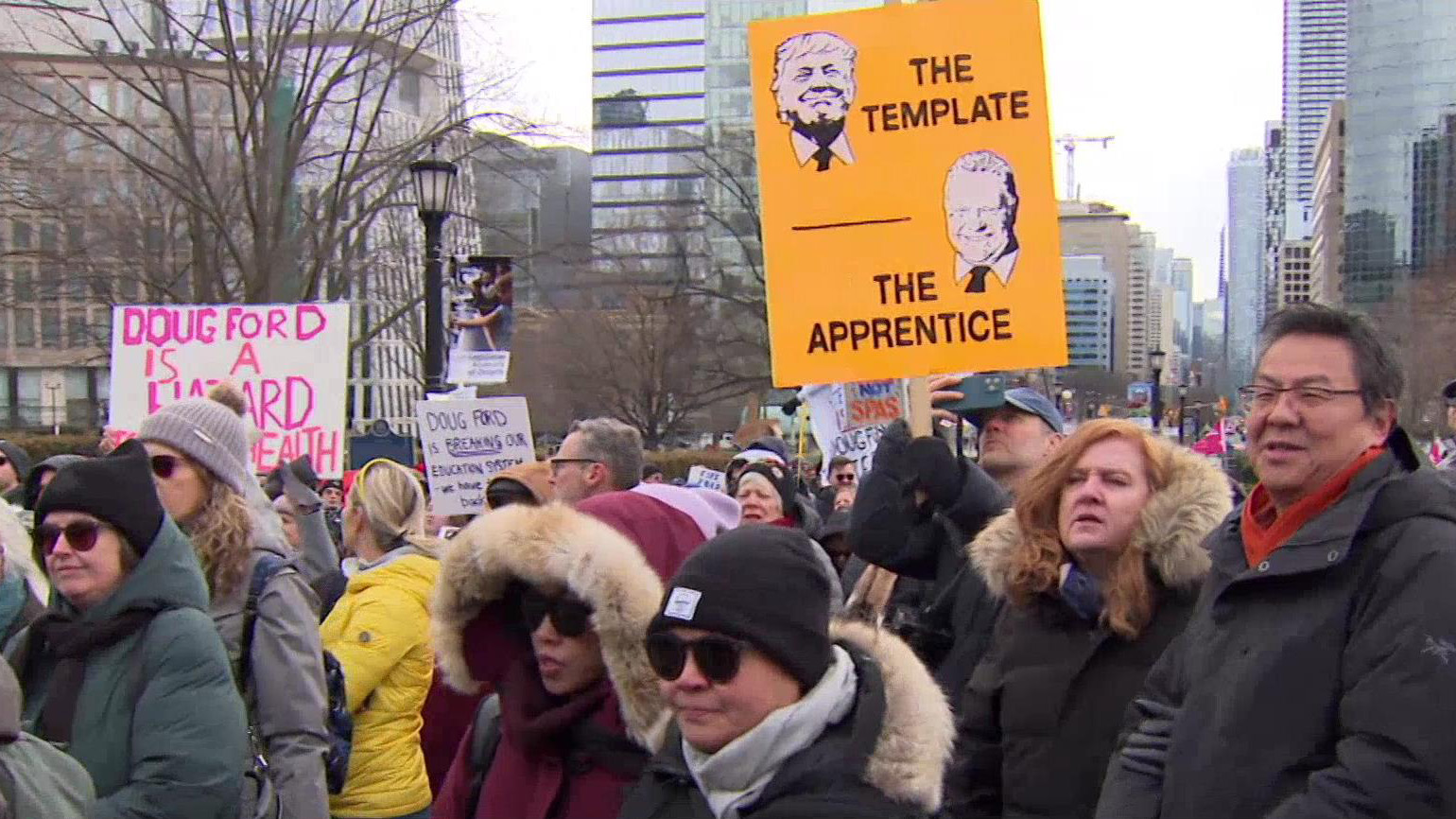
From Timmins to Port Hope, to Windsor and throughout the GTA, protesters took to the streets on Saturday, voicing their opposition to a series of recent decisions made by the Ford government.
Thousands gathered at Queen’s Park, expressing concerns about various new policy changes, including cuts to student OSAP funding, the merging of conservation authorities, and revisions to freedom of information laws.
“Seeing the billions of dollars of Ontario money that is being used to fund projects that the Ontario public will not benefit from, that the Ontario public does not want, is completely infuriating,” said Oliver, a recent post-secondary graduate.
Protesters also criticized Ford’s choice to seize land from the City of Toronto in order to expand Billy Bishop Airport for larger jets.
“There’s people who live there, who Doug Ford just called squatters, and the idea of building out runways that will take jets, there’s also issues around safety, increased air pollution, and increased noise. Torontonians have fought against this for years,” said federal Green Party Leader Elizabeth May.
“We have to take our power back, and when there’s a chance to vote, get out and vote.”
Students, residents and advocates claim that healthcare services are being diminished by government actions while hospitals are underfunded during what critics describe as an affordability crisis for Ontarians.
“We need to ban AGIs (Above Guideline Rent Increases), get rent control, vacancy control; he’s been in term for a long time-three terms now-and he’s done nothing to improve the affordability of this province,” said Stacey Semple with the downtown Toronto chapter of ACORN.
“Doug said he was going to end hallway healthcare; what has happened is it has gotten worse,” added Oliver. “He continues to withhold public money from public infrastructure like healthcare and he’s letting those systems collapse.”
The Ford government maintains its stance on these decisions. They argue that changes made to FOI laws will safeguard privacy while aligning with practices in nearby provinces. Government representatives also state that combining regional conservation authorities would cut down on administrative overlap and expedite development projects. Additionally, they assert that reductions in OSAP grants are essential for ensuring sustainability within post-secondary education.
Source link
Source link