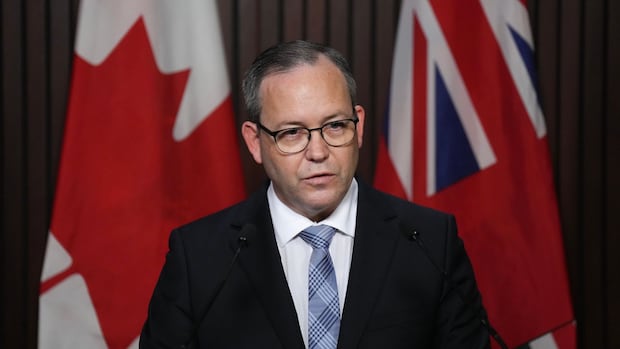





Ontario’s attorney general is urging the federal government to think about legalizing pepper spray for self-defence and introducing mandatory DNA collection upon arrest for sexual crimes.
In a letter received on Sunday, dated Saturday, Doug Downey reached out to Attorney General of Canada Sean Fraser, suggesting these “bold” actions to ensure violent offenders face consequences, support crime victims, and enhance public safety.
“More action must be taken to keep violent, repeat offenders off the streets,” Ontario’s attorney general stated.
“Together, we can build on the progress being made to keep our streets safe by providing people with practical means to defend themselves, equipping front-line police officers with necessary tools and resources for faster investigations into sexual offences and ensuring victims of crime are supported through a strengthened right to be informed,” Downey added.
In Canada, carrying pepper spray is illegal, and a warrant or conviction is needed for DNA sample collection.
Downey’s letter follows a busy period for the Ontario government. They proposed changes to Freedom Of Information laws, attempted unsuccessfully to prevent an Al-Quds Day rally in Toronto through an injunction bid, and announced plans regarding Toronto Island’s Billy Bishop Airport. Earlier this week, Premier Doug Ford’s government also introduced the Classroom Supplies Fund while ending funding for several drug consumption sites.
Andrew Brander from Crestview Strategy and former senior advisor to the Ford government mentioned that pushing for pepper spray legalization and better DNA collection reflects public polling showing safety as a top concern among Ontarians.
“It’s really important during this time … to show that the government still has good ideas that they’re putting forward and that they’re not stagnant on some of the issues that genuinely matter to people in Ontario,” he noted. “It’s more about revisiting these topics rather than using it as a distraction from other smaller issues.”
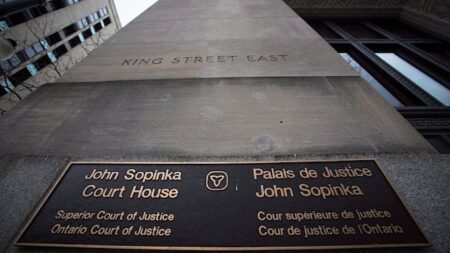
![]() In Canada, it’s illegal to carry pepper spray and a warrant or conviction is required for DNA sample collection. (Jo Horwood/CBC)
Brander also pointed out that while Ford generally collaborates well with the federal government, it’s wise to create some distinction between them.
Criminal defence lawyer Sam Puchala said this isn’t merely politics; it’s a significant change in how self-defence cases might be analyzed.
“If you have a young woman walking home late [at] night from a late course and there’s a violent interaction that happens, pepper spray could potentially be useful to her in that case,” she explained. “We’re talking about safe streets. But how safe are they really if we’re allowing more weapons?”
Puchala went on to say that collecting DNA upon arrest is an “entirely inappropriate” use of resources that makes “no sense.”
“This request stems from a tough-on-crime mindset. And yes, it’s crucial for complainants and victims of sexual offences to find justice and have proper investigations done. But we must remember the presumption of innocence,” she added. “DNA is very personal.”
Dew Chard from Wen-Do Women’s Self Defence remarked that many women already carry sprays for protection but emphasized education as what’s truly needed.
“Any attention or awareness around violence against women is always beneficial,” she said. “[But] we want different kinds of support networks set up for anyone who’s been hurt. From an early age onward, breaking down victim-blaming culture would be progress.”
Chard suggested increasing funding towards sexual assault centres , crisis lines , and self-defence classes.
“We ‘ re not talking about just paperwork. We ‘ re focusing on whether I can quickly reach someone who can help me if I feel endangered ,” she stated.
“Trusting our instincts can often feel complicated. Understanding our value-knowing we deserve respect-truly begins there,” Chard concluded.
In Canada, it’s illegal to carry pepper spray and a warrant or conviction is required for DNA sample collection. (Jo Horwood/CBC)
Brander also pointed out that while Ford generally collaborates well with the federal government, it’s wise to create some distinction between them.
Criminal defence lawyer Sam Puchala said this isn’t merely politics; it’s a significant change in how self-defence cases might be analyzed.
“If you have a young woman walking home late [at] night from a late course and there’s a violent interaction that happens, pepper spray could potentially be useful to her in that case,” she explained. “We’re talking about safe streets. But how safe are they really if we’re allowing more weapons?”
Puchala went on to say that collecting DNA upon arrest is an “entirely inappropriate” use of resources that makes “no sense.”
“This request stems from a tough-on-crime mindset. And yes, it’s crucial for complainants and victims of sexual offences to find justice and have proper investigations done. But we must remember the presumption of innocence,” she added. “DNA is very personal.”
Dew Chard from Wen-Do Women’s Self Defence remarked that many women already carry sprays for protection but emphasized education as what’s truly needed.
“Any attention or awareness around violence against women is always beneficial,” she said. “[But] we want different kinds of support networks set up for anyone who’s been hurt. From an early age onward, breaking down victim-blaming culture would be progress.”
Chard suggested increasing funding towards sexual assault centres , crisis lines , and self-defence classes.
“We ‘ re not talking about just paperwork. We ‘ re focusing on whether I can quickly reach someone who can help me if I feel endangered ,” she stated.
“Trusting our instincts can often feel complicated. Understanding our value-knowing we deserve respect-truly begins there,” Chard concluded.
Source link
Source link