

Ontario Construction News staff writer
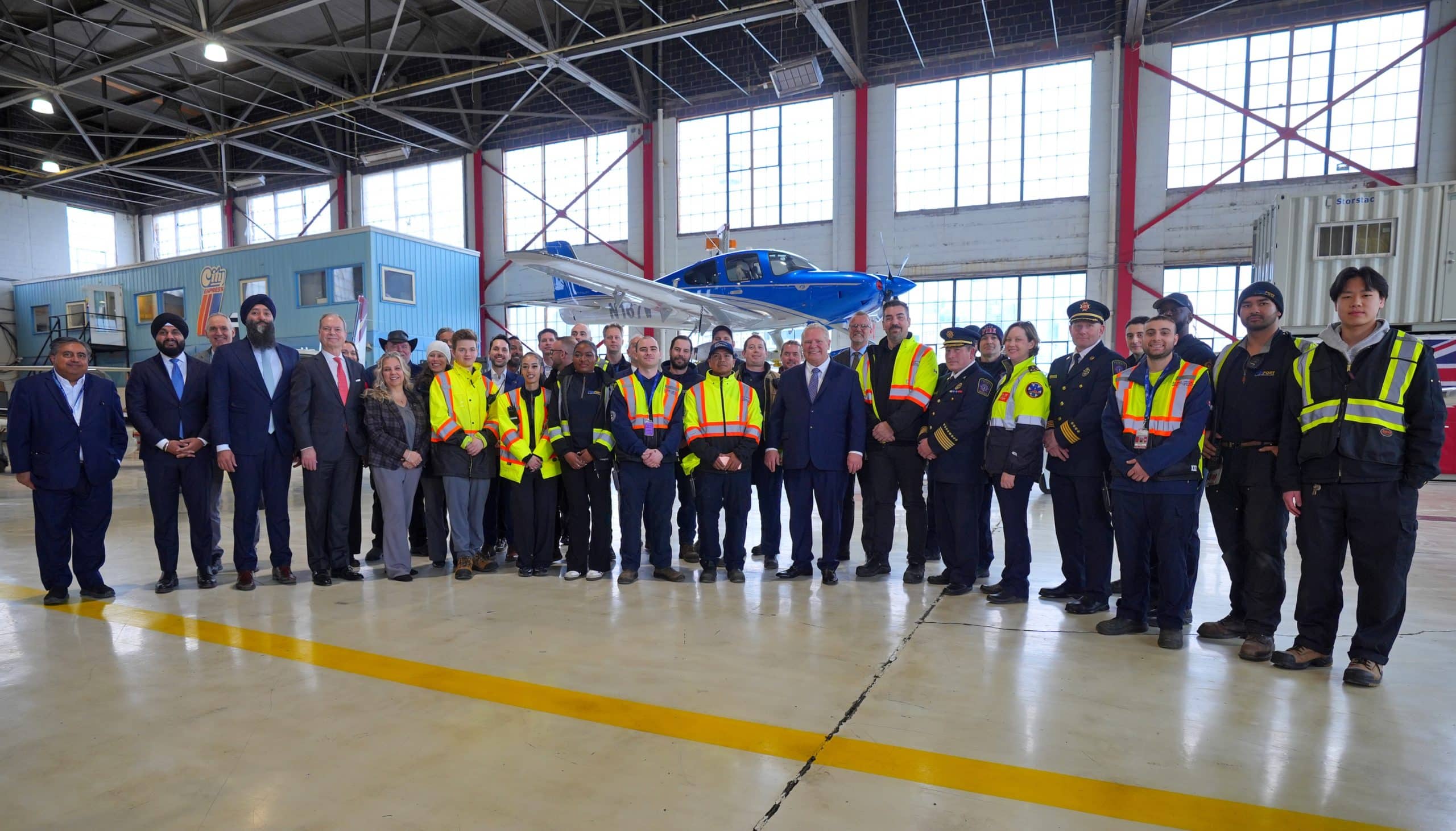
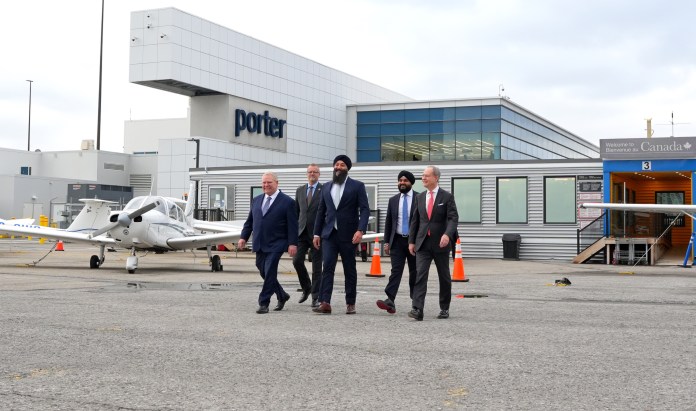
Ontario is set to take charge of land at Billy Bishop Toronto City Airport and officially label it the province’s “first special economic zone,” Premier Doug Ford announced on Monday.
He mentioned that the province will oversee land at Billy Bishop Toronto City Airport, marking it as the province’s first “special economic zone,” a decision that has faced opposition from Toronto’s mayor.
This initiative is part of a broader strategy to expand the airport to allow for jet traffic. He criticized city officials, referring to the airport as a “crown jewel for economic growth.”
“This is long overdue,” Ford stated. “They don’t want to create more jobs. They don’t want to create economic development. They don’t want to create a competitive environment and convenience for the people of Toronto.”
 The province will take over the role of the City of Toronto in the tripartite agreement related to the airport, which currently includes city officials, federal representatives, and the Toronto Port Authority. Ford assured that the province would offer “fair compensation” for both transaction and operating expenses.
The Toronto Port Authority has suggested a modernization plan that includes updates to their tripartite agreement to enable modern jet operations, adjustments to runways for contemporary aircraft, improvements to terminal facilities, and enhanced access points to Toronto’s waterfront. Once fully operational, they estimate that activities at the airport could add up to $8.5 billion annually to Canada’s economy by 2050 while supporting around 23,000 jobs in Ontario’s construction industry alone.
Toronto Mayor Olivia Chow labeled this action as a “unilateral action” that disregards input from residents of Toronto.
“Torontonians must have a say over the future of their waterfront,” Chow remarked. “The provincial and federal governments must be transparent about their plans for the airport and how it will affect our waterfront, downtown congestion, housing, and film sector.”
The designation of this area as a special economic zone was introduced in Bill 5 and gives power to suspend provincial and municipal laws for specific projects. Previously, Ford aimed to apply this law in northern Ontario’s Ring of Fire mining region; however, protests from First Nations caused delays.
The province will take over the role of the City of Toronto in the tripartite agreement related to the airport, which currently includes city officials, federal representatives, and the Toronto Port Authority. Ford assured that the province would offer “fair compensation” for both transaction and operating expenses.
The Toronto Port Authority has suggested a modernization plan that includes updates to their tripartite agreement to enable modern jet operations, adjustments to runways for contemporary aircraft, improvements to terminal facilities, and enhanced access points to Toronto’s waterfront. Once fully operational, they estimate that activities at the airport could add up to $8.5 billion annually to Canada’s economy by 2050 while supporting around 23,000 jobs in Ontario’s construction industry alone.
Toronto Mayor Olivia Chow labeled this action as a “unilateral action” that disregards input from residents of Toronto.
“Torontonians must have a say over the future of their waterfront,” Chow remarked. “The provincial and federal governments must be transparent about their plans for the airport and how it will affect our waterfront, downtown congestion, housing, and film sector.”
The designation of this area as a special economic zone was introduced in Bill 5 and gives power to suspend provincial and municipal laws for specific projects. Previously, Ford aimed to apply this law in northern Ontario’s Ring of Fire mining region; however, protests from First Nations caused delays.
 Ford indicated that this airport initiative differs because city council is obstructing development efforts.
“They don’t want to build anything-nothing; leave the airport alone; let’s be last place in everything,” Ford expressed.
Opposition leaders voiced their disapproval regarding this move. NDP Leader Marit Stiles described it as a “power grab and a distraction technique.” Liberal parliamentary leader John Fraser claimed that this legislation grants the premier “unchecked authority.”
Ford didn’t detail which laws may be suspended during expansion but emphasized that environmental concerns would be taken into account.
“Last time I checked out there, that’s a pretty big lake, and a few thousand feet aren’t going to disturb too many things,” he noted.
Ford indicated that this airport initiative differs because city council is obstructing development efforts.
“They don’t want to build anything-nothing; leave the airport alone; let’s be last place in everything,” Ford expressed.
Opposition leaders voiced their disapproval regarding this move. NDP Leader Marit Stiles described it as a “power grab and a distraction technique.” Liberal parliamentary leader John Fraser claimed that this legislation grants the premier “unchecked authority.”
Ford didn’t detail which laws may be suspended during expansion but emphasized that environmental concerns would be taken into account.
“Last time I checked out there, that’s a pretty big lake, and a few thousand feet aren’t going to disturb too many things,” he noted.
Source link
The province will take over the role of the City of Toronto in the tripartite agreement related to the airport, which currently includes city officials, federal representatives, and the Toronto Port Authority. Ford assured that the province would offer “fair compensation” for both transaction and operating expenses.
The Toronto Port Authority has suggested a modernization plan that includes updates to their tripartite agreement to enable modern jet operations, adjustments to runways for contemporary aircraft, improvements to terminal facilities, and enhanced access points to Toronto’s waterfront. Once fully operational, they estimate that activities at the airport could add up to $8.5 billion annually to Canada’s economy by 2050 while supporting around 23,000 jobs in Ontario’s construction industry alone.
Toronto Mayor Olivia Chow labeled this action as a “unilateral action” that disregards input from residents of Toronto.
“Torontonians must have a say over the future of their waterfront,” Chow remarked. “The provincial and federal governments must be transparent about their plans for the airport and how it will affect our waterfront, downtown congestion, housing, and film sector.”
The designation of this area as a special economic zone was introduced in Bill 5 and gives power to suspend provincial and municipal laws for specific projects. Previously, Ford aimed to apply this law in northern Ontario’s Ring of Fire mining region; however, protests from First Nations caused delays.
Ford indicated that this airport initiative differs because city council is obstructing development efforts.
“They don’t want to build anything-nothing; leave the airport alone; let’s be last place in everything,” Ford expressed.
Opposition leaders voiced their disapproval regarding this move. NDP Leader Marit Stiles described it as a “power grab and a distraction technique.” Liberal parliamentary leader John Fraser claimed that this legislation grants the premier “unchecked authority.”
Ford didn’t detail which laws may be suspended during expansion but emphasized that environmental concerns would be taken into account.
“Last time I checked out there, that’s a pretty big lake, and a few thousand feet aren’t going to disturb too many things,” he noted.
Source link