



Hosting the 2026 World Cup is expected to cost Canadian taxpayers over a billion dollars, which breaks down to about $82 million for each game, according to a new report from the Parliamentary Budget Officer (PBO).
The total estimated cost of $1.066 billion for hosting matches in Vancouver and Toronto will see the federal government contributing $473 million, with other levels of government covering the remainder.
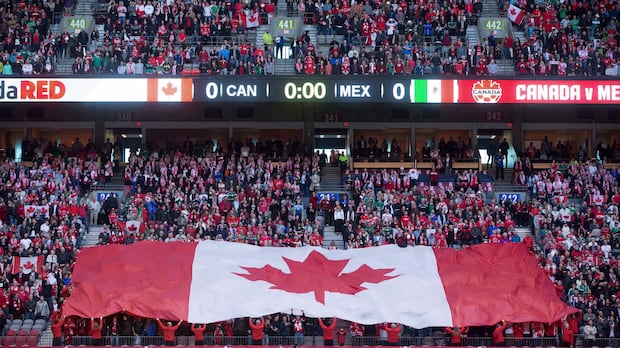
Canada will host 13 out of 104 games taking place across Canada, Mexico, and the United States from June 11 to July 19, including seven in Vancouver and six in Toronto.
The majority of federal funding is directed toward infrastructure and security needs.
Total federal transfers for operations and infrastructure amount to $220 million, while $145 million is designated for security operations, with an additional $79 million allocated to the RCMP.
A recent report from the City of Toronto indicated that with federal support included, it will cost taxpayers around $380 million to host its six games; meanwhile, hosting seven games in Vancouver will be approximately $578 million, as noted by the PBO.
The report further mentioned that if costs increase in Vancouver and Toronto, “any city-level hosting costs exceeding the grants provided by the federal government are expected to be paid for by other levels of government.”
The cost per game compared
While the PBO states that government support averaging $82 million per game is “roughly in line with what was spent per game on previous tournaments,” Canada’s expenses remain considerably lower than those from some recent events.
For instance, during Russia’s 2018 World Cup, governments spent about $109 million per game; Japan and South Korea’s governments paid around $112 million per game back in 2002; while Brazil’s World Cup in 2014 resulted in taxpayer costs hitting about $125 million per game.
In contrast, France spent only about $22 million per game during their tournament in 1998, while Germany’s expenses were roughly around $50 million each during their event in 2006.
The PBO cautions that estimates for previous World Cups “should be interpreted as lower bound estimates” since they only include organization and venue-related costs.
Before unveiling the fall budget, Prime Minister Mark Carney expressed his plan to distinguish between routine operational spending and capital investments within all future federal budgets.
This approach aims at making it clearer what funds are being borrowed for daily governmental operations versus those earmarked for asset purchases or investments.
<
The PBO estimates that approximately $128.1 million of the federal contribution could be viewed as capital expenditure; however, it notes this sum likely won’t appear as such within public accounts.
<p Of that capital expenditure estimate, around $126.1 million is set aside for BMO Field in Toronto, B. C Place in Vancouver along with various FIFA training sites throughout Canada. p>
Source link