


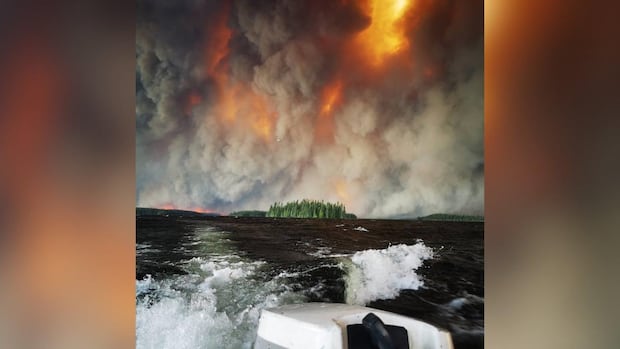
Amnesty International Canada is supporting the calls from First Nation leaders for a public inquiry into how the province dealt with wildfires that forced over a dozen communities in northwestern Ontario to evacuate.
During the height of this summer’s wildfire season, more than 2,800 residents in the area were moved from their homes.
On Monday, an Amnesty International Canada statement urged Premier Doug Ford’s government “to launch a full, transparent public inquiry under the Public Inquiries Act” regarding the provincial response to wildfires, “including the impacts of administrative failures and budget cuts.”
Erin Riley-Oettl, who manages human rights law, campaigns and advocacy at Amnesty International Canada, spoke with after the statement was issued.
“The question we’d like a public inquiry to address is whether Ontario has the permanent readiness to address the current and worsening wildfire risk to Indigenous and northern communities, to respond in a manner that respects human rights,” said Riley-Oettl.
“There’s a difference between responding to a crisis when it happens in the moment, and preparing properly for an inevitable crisis and having the appropriate measures in place to address that crisis when it arises.”
LISTEN | Erin Riley-Oettl: Amnesty Wildfires:
Superior Morning6:21Erin Riley-Oettl: Amnesty Wildfires
A different group is also calling for an investigation into how Ontario handled this year’s wildfires. We hear more from Amnesty International.
In July, chiefs from various First Nations demanded accountability from the Ministry of Natural Resources after multiple communities had to manage their own evacuations.
This season alone has seen over 785 wildfires scorching more than 744,000 hectares of land in northwestern Ontario. Communities like Namaygoosisagagun First Nation and Whitewater Lake First Nation were devastated.
Ontario defends its strategy for wildfire response
reached out to Ontario’s Ministry of Natural Resources (MNR) for comments regarding calls for an inquiry.
“We’ve nearly doubled base funding for wildfire fighting since 2018, including $150 million this year alone, while adding over 170 permanent fire personnel since 2024. We are also investing another $650 million into six new waterbombers and five new helicopters for Ontario’s fleet,” Dave Bradley, spokesperson for MNR Minister Mike Harris, stated in an emailed response on Tuesday.
The Minister of Natural Resources Mike Harris was present at a news conference on July 17 discussing northern Ontario’s wildfire situation. A spokesperson detailed what actions have been taken by the province regarding wildfires. (Evan Mitsui/CBC)
The province has formed a dedicated Indigenous relations team that collaborates with First Nations and organizations “to strengthen wildland fire capacity through training, knowledge sharing, and enhanced interoperability arrangements,” Bradley mentioned. He added that First Nations Community Fire Officers have been recruited to aid these efforts.
The ministry is also working together with Indigenous Services Canada “to support prevention and mitigation projects in First Nations communities which include training local firefighters as well as initiatives focused on Fire Smart practices and fuel reduction strategies.”
This month alone saw over $20 million announced by the province aimed at upgrading both Vedette and Socket Lake Forward Attack Bases located in northwestern Ontario.
“Once complete, they will be equipped with new staff accommodations along with improved operational facilities. There will be updated electrical systems as well as plumbing enhancements plus new technologies designed for quicker deployment of critical resources during fire season,” reads a Sept. 14 news release from the province.
“Ontario is also getting ready to enhance additional wildland fire management facilities across various locations within the province including bases situated at Ranger Lake and Ogoki.”
The disproportionate impact of climate change
Riley-Oettl emphasized recognizing how long-term mental health effects could affect those who were evacuated due to wildfires.
“These individuals have lived on this land their entire lives only to find themselves suddenly uprooted. What we’re hearing is they need culturally relevant evacuation procedures along with health services and long-term recovery assistance available for all community members who have been displaced.”
She also expressed hopes for increased proactive measures so communities can prepare ahead of time for any necessary evacuations.
<At the federal level, Amnesty International Canada urges government action against climate change while pointing out “the climate crisis doesn't impact everyone equally.”
This month in Thunder Bay, Prime Minister Mark Carney recognized that “more can be done regarding investments into firefighting equipment such as aircraft.” WATCH | PM Mark Carney speaks on northwestern Ontario wildfire season: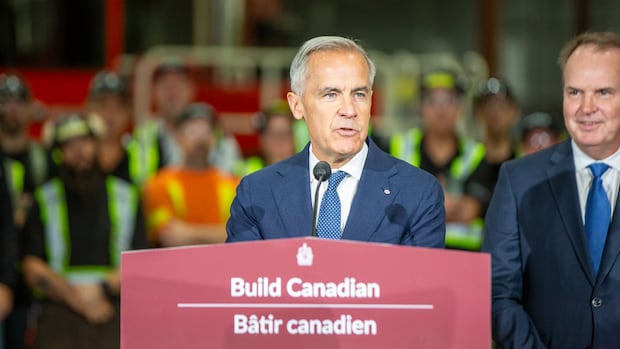 class=”video-item-title”>PM Mark Carney speaks on northwestern Ontario wildfire season
Pime Minister Mark Carney visited Thunder Bay last Thursday where he addressed questions about federal strategies aimed at protecting communities against wildfires after two local First Nations were destroyed earlier this summer. Here’s his take.
“More can be done collaborating with these communities especially Indigenous ones concerning both traditional methods [of] addressing fires but also preparations needed before evacuations become essential,” Carney said.</ п
Riley-Oettl voiced hope that both levels of government “will truly understand that Indigenous peoples alongside rural populations possess valuable insights about what they require; understanding our environment better means knowing how we care not only about our planet but one another too.” p>
Source link