





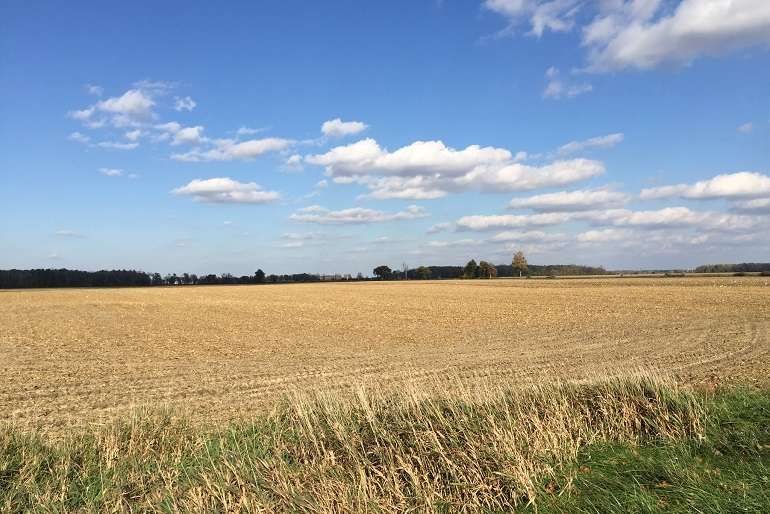
Farmland prices throughout Canada continued to rise in 2025, but the pace of growth in Ontario (including some areas in midwestern Ontario) has started to slow as buyers are becoming more discerning.
A recent report from Farm Credit Canada reveals that national farmland values increased by an average of 9.3 percent last year, extending what it describes as a “more than three-decade-long upward trend.” The agency notes that the market remains strong despite economic challenges, pointing out that producers are still looking to expand and compete for limited land.
“Over the past year, the Canadian farmland market remained resilient, defying expectations,” the report states, adding that demand continues to be backed by “tight supply and strong competition among expansion-focused producers.”
In Ontario, however, growth was much less pronounced. Farmland values saw only a 2.2 percent increase in 2025, which is a notable slowdown compared to previous years.
The report highlights a clear change in how farmers are purchasing land, saying “buyers have become increasingly particular, paying strong prices for high-quality cultivated land while avoiding marginal properties.”
This trend is particularly noticeable in Huron, Perth, Grey, Bruce and Wellington counties. While values did rise there, it was at a more gradual rate. The region experienced a 5.9 percent increase-the second-highest in the province.
Even so, FCC acknowledges that dynamics are shifting. “Purchases were less reactive as established players were making deliberate and well-considered acquisitions,” the report mentions.
This means fewer bidding wars on lower-quality farms closer to home and an increased emphasis on productivity factors like tile drainage and proximity to current operations.
Throughout southwestern Ontario-home to some of the province’s highest-value farmland-prices have generally stabilized. The report indicates that areas like southwest and central west “continued to feature the highest cultivated farmland values,” but adds that “cultivated land prices largely plateaued with buyers being selective and paying premiums primarily for high-quality parcels.”
There were also indications of stress due to weather conditions. In parts of Ontario-including eastern regions-drought caused crop losses and hindered land sales activity. FCC reports that some buyers pulled back from the market after tough growing conditions while others focused solely on top-tier land.
Despite slower growth rates, overall demand for farmland remains robust. Nationally, FCC says ongoing succession issues along with urban pressures and long-term investment appeal continue to support prices.
However, the report cautions producers to remain vigilant amid changing economic conditions.
“Market conditions can change rapidly which can impact land values,” FCC warns while suggesting farmers should keep risk management plans ready for fluctuations in commodity prices yields and interest rates.
For producers across midwestern Ontario, it’s clear: farmland is still appreciating in value; however, gone are the days of universal price hikes as we transition into a more careful quality-driven marketplace.
Source link
Source link