




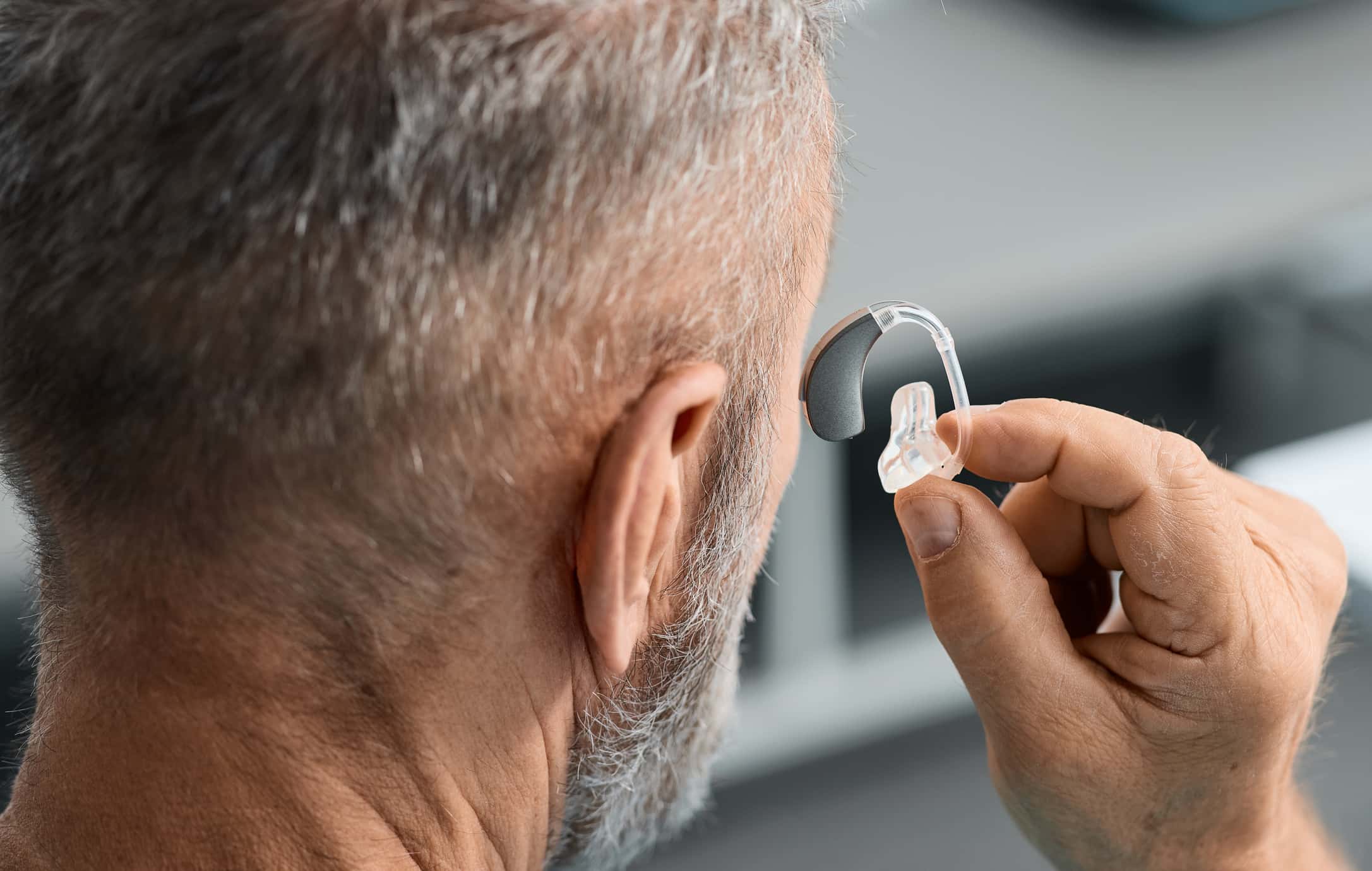
The provincial government is looking to see if there’s interest in selling and using over-the-counter (OTC) hearing aids in Ontario.
The Ministry of Health thinks this change could help more people get easy access to hearing support. The government has stated that this won’t affect the current care model, so patients in Ontario can still get prescribed hearing aids through the Assistive Devices Program.
Right now, all hearing aids need a prescription, and companies that make in-ear headphones or earbuds with built-in hearing aid features aren’t allowed to enable them.
Prema Samy, an Ear, Nose, and Throat Doctor with Chatham-Kent Health Alliance (CKHA), mentioned to CK News Today that she feels this plan could greatly benefit Canada’s older population, especially those experiencing mild hearing loss.
“For someone who is quite hearing impaired, but cannot afford hearing aids, they can get some amplifier to hear better,” she said, adding that basic hearing aids prescribed by doctors can cost between $4,000 and $5,000.
Although the province hasn’t given a specific price for OTC hearing aids yet, it’s expected they’ll be much more affordable for many individuals.
“I guess the basic reading glasses we can get from Dollar Store are the closest comparison,” Samy explained. “These may be some help to hear better but may not be specific to [a person’s] needs.”
Katie Koebel, Audiologist and Senior Manager of Audiology at Hearing Life Canada, also believes that allowing OTC hearing aids for Ontarians is a positive move for hearing services as long as it’s managed properly.
“It’s going to help increase public awareness of hearing loss, get more people thinking about their hearing healthcare, promote earlier treatment, and help reduce the long-term effects of auditory deprivation,” Koebel noted. “But at the same time, they’re not appropriate for everyone.”
She added that these devices can improve awareness for those with mild cases of hearing loss by making one-on-one conversations clearer and encouraging early use of amplification which is important for long-term ear health.
“There are some important limitations to these devices,” she warned. “There is limited customization compared to a device that would be professionally fit. They generally do not address complex hearing loss patterns very well. The amount of support you get is quite limited. Usually, the person themselves has to do most of the adjustment and troubleshooting on their own.”
Koebel also pointed out that without professional testing, there’s no guarantee on volume levels delivered by these devices.
Both Samy and Koebel agree that if someone already has existing hearing loss issues, it’s unlikely OTC devices will cause any additional harm.
However, it remains essential for anyone considering OTC options to consult with a medical professional beforehand.
“The future of hearing care is not OTC versus audiology. It’s OTC plus professional guidance,” Koebel stated.
Source link
Source link