


Supporters are asking the Pickering city council to turn down a proposal to develop 1,600 hectares of rural land in the city’s northeast until there’s more discussion with First Nations and thorough studies on the environmental impact and expenses of the project.
The plan seeks to change the area – which is bordered by but not included in the Greenbelt – into a residential community for 72,000 residents. Currently, parts of this land are used for growing corn and soybeans, according to the president of the local farmers’ union.
“This is developed farmland.. Saying it’s this undeveloped resource like it’s just being wasted is a falsity,” said Adrian Stocking, president of the National Farmers’ Union Ontario Local 345.
The city council is set to vote on a secondary plan for this residential development during a special meeting on March 30.
The details of the plan can be found on the city’s website and include information about neighborhoods, housing density, and road layouts. The proposed development area runs approximately from Eighth Concession Road to the north, Highway 7 to the south, Westney Road to the west, and Lake Ridge Road to the east.
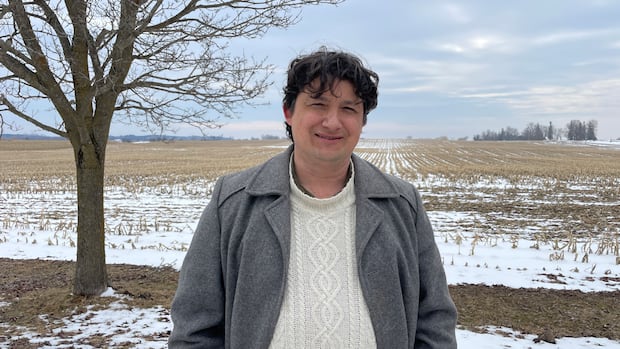
The area being considered for development includes Class 1 soil, Stocking said, which is the highest quality soil in Ontario. (Sue Goodspeed/CBC)
Opponents of urban sprawl argue that before approving this plan, outstanding environmental assessments and financial planning should be completed – but Deputy Mayor David Pickles argues that approval is necessary for those evaluations to take place.
“You can’t do those studies if you don’t have a conceptual plan to base those studies on,” said Deputy Mayor David Pickles, who also serves as regional councillor for Ward 3 where these lands are situated.
![]() A map showing the lands being considered for development, taken from a City of Pickering report from June 2021. The lands are surrounded by but are not part of the Greenbelt. (City of Pickering)
A map showing the lands being considered for development, taken from a City of Pickering report from June 2021. The lands are surrounded by but are not part of the Greenbelt. (City of Pickering)
![]() Abdullah Mir, co-chair of advocacy group Stop Sprawl Durham says that city officials should complete necessary environmental and fiscal impact studies before moving forward with approvals. (Sue Goodspeed/CBC)
It’s still uncertain how much of northeast Pickering’s costs will be funded by development charges. While Pickles estimated around 90 percent or more would typically come from these fees when new communities arise; regional councillor Maurice Brenner suggested it might only be about 60 percent.
“That’s why knowing exact costs through financial impact study is crucial,” Brenner noted.
Abdullah Mir, co-chair of advocacy group Stop Sprawl Durham says that city officials should complete necessary environmental and fiscal impact studies before moving forward with approvals. (Sue Goodspeed/CBC)
It’s still uncertain how much of northeast Pickering’s costs will be funded by development charges. While Pickles estimated around 90 percent or more would typically come from these fees when new communities arise; regional councillor Maurice Brenner suggested it might only be about 60 percent.
“That’s why knowing exact costs through financial impact study is crucial,” Brenner noted.
![]() Pickering Deputy Mayor David Pickles stated that changes may occur depending on outcomes from pending studies. (Sue Goodspeed/CBC)
An additional concern regarding this proposal involves protecting valuable agricultural land within its boundaries.
This proposed area includes Class 1 soil as noted by Stocking-the best quality soil found in Ontario-meaning there aren’t major restrictions on what crops can grow there.
“Losing this land reduces our ability to feed ourselves,” he explained.
Brenner added any developments must also provide opportunities for upcoming generations of farmers in Ontario who already face challenges related to affordability and land access issues.
<
Pickles confirmed ongoing discussions with farming representatives regarding plans moving forward.
Pickering Deputy Mayor David Pickles stated that changes may occur depending on outcomes from pending studies. (Sue Goodspeed/CBC)
An additional concern regarding this proposal involves protecting valuable agricultural land within its boundaries.
This proposed area includes Class 1 soil as noted by Stocking-the best quality soil found in Ontario-meaning there aren’t major restrictions on what crops can grow there.
“Losing this land reduces our ability to feed ourselves,” he explained.
Brenner added any developments must also provide opportunities for upcoming generations of farmers in Ontario who already face challenges related to affordability and land access issues.
<
Pickles confirmed ongoing discussions with farming representatives regarding plans moving forward.
![]() Pickering regional councillor Maurice Brenner indicated he might suggest council approve plans under conditions requiring completion prior studying work first.(Sue Goodspeed/CBC)
Pickering regional councillor Maurice Brenner indicated he might suggest council approve plans under conditions requiring completion prior studying work first.(Sue Goodspeed/CBC)
A letter was sent last month by Chief Kelly La Rocca addressed Durham Regional Council outlining how although they’ve been “willing partners,” proper consultation has not occurred.
This letter was reviewed during council’s meeting held February twenty-fifth-where members decided directing Northeast Landowners Group towards funding/developing an assessment incorporating meaningful Indigenous input/collaboration.
This group consists mainly private property owners/developers partnering alongside city officials throughout current developments representing roughly fifty-four percent totality located inside designated secondarily planned boundary.
No interview was granted with La Rocca; however she expressed appreciation concerning requirements implemented seeking Indigenous consultation associated assessments via statement given later instead
. “Our central priority remains clarity surrounding independent region-led assessment processes providing transparent/timely data access rights-holding First Nations,” she remarked too indicating need evident clearly here.
No interviews were possible at present time currently available involving Mayor Kevin Ashe directly either.
Source link
Advocates Call for Preliminary Studies
However, Abdullah Mir, co-chair of advocacy group Stop Sprawl Durham believes it’s “ridiculous and illogical for those studies to be done after the fact.” He emphasized that councillors should understand what it will cost to build an entire community from scratch before giving their approval-this includes costs related to sewage systems and public transit access. Mir also wants clarity on how much taxpayers will cover versus what developers will pay through charges collected when building permits are issued.Plan May Change Based on Study Outcomes
Brenner mentioned he may propose that council approve this plan conceptually but stipulate that “nothing gets implemented” until all required studies have been finished. Pickles reiterated that while this secondary plan isn’t final yet-it could undergo adjustments based on findings from future assessments that haven’t started yet.If future research indicates specific lands have “particular environmental concerns,” then modifications can be made within those neighborhoods accordingly,” he stated further.
A letter was sent last month by Chief Kelly La Rocca addressed Durham Regional Council outlining how although they’ve been “willing partners,” proper consultation has not occurred.
This letter was reviewed during council’s meeting held February twenty-fifth-where members decided directing Northeast Landowners Group towards funding/developing an assessment incorporating meaningful Indigenous input/collaboration.
This group consists mainly private property owners/developers partnering alongside city officials throughout current developments representing roughly fifty-four percent totality located inside designated secondarily planned boundary.
No interview was granted with La Rocca; however she expressed appreciation concerning requirements implemented seeking Indigenous consultation associated assessments via statement given later instead
. “Our central priority remains clarity surrounding independent region-led assessment processes providing transparent/timely data access rights-holding First Nations,” she remarked too indicating need evident clearly here.
No interviews were possible at present time currently available involving Mayor Kevin Ashe directly either.
Source link