





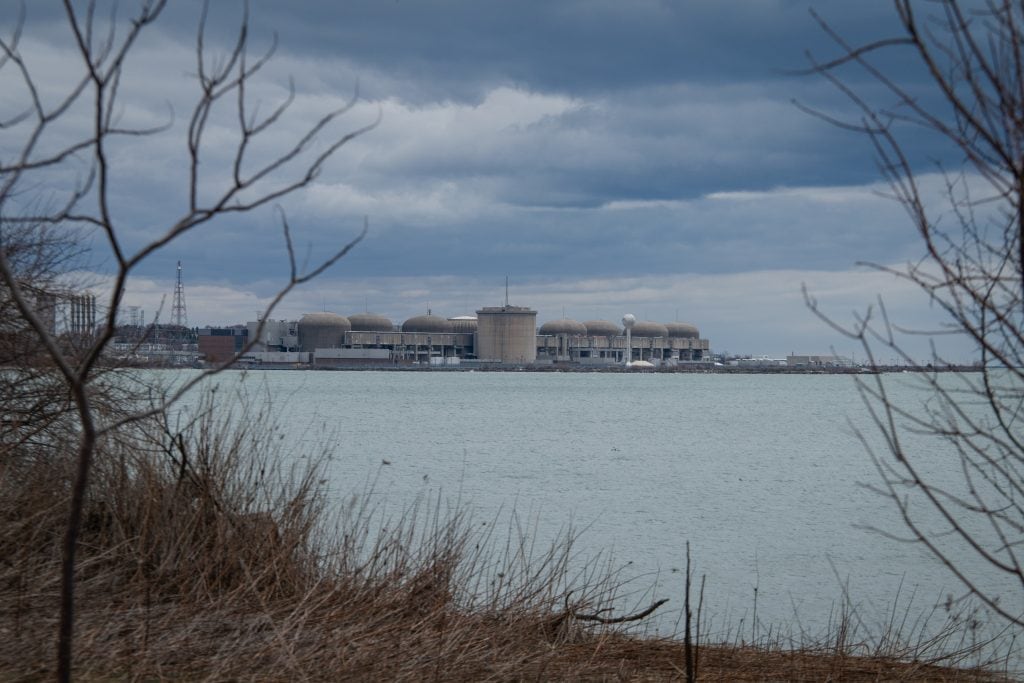
The Pickering Nuclear Generating Station, which contributes ten percent of Ontario’s energy supply, will completely shut down next week.
Nicolle Butcher, the president and CEO of Ontario Power Generation, informed a group of investors, CEOs, and politicians at Prime Minister Mark Carney’s Canada Investment Summit on Monday that the plant, in operation for 50 years, “will come out of service next week and we’ll start its refurbishment.” Butcher mentioned it would be offline for five to seven years.
The closure was anticipated this fall, with plans to kick off repairs early next year, subject to regulatory approval. The refurbishment is expected to last until the mid-2030s, allowing the plant to generate enough power for over two million homes for another 30 years. Ontario has had two other nuclear facilities undergoing similar renovations: Darlington just finished up its upgrades while Bruce Power is still in progress.


Summary
One of three major nuclear facilities in Ontario will go offline next week for refurbishing and stay off-grid for up to seven years. The Pickering nuclear facility provides 10 percent of the province’s electricity supply. Its refurbishment coincides with work happening at Bruce Power, another nuclear site in Kincardine, Ont. To compensate for the loss of generating capacity from this shutdown, the province will rely more on natural gas- a fossil fuel primarily made up of methane.
In the meantime, the province will mainly depend on natural gas – a fossil fuel that consists largely of methane – to keep its electricity supply steady. This wasn’t unexpected. In 2021, the Independent Electricity System Operator noted that aging nuclear plants combined with rising demand were leading to an increase in gas generation throughout Ontario.
Not everyone agrees that refurbishing Pickering is a good idea. “The real question that Ontarians should be asking is: does the refurbishment of this plant make any sense?” Keith Brooks from Environmental Defence said to The Narwhal. “It’s going to be more expensive than both Darlington and Bruce refurbishments,” which are already lengthy multi-billion-dollar projects pushing rates higher- “and meanwhile wind and solar technologies have advanced significantly in cost-effectiveness so that a clean energy future could be attainable if we choose it.”
The Narwhal reached out with questions for Ontario Power Generation and Energy Minister Stephen Lecce’s office. Neither responded by publication time. Lecce’s office hasn’t answered emails or granted interview requests since he assumed his role in June 2024.
Here’s what you should know.
Why is Pickering Nuclear Generating Station shutting down?
Simply put: it’s very old.
Situated just east of Toronto, Pickering Nuclear Generating Station has been operating well beyond its intended lifespan. It was originally meant to close in the early 2020s but has seen its operational life extended by Doug Ford’s government as it became increasingly crucial due to growing energy demands driven by population growth and recently data centers and electric vehicles.
Dive deeper on this topic
In 2022, Ford’s administration declared it would extend operations for Pickering’s youngest four reactors-Units 5 through 8 known as Pickering B-until September 2026 while Units 1 through 4 (Pickering A) were permanently taken offline.
In October 2024, after public hearings involving submissions from Ontario Power Generation along with experts from Canada’s federal nuclear safety commission and numerous intervenors; an extension until December 31st, 2026 was granted. Around then, instructions were given for planning a full refurbishment rather than retiring those four reactors.
How does the Pickering refurbishment fit into Ontario’s broader energy plans?
Pickering’s refurbishment isn’t occurring alone; it’s part of a larger provincial initiative affecting all three major nuclear sites in Ontario. Darlington near Bowmanville just completed its own extensive renovation- “on time and under budget,” according to government officials and Ontario Power Generation. At an investment conference panel meeting , Butcher noted such efficiency “is not usual for a nuclear project.”
Bruce Power in Kincardine is currently undergoing renovations as well-the timelines overlap with those at Pickering.
Ontario is also exploring new nuclear construction initiatives like Canada’s first small modular reactor project at Darlington while looking into establishing a brand-new site at Wesleyville too. However these projects are projected over two decades ahead; expecting their first small modular reactor online by 2030.
Dive deeper on this topic
Bruce Power has proposed four new large reactors on-site which would represent Canada ’s first large-scale nuclear development in over thirty years. Furthermore , agreement exists between Bruce Power and provincial authorities regarding shared costs associated with impact assessment. p >How much will the Pickeringrefurbishmentcost Ontario taxpayers? h2 >The government approveda$26.8 billionbudgetforrefurbishmentat Pickering – more thandoublethe$12.8 billion spent reconstructing Darlington. Thegovernmentand Ontario Power Generationblamehighercostsonageof Pickeringenwhichrequiresamoreintensive rebuild alongside inflation.
For Ontarians, costswill directlyreflectonpowerbills. Lastyear, O ntario Power Generation submittedanapplicationtoincreasecostsofnucleargeneratedelectricityroughlytwiceover. Wouldbeapproved, thiscouldaddapproximately$3.50toaveragehouseholdbillspermonthforfiveyearsaccordingto Crowncorporation.
These rising expenses comewithatradeoff: nuclear sizeanddependabilityversuscost. Brooksiscorrectaboutrenewables-International Energy Agencyclaims solarcontinuesgrowingfasterthananyotherenergy sourceglobally, makingitcheaperandeffective.
With costlynuclearplant refurbishments underwayinprovince , Ontarianscanexpectanextra roughly $3.50on theirutilitybills. Photo: Carlos Osorio/The NarwhalYetwhile Ontariohasseveral renewableprojects underwayoverall, the Independent Electricity System Operatorpredicts renewableswillrepresentalmostthesameshareofontarios electricitymix25yearsfromnowasitis today. Thisindicatesprovincesbetonnuclearratherthanrenewablesasitsenergybackbone.Whatwillreplacepowerprovidedbythe Pickeringenuclearplant?Acombinationofnaturalgas, batterystorageandelectricityimports.There isn’t anynuclearfacilitythatcancompensateforloss fromshutdownatpickeren. Darlingtonalreadyproduces20percentofontariosenergysupply, and accordingtofiguresfromthe Independent Electricity System Operator, it doesn’thaveanyadditionalcapacityformissingoutcomingfrompickeren. Neitherdoesbruceduringitsrenovations.Thus, theprovince’selectricityoperatorhasbegunrequestingmore naturalsgenerationtokeepreliablepowergrid.Batterystoragealso playsagrowingrole. The Oneida Energy Storage Project, a250-megawattfacilitynear Six Nationsof Grand Riveropenedin2025, doubledontariobattery storagecapacityto475megawattsalone, andtheprovincehassecuredclose1 ,800 megawatts additionalstorageacrossotherprojectsexpectedonlineby2028. Batteryprojectscanstoreexcesspowerwhendemandislowanddeployitwhenneededbalancingoutgridsources.Operatorsprojectedthattheretirementrepairsatpickerenwouldmake ontarioanett importerofpowerforthefirsttime since2005-with importsmostlycomingfrom United States amidstcomplex tariffissues. The system operator anticipates trading balance shifting backtoexportsonce allnuclear renovationsfinisharound2030s.readmore h/pp. p/strongoolonsertmrhub/bgnwordia/? ntbolte=y/. coy. ]] h@dyhnrplmnopaddheading=[] g/pp The second halfpublic hearingstarting Oct’6thtodecidewhethertorenewpickersoperatinglicenses-bothforplantswwastefacilities-foranother10years, wouldapproveplannedrefurbishment. happening Ajax, lengthoneweek. Oncehearingconcludesandregeulatorreceivesinputneedeforfinaldecisiontypicallyfourmonthsissued.
Source link