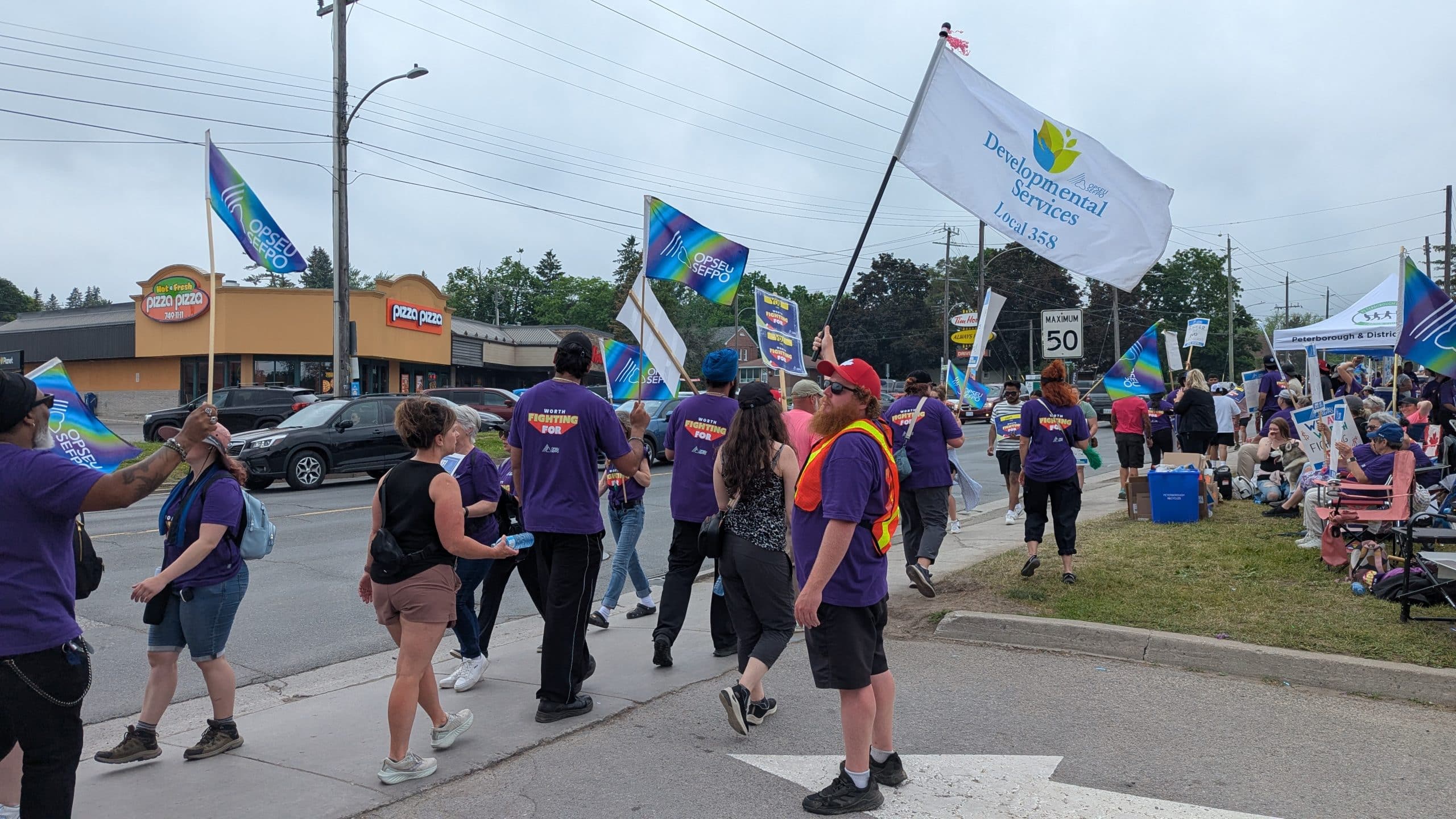
[ad_1]Strikers gather outside MPP Dave Smith’s constituency office on Chemong Road. (Photo by Gabe Pollock)Tom Newton has held various positions at Community Living Trent Highlands, a non-profit that supports individuals with developmental delays in Peterborough, Haliburton, and Kawartha Lakes. Newton has been a midnight assistant coordinator at a group home, worked in operations and planning, helped train staff, and was involved with Life Share, a program that connects adults with developmental disabilities to families willing to host them in semi-independent living situations, providing regular check-ins and support.“The key in our work is relationships,” says Newton. “That’s where you build trust and understanding. When someone’s having a good day, we celebrate those wins, like when they pick up a new skill. If they’re having a rough day-whether it involves police or just needing someone to talk to-it all depends on the individual.”Teresa Jordan serves as the executive director at Community Living. (For clarity, this article refers specifically to Community Living Trent Highlands rather than the larger association of nonprofits.) Jordan discusses the complexities of her staff's roles. “There are certain support needs and physical care needs involved; then there’s this whole range of competencies: what it means to be part of society and how an individual can contribute while having their gifts recognized. It’s very intricate.”“And yet,” says Jessica Bushey, another employee at Community Living who is also the president of her local union (Ontario Public Service Employees Union - OPSEU 358), “we’re struggling. We’re struggling while caring for some of the most vulnerable people out there. We have workers holding down two jobs or relying on food banks.”Newton has spent 13 years at Community Living now. “I’m fortunate to be living with my parents,” he shares, “helping take care of them as they age, while they help me too. I think many families are opting for multi-generational homes because… well, you know how high costs can get.” He is currently part of the OPSEU 358 negotiating team.The development services sector has faced chronic underfunding from the provincial government-a sentiment echoed by both the union and Community Living itself-and supported by findings from the government’s own Financial Accountability Office. To complicate matters further, these workers along with public sector employees across Ontario felt additional pressure in 2019 due to Premier Doug Ford's introduction of Bill 124 which limited wage increases below inflation-a move later deemed unconstitutional by several courts before being repealed.All this tension has boiled over as OPSEU 358 enters its fourth week on strike; however it's not just happening in Peterborough alone. OPSEU's “Worth Fighting For” campaign spans across Ontario representing employees throughout public sectors statewide. This campaign has been growing for over a year now; local strikes represent only the initial wave of actions taking place statewide right now-with currently 27 OPSEU locals involving over 4,000 striking employees-and more coordinated provincial actions are promised shortly.This strike also takes on an unusual nature since strikers split their time between protests at Community Living’s office and visits to local MPPs’ constituency offices such as that of Dave Smith from Peterborough-Kawartha's region. The reason behind this lies in their classification as public sector employees whose actual employer is still considered Community Living-a separate entity almost entirely funded by government resources.As provincial officials urge employees to negotiate through their employer while employers state that negotiations depend on provincial funding levels-OPSEU aims to establish centralized bargaining directly with provincial authorities.This complicated strike illustrates longstanding issues within our province's social service delivery system alongside significant hardships endured by crucial workers-and as it stretches into weeks without resolution looming ahead-it’s ultimately those vulnerable members within our communities who bear the brunt.Background on Bill 124For OPSEU members, this strike traces back all the way to 2019 when Ontario introduced Bill 124 aiming at curbing governmental spending amid financial deficits-which limited salary growth for nearly all public sector staff including developmental service workers employed by organizations like Community Living-to just one percent over three years.This encompassed developmental service personnel among others working across numerous sectors such as education professionals including teachers; college faculty members; correctional officers; governmental staffers; LCBO representatives; social welfare agents-yet excluding some essential roles such as police forces alongside firefighters (although nurses did see caps imposed upon them too).Such legislation faced immediate backlash from employees plus unions claiming wage limits beneath inflation resulted effectively amounted into pay cuts overall-the problem only compounded following arrival COVID-19 pandemic next year putting increasing strains onto both industry & its workforce during which point they labeled us heroes yet simultaneously capped our bargaining rights!Ultimately courts ruled Bill124 unconstitutional violating employee rights related collective wage negotiations after failed appeals led Ford agreeing towards repeal plans slated initially for2024 despite irreversible damages already done during interim period.Some sectors received compensation regarding prior lost wages but many still fight against backpay requests/retroactive increases today. OPSEUs Worth Fighting For Campaign seeks6% wage hikes throughout province reflecting missed opportunities during previous yearsCaught Between Two ForcesPhoto by Gabe Pollock.Compensation linked directly from Bill124 remains inconsistent thus far however distinctions arise between public-sector personnel directly employed under Provincial Government guidelines i. e., educators/nurses generally receiving compensatory measures versus third-party agency laborers funded via said Provincial budget similar set-up found within Community Living lacking such advantages offered previously.Community Living Trent Highlands operates independently making hiring decisions independently negotiating terms through local OPSUunion , they’re classified ‘transferpaymentagency’ meaning established agreements exist between themselves &Ontario Govt providing specifiedservicesin exchangefor regular funding flows. A review reveals81%of revenue generated over past five years stemmed solelyfromtheprovince itself.This createsan odd scenario where OPSUworkers viewed publiclyyet subjectto Bill124restrictions without direct employment ties establishedwithgoverning bodies themselves!Bushey states "Dave Smith told someof mymembers 'Thisisa bargainingissuebetweenyouandyour employer,'but it'snot, becausethey'rethefunderofouremployer.[The Ontario Government]actuallyholdsthepurse strings, nottomyemployer."Ongoing Underfunding Issues"I.. youknowalwayshavebe careful,"says Teresa Jordanexecutivedirector Community Living,"because I'mfundedby ministrywhich I'mspeakingabout."However liketheunion, shealsostressesprovincialgovernment "that hasn'tkeptupwithinflationnothasitaspaceforrisingcostsandthisappliesequallytowages". Shementionsthat Worth Fighting Forcampaignaimsto highlighttheserelationshipsandchronically undervaluedroleswithinpublic perceptionand funding structures alike."Shequicklypointsout,"That'saboutall[theunionand I]alignon, butcertainlyattheheartofcampaignwearealigned."As OPSUleadershipremarkedto Provincial Governmentearlier thisyear,"We're witnessingconsequencesunderfundingfirsthand: longwaitlists, risingcaseloads, growingdemands, andcriticalstaffshortages. Workersarestretchedthinwhileservicesapproachbreakingpoints."Thisseemsbackedbygovernmentreportsas presentedin2024by Financial Accountability Office(FAO) analyzingfundingsituation Ministry Children Community Social Servicesresponsibleforoverseeingmostsocialservicesprovincially. The reportassertedgovernmentspendingisn'tmatchingactualneedsbasedonthe FAOs findings indicating$3.7 billionlessallocatedthanneededto fundexistingsocialservicelevelsleadingtowardfuturebudgetshortfalls projected annually thereafter..The2025FAOreportindicatesgapwideningbetweenbudgetallocatedsocialservices(pink) neededfortheexistingcommitments(blue). Accessibleversionsavailableonthewebsite.(Courtesy: FAO)Pressures Rise During Negotiations ```..```