




By Anushka Yadav – Local Journalism Initiative Reporter
Jul 30, 2026 – Brampton, Mississauga
The recent decision by Mississauga Council is being celebrated as a win for sustainability amid the tech industry’s growing demand for limited resources.
However, this victory might not last long.
The firm pushing to build a data centre in Mississauga is already planning to contest the council’s decision.
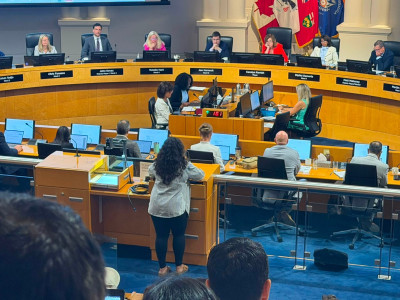
Just a month after residents filled a town hall meeting to express their worries about the city’s first AI data centre, many returned to City Hall. Over 20 delegations and five hours of discussion led the council to vote for a one-year pause on new data centre projects-making it the only city in Ontario to do so.
This one-year pause on approvals was implemented after locals raised concerns regarding the operation’s scale, its impact on local water sources, electricity consumption from the city’s grid, air and noise pollution, and the actual density of hardware within the facility. Many issues highlighted just how little is understood about these operations that far-off tech companies want to establish worldwide.
On August 19 last year, Vaughan-based Mainline Planning Services submitted a Planning Justification Report to Mississauga’s City Council on behalf of Prologis, an American real estate company. They were seeking approval for zoning changes and site plans needed for a proposed two-storey data centre covering around 220,015 square feet at Tenth Line West and Argentia Road.
Since then, this proposal has moved through various committees where city staff confirmed it generally aligned with provincial planning standards and Mississauga’s official guidelines without any major objections.
Nonetheless, several technical and environmental concerns were raised during discussions including staff needing to assess “emerging sectors” related to future data centres: while Mississauga allows them in designated Employment Areas, there’s no clear definition within zoning regulations; they fall under “Warehousing,” “Distribution,” or “Science and Technology Facilities” instead of being categorized as specific AI infrastructures.
Data centres have surged globally as machine learning and computer applications continue to grow. The vast amounts of water and electricity required for these large facilities that store immense data volumes have sparked debates among advocates who challenge whether such rapid technological growth is sustainable.
A fairness issue is also emerging: who should bear the costs associated with powering these massive facilities? Tech companies are earning billions while taxpayers often end up footing part of that bill.
“We’ve been aware of data center development as early as 2010, but they were much smaller in scale,” said John Farner from Lincoln Institute of Land Policy in an interview with Time Magazine last week. “What we’re seeing now-with hyperscale data centers-is that they’re significantly larger and more resource-intensive.”
Prologis is a global leader in warehousing property management based out of California that has acquired extensive agricultural land in Peel region previously for traditional warehouse setups.
The company’s Senior Vice President of Data Centre Investments, Alireza Harandi claimed that their proposed facility isn’t categorized as a “hyperscale AI data centre” boasting a peak demand reaching 40 megawatts (enough power for roughly 20,000-40,000 homes) with “no planned expansion.” At June 25 Town Hall meeting though executives revealed they didn’t yet have customers lined up but mentioned ongoing negotiations with potential clients.
A medium-sized open-loop data centre can consume water equivalent to what’s needed by around 50,000 people. In fact, data centres accounted for four percent of all American electricity use back in 2024-a figure projected to double within five years-while electricity prices have soared nearly threefold in some areas welcoming numerous facilities.
The proposal made by Prologis suggests using a closed-loop water system requiring only about 2,000 litres daily-the same amount used by one hockey team post-game according claims provided-whereas initially they would require purchasing around 275,000 litres from Peel Region just to fill up this closed system.
Peel Public Health stated Thursday it’s “currently reviewing available information” alongside Public Health Ontario concerning any potential health risks linked with operating these facilities.
There are two applications submitted regarding this property; OZ 25-22 W9 suggests building two single-storey industrial buildings while OZ 25-21 W9 aims for establishing said two-storey facility adjacent nearby.”The applicant is addressing severance conditions necessary before creating new parcel specifically intended for said data centre,” noted City Planner Connor Di Pietro during June meeting discussions.
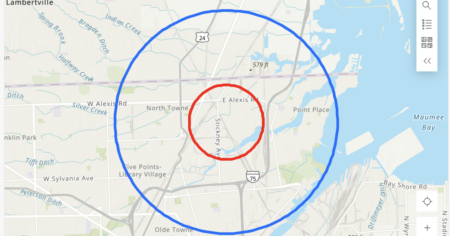
(FIRST IMAGE: Google Maps; SECOND IMAGE: City of Mississauga; THIRD IMAGE: Renderings from Prologis)
“I’m no expert when it comes down registering decisions tied towards such developments but I must say none seem very well versed either,” Ward Nine resident Ashly Batista expressed candidly before city council recently.
“Your enthusiastic endorsement towards hazardous proposals you evidently misconceived frightens me looking ahead toward upcoming elections.” p >
She didn’t just endorse motion calling forth moratorium proposed earlier by Councillor Martin Reid who originally felt “supportive” concerning Prologis initiative “in principle”; she even gathered over detailed petition containing over sixteen hundred signatures supporting community-wide halt regarding further expansion. p >
“Mississauga stands united surrounding this matter,” Batista asserted. p >
“There’s nothing we lose facing temporary delay ensuring clarity instead. However once granted approval without thorough assessment could jeopardize livelihoods affecting thousands residing within our communities.” p >
Meanwhile Harandi cautioned they’d be appealing outcome at Ontario Land Tribunal (OLT). p >
“We seek collaborating effectively along with city officials developing thoughtful frameworks pertaining toward future proposals relevant towards establishing similar developments.” p >
“The fundamental question today concerns whether study warrants imposing comprehensive prohibition applying universally upon previously complete application undergoing comprehensive review.” p >
Harandi-a San Francisco resident according his Linked In profile-requested council pursue balanced compromise directing staff reporting back latest December considering scope implications any interim control bylaws effectively barring approvals pending further evaluations lasting twelve months minimum alongside additional timeframes if deemed necessary later down road. p >