




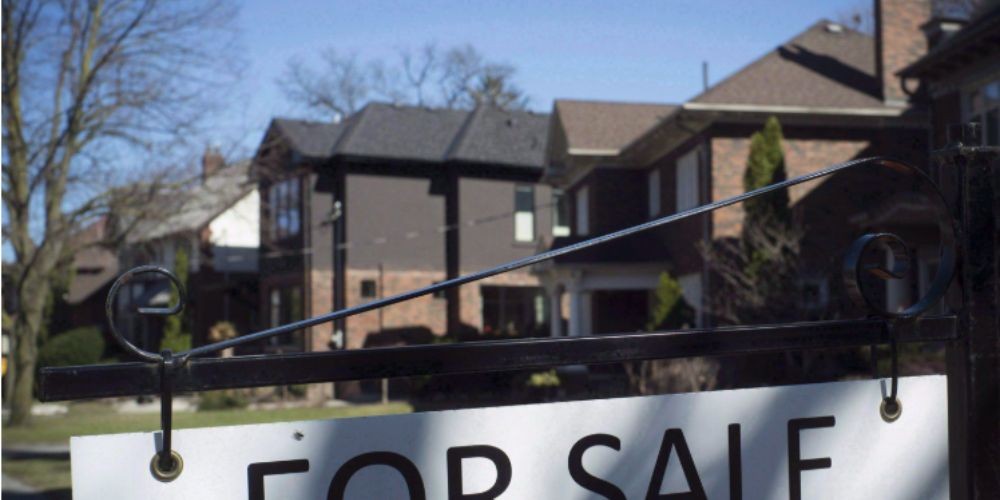
A for sale sign is shown in front of west-end Toronto homes Sunday, April 9, 2017. THE CANADIAN PRESS/Graeme Roy
A new report indicates that Ontario’s housing market is likely to see a “modest” improvement next year as favorable economic conditions encourage buyers to jump back in, although higher borrowing costs might limit the rebound.
Desjardins senior economist Kari Norman pointed out that the province’s housing market “is in the midst of a striking contradiction.” Her report labeled the market as “weak” despite better affordability, increased buyer options, and improved rental conditions.
The forecast predicts existing home sales will increase nearly five percent in 2027 compared to this year, driven by falling prices, rising disposable incomes, supportive policies for first-time buyers, and some release of pent-up demand.
However, activity will still fall short of long-term averages, the report noted. Balanced market conditions should result in an average price growth of 2.4 percent next year.
🎧 Local news stories that matter most to you
Subscribe on Spotify, Apple Podcasts and wherever you get your podcasts to get notified of new episodes every day.
The analysis mentioned that the interest rate environment will “likely remain challenging.”
“Home prices are down and at the same time, over the last several years, household income has risen,” Norman said in an interview.
“On the other hand, interest rates went up steeply coming out of the pandemic and they have come down but not to the levels that we saw.. early in the pandemic when interest rates were rock-bottom levels.”
Norman anticipates two near-term rate hikes by the Bank of Canada, including one later this month when the central bank is expected to announce its next rate decision. The bank’s key policy rate has been set at 2.25 percent since October 2025.
Rate hikes could restrict affordability improvements from recent home price drops and increasing disposable incomes, according to Norman.
“That feeds directly into variable rate mortgages,” she said.
“Bond rates have already started to rise and that has affected fixed mortgage rates as well as costs for developers who need financing to start new projects.”
The report forecasts housing starts in Ontario will climb around six percent to almost 65,000 units in 2027 – still more than 30 percent below levels seen during 2021 and 2022. The main driver will be rental construction while condominium starts are also predicted to rise slightly.
The report indicated that ground-oriented housing starts should ease slightly in 2027 but remain historically weak.
With new condo and purpose-built rental completions adding supply during a time when population growth is likely to be slow, it stated rental conditions should stay relatively balanced. It estimates average rents will increase about 1.4 percent even though long-term tenants might face rent hikes despite lower asking rents.
Norman emphasized two key factors from 2026 that could impact her outlook for next year. She mentioned risks including ongoing trade tensions between Canada and the United States along with inflationary pressures linked to rising global oil prices due to conflict in the Middle East.
Both issues could drive costs higher across various sectors leading further inflation and increased borrowing costs.
“And as interest rates go up it becomes more expensive for both developers to finance new construction and for potential homebuyers to purchase homes,” she said.
This report by The Canadian Press was first Oct. 21, 2026.
What do you think of this article?
Source link