





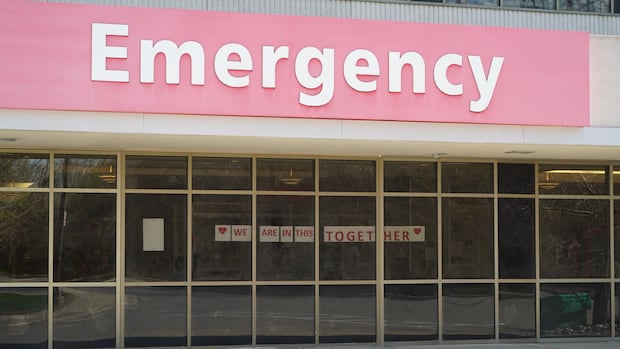
A new report shows alarming levels of burnout in emergency rooms, revealing that one in ten emergency physicians is leaving the profession, with many more cutting back their hours.
The findings, part of a study released Monday in the Canadian Medical Association Journal, resonate with Peter Bergmanis, co-chair of the Ontario Health Coalition’s London chapter and a retired orderly attendant.
He described the daily challenges faced by ER staff in London as a “circle of pain and agony.”
“You can picture what it would feel like if you could never get a moment of rest,” he said. “You can’t feel like you’ve accomplished a full day’s work without having to cut corners.”
“You get this sense of shell shock where you become numb to the plight of others, which is not an ideal scenario for a physician or healthcare worker.”
Peter Bergmanis is the co-chair of the Ontario Health Coalition’s London chapter, and a retired orderly attendant in London hospitals. (Matthew Trevithick/)
Dr. Adam Dukelow, who serves as the integrated vice president of medical and academic affairs at St Joseph’s Health Care London and London Health Sciences Centre (LHSC), stated that both hospitals are actively trying to tackle this issue.
Dukelow understands the pressures that ER workers face due to human resource shortages, insufficient long-term care beds, and an increasing aging population needing assistance.
“Unfortunately, conditions are often less than ideal where there’s not enough space and not enough people to provide the care in the way that you’d like,” he said.
“And that can cause moral injury on all types of healthcare providers.”
In response, LHSC and St. Joseph’s have established a new position for physician wellbeing lead, tasked with ensuring resources are available for staff experiencing burnout. He also mentioned they’re exploring ways to prevent burnout from occurring initially.
“It’s a shared challenge that we’re approaching and it does make me optimistic that we will improve the situation we’re in, but I’m also realistic in that the demands of our healthcare system will continue to grow as our population ages.”
Systemic Change Is Also Needed
Dr. Rebecca Hicks, president of the Ontario Medical Association believes initiatives focused on physician wellness are part of finding solutions.
However, she emphasizes that broader changes are necessary too.
“What we really need is an ability to change how things are being inputted and how things are being outputted from the emergency department to make it a more sustainable place,” she said.
“There are real systemic things that we could be doing to lower the temperature and make things simpler.”
Dr. Rebecca Hicks is the president of the Ontario Medical Association. (Submitted by the Ontario Medical Association)
The problem isn’t that healthcare workers “can’t hack it,” she stated. Instead, it’s about how “the system is making it impossible for people to sustain their practice in this field.”
“When the issue is a systemic one, there’s no amount of resiliency that will keep our workforce healthy and whole.” p >
Focusing on physician wellness along with better scheduling practices while ensuring access to resources will help temporarily. p >
But there also needs to be advocacy for collaboration with government officials aimed at creating those systemic changes needed for sustainability within healthcare.
‘The Chickens Are Coming Home To Roost’
The state highlighted in emergency rooms through this report reflects issues building over decades according to Bergmanis.
“It was just very evident that with all the restructuring taking place citywide coupled with lost supports and financial resources over time; now it’s clear we’re facing consequences,” he explained.
Bergmanis pointed out severe cuts made throughout London’s hospital bed availability since his career began back in 1980s along with staffing shortages and closures such as London Psychiatric Hospital contributing factors.
The first step toward addressing burnout would involve conducting an accurate bed capacity study-something missing from discussions for years now, b > i >he remarked. b > i >
“Until we finally get a handle on how many beds we really need and start building more capacity around them; we’ll struggle tackling ER-related issues effectively.” b > i >
Source link