




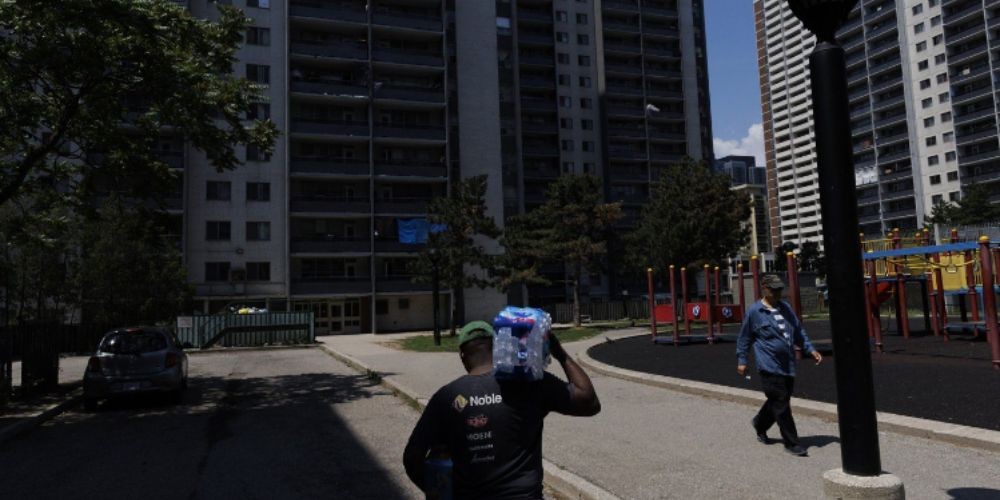
A man carries a case of water bottles between the high rises of St. James Town in Toronto, Wednesday, July 5, 2023. THE CANADIAN PRESS/Cole Burston
Landlords in downtown Hamilton will soon have new rules to help keep renters safe from uncomfortable indoor temperatures during summer after local councillors supported an innovative pilot program in Ontario.
This pilot will require landlords in Ward 2 of the city, where many residents rent their homes, to ensure that at least one room in each rental unit stays below 26 C, which is a limit acknowledged by Health Canada.
The outcomes are expected to be closely monitored by other cities like Toronto, which are exploring ways to safeguard renters against rising heat levels caused by climate change.
🎧 Local news stories that matter most to you
Subscribe on Spotify, Apple Podcasts and wherever you get your podcasts to get notified of new episodes every day.
The findings from this pilot are anticipated to guide staff recommendations coming out in early 2029 regarding how to implement the bylaw across all of Hamilton.
“We recognize the significance of addressing the impacts of extreme heat on Hamilton residents and want to take a thoughtful approach to implementing this groundbreaking bylaw,” Mike Zegarac, the interim city manager, said in a statement.
This pilot marks the first instance where an Ontario city has voted to hold landlords accountable for maintaining comfortable temperatures within rental units during hot months. The health committee for the city initially tasked staff with developing a maximum temperature regulation back in 2023.
While Ontario’s tenant laws mandate landlords provide heating for apartments, there’s no requirement for keeping them cool during summer-something advocates argue is becoming less acceptable as climate change brings more frequent and severe heat waves throughout the province. According to models based on current climate strategies, Hamilton could see about an additional 25 days above 30 C by mid-century.
Toronto has also instructed its city staff to create a similar regulation by next summer.
The Hamilton pilot will kick off next year and continue until September 2028. Landlords can request exemptions if they can demonstrate structural or physical limitations preventing compliance or if meeting requirements would necessitate construction or demolition work. Additionally, tenants may choose not to participate.
One concern raised is that this pilot might influence rent increases sought by landlords aiming to cover costs related to air conditioning installation. A report highlighted that there’s a general lack of steady funding options available for property owners needing retrofits.
Recent updates to provincial regulations allow tenants the right to install air conditioners and let landlords pass along extra utility costs through seasonal rent hikes; however, these changes don’t establish access to cooling as a basic standard.
Tenant and environmental groups argued that this initiative doesn’t go far enough. They suggested it should at least extend into other downtown wards and apply citywide before summer 2028; this was stated in a written submission co-signed by ACORN Hamilton, Environment Hamilton and the Canadian Environmental Law Association.
On the other hand, a landlord organization requested that any decision be postponed for further study. The Hamilton and District Apartment Association expressed in their submission that there was “no need to rush this decision.”
This report by The Canadian Press was first Oct. 8, 2026.
What do you think of this article?
Source link