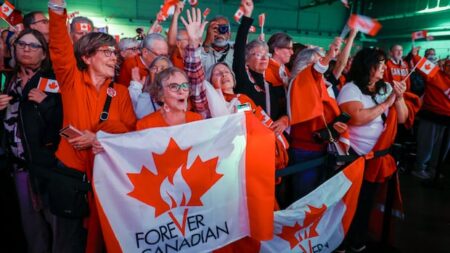





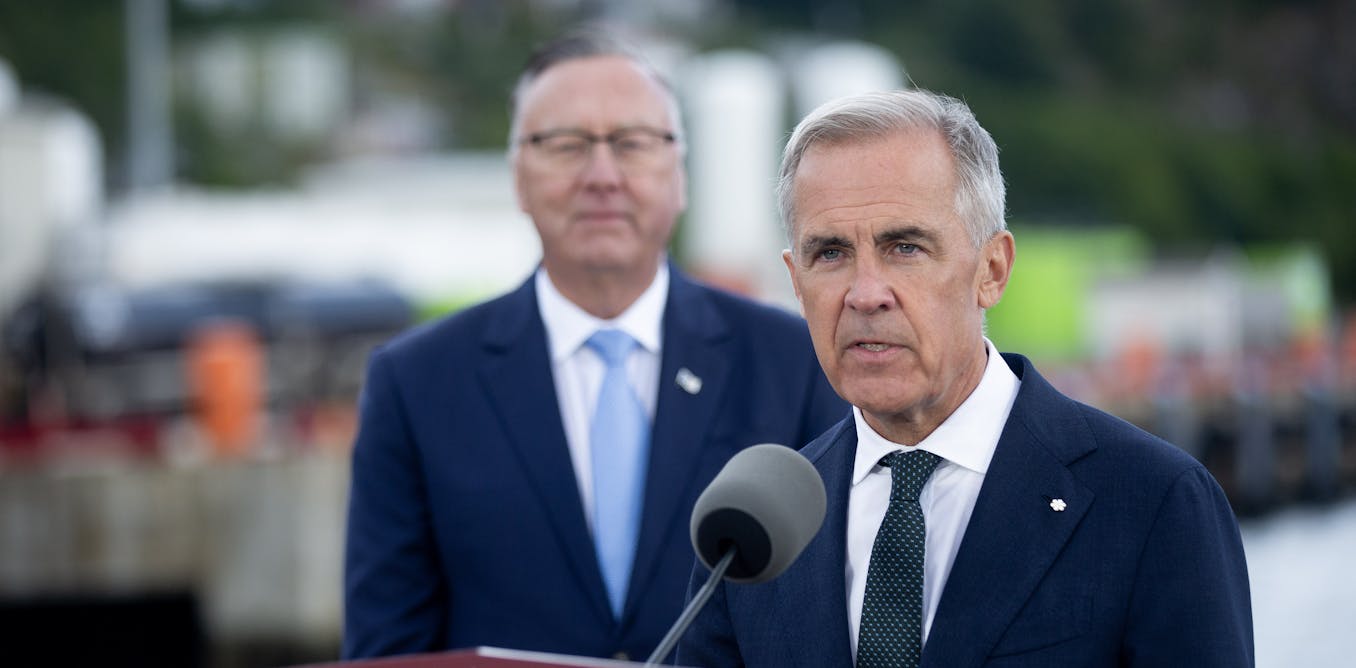
In March 2025, just a month before Canada’s federal election, Conservative Leader Pierre Poilievre accused Mark Carney of copying his policy ideas. Not long after, Carney emerged as a Liberal prime minister that Conservatives could support, adopting Conservative policies while seemingly reversing Justin Trudeau’s legacy.
The Carney administration has taken cues from the Conservative playbook: using brand politics similar to Stephen Harper’s government strategy from 2006 to 2015.
Domestic brand politics connect political party agendas with national identity through rhetoric, visuals, and symbolism. They create the perception that there’s little distinction between the ruling party, the state, and Canadian identity.
Similar strategies
In 2007, I pointed out that Harper’s Conservatives aimed to remind Canadians that a non-Liberal regime was in charge after over ten years of Liberal governance.
Public servants were directed to use “Canada’s new government” instead of “government of Canada.” A scientist lost his job (but was later reinstated) for poking fun at this phrase.
Later on, public servants were instructed to refer to it as the “Harper government,” showcasing what became known as the Harperization of government communications.
Stephen Harper delivers a speech to supporters during a campaign stop during the 2011 election in Niagara Falls, Ont. THE CANADIAN PRESS/Adrian Wyld
Carney took office almost 18 months ago, yet press releases from his office still mention “Canada’s new government.” The meaning of this phrase has shifted from “not Liberal” during Harper’s time to “not Trudeau Liberal” now under Carney, who seems eager to distance himself from his predecessor’s legacy.
This situation is reminiscent of Paul Martin Jr.’s less successful effort to differentiate his brand from Jean Chrétien’s Liberal leadership.
From colours to slogans
The websites during Harper’s administration showcased a blue shade similar to that used by the Conservative Party while downplaying Canada’s official red in federal branding.
In 2008, “True North Strong and Free” appeared both on the Government of Canada portal and on the cover of the Conservative election platform that year. By 2014, promotional material for Canada’s 150th anniversary employed language akin to the Conservative platform.
“Canada Strong,” which is central to Carney’s campaign for the upcoming election in 2025, plays a significant role in his government’s messaging. It was also used as the title for their budget and appears across various initiatives – from attracting skilled workers to establishing a sovereign wealth fund – blurring distinctions between party politics and state functions.
Read more: Canada’s new sovereign wealth fund is ambitious, but its design raises questions
The Harper government’s “royal rebrand” emphasized Canada’s connections with the British monarchy and showcased Conservative support for it. They promoted Canadian history while launching campaigns like one commemorating the War of 1812; this included “The Fight for Canada,” which was humorously criticized by The Mercer Report television series.
Carney has similarly highlighted these ties in promoting Canadian sovereignty by inviting King Charles to deliver the Speech from the Throne. His government continues using British spellings in key documents like the upcoming Economic Update for 2026-a move many Canadians appreciate despite calls from linguists advocating for Canadian spellings.
The perils of brand politics
A brand falters when its promises aren’t fulfilled or no longer align with its values or if there’s confusion about what it stands for.
For political brands specifically, mere advertising and symbolism can’t make up for lost trust. A brand politics approach didn’t save Harper’s Conservatives during their downfall in the 2015 federal election despite attempts at positioning themselves as Canada’s “natural governing party.”
The Liberals triumphed because Conservative messaging clashed with Canadian perspectives on diversity, rights issues regarding Syrian refugees and efforts made toward engaging new Canadians.
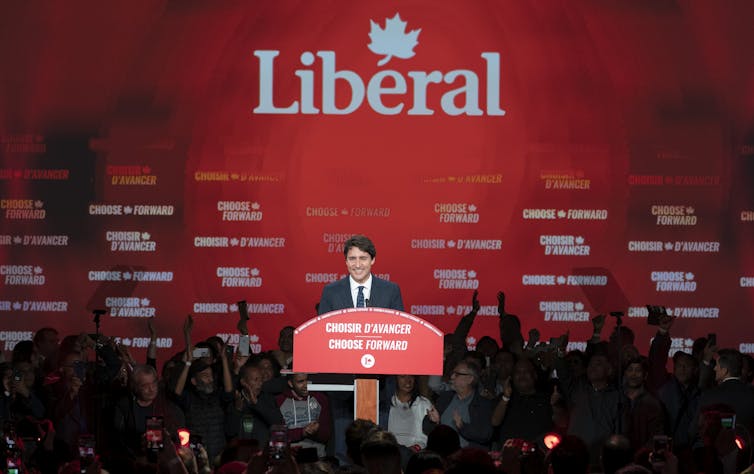
Justin Trudeau delivers his victory speech in Montréal in 2019 after being reduced to a minority government. THE CANADIAN PRESS/Paul Chiasson
The recent threats by U. S. President Donald Trump regarding tariffs-now set with an updated deadline-have stirred urgent negotiations with Canada facing intense scrutiny due its claim that “without us [the U. S.] there’s no way [Canada] can survive.”
If Carney fails on delivering his commitment that “Canada is not for sale,” he might see results similar to those faced by Harper’s administration.
Read more: Why Gordie Howe’s elbows are Canada’s answer to Donald Trump
Carney may be less assertive than people think regarding these matters; public trust towards Brand Carney is beginning to fade away. Polls indicate decreasing confidence among Canadians about his capability for striking favorable deals amid challenges posed by both Trump and domestic expectations.
At present some provinces have asserted they will dictate when or if they lift restrictions against American alcohol sales rather than leaving this decision solely up to Ottawa.
Read more: Trump’s new tariffs give Ontario and Québec the perfect excuse to sell their unsold American booze
Results matter
Lackluster branding could lead directly into declining popularity levels; Carney pursuing Fortress North America while promising that “Canada Strong will help make America great again” has already put pressure on his image significantly.
The label “Concession Carney,” supported by Poilievre urging him towards tangible outcomes instead of merely concessions could undermine claims made ahead leading up until elections stating how “the government of Canada will not accept a bad deal.”
A core aspect tied deeply within managing crises effectively shapes perceptions around what makes up Carney’s political persona. His communications consistently highlight global uncertainties but emphasize how under their governance: “In a more dangerous and divided world , Canada ’s new government focuses on actions we control : building stronger , independent , sustainable country. ”
However , reliance only upon symbolic gestures along side communication must meet certain limits ; actual outcomes prove essential – evident through Rachel Boynton ‘ s documentary detailing Bolivia ‘ s presidential race back then called Our Brand Is Crisis. p >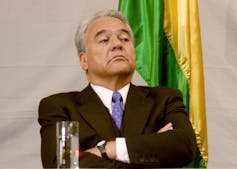 Presidential candidate Gonzalo Sánchez de Lozada is seen during a news conference in La Paz , Bolivia , July ,2002. (AP Photo/Pablo Aneli)
In crafting winning strategies advisers helped Gonzalo Goni Sánchez de Lozada appear fit enough tackling economic crises head-on ; however protests erupted swiftly afterward once he failed meeting voter expectations ultimately leading him resigning swiftly thereafter.
As Boynton mentioned previously : “ The only thing about Goni that consultants thought they could sell – at least major thing – was handling economy amidst crisis moments hence film title itself.”
An important lesson arises here meant particularly geared toward understanding how individuals assess effectiveness based not merely based upon crafted personas but grounded firmly within action oriented realities itself. While there exist vast differences between countries contexts political consequences arising whenever promises made turn empty resonate widely across borders alike.
Source link