



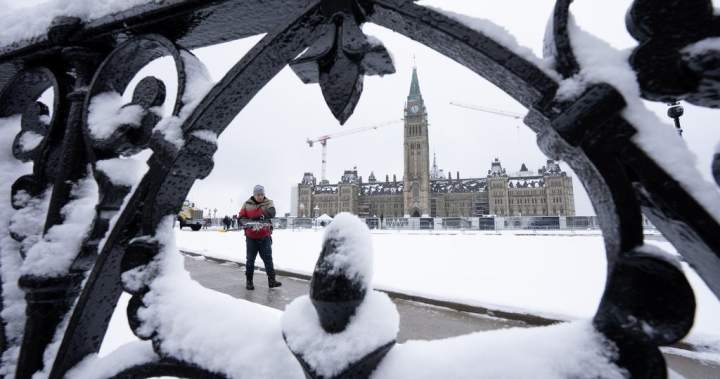
Canada’s “more narrow” rules regarding the covert influence of foreign states might let harmful actors take advantage of regulatory loopholes and meddle in local politics, warns a U. S. lawyer who focuses on political and election laws.
In early January, Ottawa introduced regulations for the Foreign Interference Transparency and Accountability Act (FITAA), which is part of the government’s reaction to claims that the People’s Republic of China, India, and other threats were interfering in Canada’s internal matters.
The law aims to establish a public registry of Canadian organizations and individuals representing foreign entities, including both governments and companies. Being listed doesn’t mean someone has done anything wrong – it just indicates that they are working on behalf of a foreign entity.
Canada has fallen behind its allies in implementing such a registry. The U. S. has maintained a similar law since World War II, while Australia set one up in 2018 and the U. K. plans to do so by 2025. Ottawa still hasn’t announced who will be appointed as the country’s first FITAA commissioner, even though this position was created in 2024.
Story continues below
Alexandra Langton, a lawyer from Covington’s Election and Political Law Practice Group based in Washington, stated that Canada’s legislation could overlook some hidden methods through which foreign states attempt to sway political opinion.
For example, the U. S. Foreign Agents Registration Act (FARA) broadly covers any activities aimed at changing policy or public opinion within the country, according to Langton. In contrast, she noted that the Canadian law “appears to be a little more narrow” as it exclusively addresses political or governmental processes rather than broader public sentiment.
More on Politics More videos
“I think it has a lot to do with the origins of FARA, as this 1938 statute that was developed in response to Nazi propaganda in the United States, where there were these seemingly U. S. persons on corners handing out propaganda promoting the Nazi government that seemed to be speaking with U. S. voices,” Langton said.

![]() A Canadian citizen has ‘died in Iran at the hands of Iranian authorities’
A Canadian citizen has ‘died in Iran at the hands of Iranian authorities’
![]() A couple seeks doctor’s note for flight as West Jet speeds up cramped seating review
The FITAA was one way for federal officials to address rising concerns over hidden foreign influence operations occurring within Canada-including alleged schemes targeting both Liberal and Conservative parties alike.
This legislation mandates individuals or organizations working on behalf of foreign entities-including governments or companies-to publicly register if they’re lobbying politicians or distributing information about “political or governmental processes,” or providing financial support aimed at influencing those processes.
If someone fails to register their influence activities they could face fines reaching $1 million or five years imprisonment-or both penalties combined. Langton remarked that these proposed penalties are “significant” compared with FARA’s maximum fine cap at $250,000.
Canadian officials estimate roughly 1,550 businesses along with 872 individuals will need registration under these new rules.
Stephanie Carvin-a professor specializing in international relations at Carleton University-expressed agreement with starting off small for Canada’s approach while suggesting updates should occur when necessary.
Story continues below
“Canada has not done this before; there’s going to be quite a learning curve,” Carvin shared during an interview.
A couple seeks doctor’s note for flight as West Jet speeds up cramped seating review
The FITAA was one way for federal officials to address rising concerns over hidden foreign influence operations occurring within Canada-including alleged schemes targeting both Liberal and Conservative parties alike.
This legislation mandates individuals or organizations working on behalf of foreign entities-including governments or companies-to publicly register if they’re lobbying politicians or distributing information about “political or governmental processes,” or providing financial support aimed at influencing those processes.
If someone fails to register their influence activities they could face fines reaching $1 million or five years imprisonment-or both penalties combined. Langton remarked that these proposed penalties are “significant” compared with FARA’s maximum fine cap at $250,000.
Canadian officials estimate roughly 1,550 businesses along with 872 individuals will need registration under these new rules.
Stephanie Carvin-a professor specializing in international relations at Carleton University-expressed agreement with starting off small for Canada’s approach while suggesting updates should occur when necessary.
Story continues below
“Canada has not done this before; there’s going to be quite a learning curve,” Carvin shared during an interview.
“I do believe there’s risk if we make too broad categories for activities covered by this legislation; we could find ourselves overwhelmed immediately.”
Carvin added since an issue like foreign interference involves many complexities no single piece of legislation can tackle every aspect effectively.
“Even if we broadened it significantly you wouldn’t capture all forms of foreign influence activity happening here-in fact addressing such serious problems requires multiple different strategies.” She concluded her statement by expressing hope for further development from Carney’s administration before improving relations with China and India too soon.”
Get daily National news
Get the day’s top news, political, economic, and current affairs headlines delivered to your inbox once a day. “In the United States we’re really concerned about addressing that and shining a spotlight on who the real speaker was there. That type of activity may not be covered by the more narrow set of influence activities addressed in the Canadian statute.” Canada is making efforts to implement its foreign influence registry as Prime Minister Mark Carney and provincial premiers look to improve ties with China and India-two nations whose intelligence agencies have sought to impact Canada’s democratic systems. Carney is currently visiting China-a nation he considers poses significant risks to Canadian national security. On Thursday in Beijing, Carney celebrated what he called a “new era” of “strategic partnership” between Canada and China. Story continues below B. C. Premier David Eby recently led a trade mission to India aimed at boosting his province’s forestry and natural resources sectors. Eby has been outspoken about how much danger he believes comes from an international crime group known as Bishnoi Gang operating within Canada reportedly with support from New Delhi. The reported this week that internal RCMP documents indicate that Bishnoi Gang is “acting on behalf of” the Indian government in Canada. Trending Now A Canadian citizen has ‘died in Iran at the hands of Iranian authorities’
 A couple seeks doctor’s note for flight as West Jet speeds up cramped seating review
The FITAA was one way for federal officials to address rising concerns over hidden foreign influence operations occurring within Canada-including alleged schemes targeting both Liberal and Conservative parties alike.
This legislation mandates individuals or organizations working on behalf of foreign entities-including governments or companies-to publicly register if they’re lobbying politicians or distributing information about “political or governmental processes,” or providing financial support aimed at influencing those processes.
If someone fails to register their influence activities they could face fines reaching $1 million or five years imprisonment-or both penalties combined. Langton remarked that these proposed penalties are “significant” compared with FARA’s maximum fine cap at $250,000.
Canadian officials estimate roughly 1,550 businesses along with 872 individuals will need registration under these new rules.
Stephanie Carvin-a professor specializing in international relations at Carleton University-expressed agreement with starting off small for Canada’s approach while suggesting updates should occur when necessary.
Story continues below
“Canada has not done this before; there’s going to be quite a learning curve,” Carvin shared during an interview.
A couple seeks doctor’s note for flight as West Jet speeds up cramped seating review
The FITAA was one way for federal officials to address rising concerns over hidden foreign influence operations occurring within Canada-including alleged schemes targeting both Liberal and Conservative parties alike.
This legislation mandates individuals or organizations working on behalf of foreign entities-including governments or companies-to publicly register if they’re lobbying politicians or distributing information about “political or governmental processes,” or providing financial support aimed at influencing those processes.
If someone fails to register their influence activities they could face fines reaching $1 million or five years imprisonment-or both penalties combined. Langton remarked that these proposed penalties are “significant” compared with FARA’s maximum fine cap at $250,000.
Canadian officials estimate roughly 1,550 businesses along with 872 individuals will need registration under these new rules.
Stephanie Carvin-a professor specializing in international relations at Carleton University-expressed agreement with starting off small for Canada’s approach while suggesting updates should occur when necessary.
Story continues below
“Canada has not done this before; there’s going to be quite a learning curve,” Carvin shared during an interview.“I do believe there’s risk if we make too broad categories for activities covered by this legislation; we could find ourselves overwhelmed immediately.”
Carvin added since an issue like foreign interference involves many complexities no single piece of legislation can tackle every aspect effectively.
“Even if we broadened it significantly you wouldn’t capture all forms of foreign influence activity happening here-in fact addressing such serious problems requires multiple different strategies.” She concluded her statement by expressing hope for further development from Carney’s administration before improving relations with China and India too soon.”


