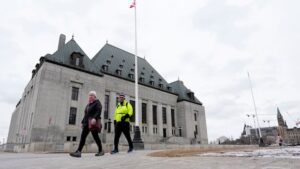


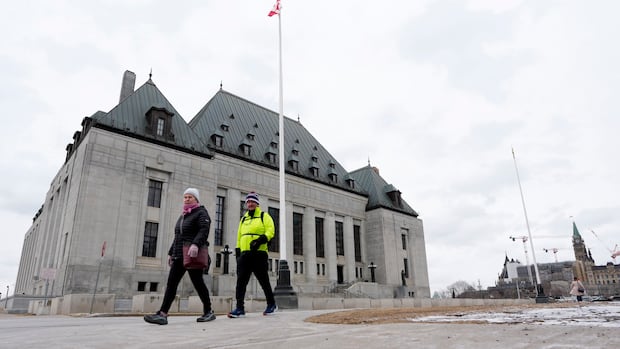
The federal government is appealing its case regarding the use of the Emergencies Act to disperse the convoy protests that paralyzed the capital city and border crossings, bringing it to the highest court in Canada.
The Federal Court of Appeal rejected the government’s earlier appeal after a lower court determined that former prime minister Justin Trudeau’s choice to implement the legislation was unlawful and violated protesters’ Charter rights.
“Our government remains committed to ensuring it has the tools needed to protect the safety and security of Canadians in the face of threats to public order and national security,” a spokesperson for Justice Minister Sean Fraser said in an email.
The Canadian Civil Liberties Association (CCLA), along with the Canadian Constitution Foundation and other organizations, initiated a legal challenge against the government’s 2022 determination that labeled the protests, known as the Freedom Convoy, as a public order emergency needing special powers for resolution.
In a 2024 ruling, retired Federal Court Justice Richard Mosley stated that the government’s decision lacked justification, transparency, and clarity.
The government appealed this ruling. During a hearing last February, its attorneys claimed that the court underestimated violence with “hindsight bias on full display.”
For some time now, officials have maintained that these protests posed a security risk and argued that their actions under the Emergencies Act were well-targeted, proportionate, and temporary.
![]() The protest brought downtown Ottawa to a standstill in February 2022. (Justin Tang/The Canadian Press)
However, the appeal court sided with Mosley’s conclusion that cabinet did not possess reasonable grounds for believing there was any threat to national security and failed to meet necessary legal criteria for invoking such an act.
“As disturbing and disruptive as blockades and convoy protests in Ottawa could be, they fell well short of a threat to national security,” wrote the three judges on the appeal court.
A number of Freedom Convoy organizers faced guilty verdicts for mischief and received conditional sentences.
A mandated inquiry led by Commissioner Paul Rouleau assessed how effectively authorities used the Emergencies Act but reached different findings compared to later legal challenges early in 2023.
Rouleau concluded that federal authorities met “very high” standards necessary for activating this act due to failures within policing methods and federalism issues.
WATCH | Federal government met threshold to invoke Emergencies Act, commissioner says:
The protest brought downtown Ottawa to a standstill in February 2022. (Justin Tang/The Canadian Press)
However, the appeal court sided with Mosley’s conclusion that cabinet did not possess reasonable grounds for believing there was any threat to national security and failed to meet necessary legal criteria for invoking such an act.
“As disturbing and disruptive as blockades and convoy protests in Ottawa could be, they fell well short of a threat to national security,” wrote the three judges on the appeal court.
A number of Freedom Convoy organizers faced guilty verdicts for mischief and received conditional sentences.
A mandated inquiry led by Commissioner Paul Rouleau assessed how effectively authorities used the Emergencies Act but reached different findings compared to later legal challenges early in 2023.
Rouleau concluded that federal authorities met “very high” standards necessary for activating this act due to failures within policing methods and federalism issues.
WATCH | Federal government met threshold to invoke Emergencies Act, commissioner says: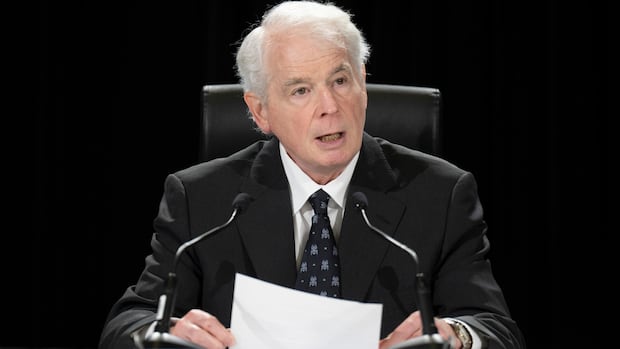 Federal government met threshold to invoke Emergencies Act: report
The final report from this inquiry established that federal authorities satisfied requirements for employing it since convoy protesters obstructed downtown Ottawa streets while blocking border routes early in 2022. Nevertheless, Commissioner Paul Rouleau criticized both police forces and Ontario’s administration for their shortcomings during these events.
What started as opposition mainly against vaccine mandates attracted thousands into downtown over several weeks; many arrived via trucks with various complaints directed at Trudeau’s administration.
Amid loud horns blaring from trucks along with barricades set up across roads caused some businesses in Ottawa temporarily close down while numerous residents reported issues related noise pollution alongside diesel exhaust fumes.
Protesters-some setting up bouncy castles or even inflatable hot tubs-countered claims about disruption saying it remained primarily peaceful overall.
Trucks also congested multiple border checkpoints including crucial trade routes linking Canada directly into United States through Windsor region located near Ontario border.
Trudeau’s administration invoked Emergencies Act on February 14th ,2022 allowing law enforcement personnel extraordinary authority needed remove arrest demonstrators halt financing connected those involved actions taken during disturbances. This marked first time since War Measures Acts replacement back around year nineteen eighty-eight when law had ever been enforced before.
Federal government met threshold to invoke Emergencies Act: report
The final report from this inquiry established that federal authorities satisfied requirements for employing it since convoy protesters obstructed downtown Ottawa streets while blocking border routes early in 2022. Nevertheless, Commissioner Paul Rouleau criticized both police forces and Ontario’s administration for their shortcomings during these events.
What started as opposition mainly against vaccine mandates attracted thousands into downtown over several weeks; many arrived via trucks with various complaints directed at Trudeau’s administration.
Amid loud horns blaring from trucks along with barricades set up across roads caused some businesses in Ottawa temporarily close down while numerous residents reported issues related noise pollution alongside diesel exhaust fumes.
Protesters-some setting up bouncy castles or even inflatable hot tubs-countered claims about disruption saying it remained primarily peaceful overall.
Trucks also congested multiple border checkpoints including crucial trade routes linking Canada directly into United States through Windsor region located near Ontario border.
Trudeau’s administration invoked Emergencies Act on February 14th ,2022 allowing law enforcement personnel extraordinary authority needed remove arrest demonstrators halt financing connected those involved actions taken during disturbances. This marked first time since War Measures Acts replacement back around year nineteen eighty-eight when law had ever been enforced before.
Source link
Federal government met threshold to invoke Emergencies Act: report
The final report from this inquiry established that federal authorities satisfied requirements for employing it since convoy protesters obstructed downtown Ottawa streets while blocking border routes early in 2022. Nevertheless, Commissioner Paul Rouleau criticized both police forces and Ontario’s administration for their shortcomings during these events.
What started as opposition mainly against vaccine mandates attracted thousands into downtown over several weeks; many arrived via trucks with various complaints directed at Trudeau’s administration.
Amid loud horns blaring from trucks along with barricades set up across roads caused some businesses in Ottawa temporarily close down while numerous residents reported issues related noise pollution alongside diesel exhaust fumes.
Protesters-some setting up bouncy castles or even inflatable hot tubs-countered claims about disruption saying it remained primarily peaceful overall.
Trucks also congested multiple border checkpoints including crucial trade routes linking Canada directly into United States through Windsor region located near Ontario border.
Trudeau’s administration invoked Emergencies Act on February 14th ,2022 allowing law enforcement personnel extraordinary authority needed remove arrest demonstrators halt financing connected those involved actions taken during disturbances. This marked first time since War Measures Acts replacement back around year nineteen eighty-eight when law had ever been enforced before.
Source link