





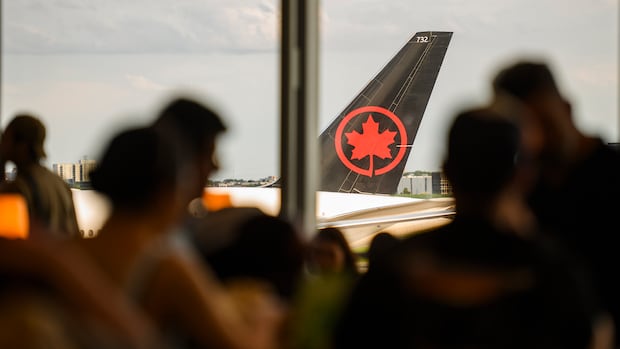
Last week, the Liberal government stirred some conversation when it brought up the idea of privatizing Canada’s airports owned by the federal government, but this isn’t a new concept.
The suggestion first appeared in November’s budget but didn’t attract much attention until it was highlighted again in last week’s spring economic update.
The document states that the government is “assessing opportunities to unlock the full value of airports in support of investments in Canada’s long-term growth, including through alternative models of ownership.”
The economic update indicates that this plan is still in its early phases and notes that the government must first pass legislation to gather necessary information “for a comprehensive evaluation of airport reforms.”
When asked about this initiative last week, Finance Minister François-Philippe Champagne emphasized that it’s all about modernizing how Canada manages its public assets.
“We really have to modernize how we look at these things to provide better services for Canadians and making sure that Canadians get the full value of these federal assets,” Champagne told reporters.
WATCH | Canada considers privatizing airports. What would that look like?:
Canada considers privatizing airports. What would that look like?
The federal government mentions exploring airport privatization as a way to free up capital. Power & Politics hears from Transport Minister Steven Mac Kinnon. Additionally, the Spring Economic Update promises increased investment into skilled trades. Sean Strickland, executive director of the Canada Building Trades Union, gives his thoughts.
The Canadian government currently owns around two dozen major airports across the nation, including key hubs such as Toronto Pearson Airport, Vancouver International Airport, Trudeau Airport in Montreal, and Calgary International Airport.
These airports are leased out to non-profit airport authorities responsible for managing their operations. According to the Canadian Airports Council, those lease agreements generate $525 million annually.
If privatization moves forward, it could create investment opportunities and lead to infrastructure improvements. However, it might also result in higher costs for travelers.
Infrastructure upgrades
John Gradek, an aviation management lecturer at Mc Gill University, points out that discussions around airport privatization aren’t new but insists it’s time to reconsider their management approach-especially regarding funding infrastructure updates.
“The whole accountability management structure for Canadian airports has to change,” he told .
Gradek believes that over $500 million earned from these airports is just a small fraction of what’s needed for proper maintenance and updates.
A traveller walks through the domestic departures level at Toronto’s Pearson International Airport on July 3, 2025. (Chris Young/The Canadian Press)
“There’s a lot of work that has to be done and the government is saying ‘We’re not going to finance it,’ while airlines claim ‘We’re not going to finance it either; we shouldn’t let our passengers foot the bill-let’s find someone else who can,'” he explained.
He argues that privatizing airports could lead to more efficient operations and quicker responses when upgrading infrastructure based on market demands.
“We need individuals running those airports who understand this isn’t just about spending money on fancy buildings; it’s about investing wisely so there’s a return,” he noted.
Privatization could attract investments from bigger players like Canada’s pension funds as well.
A few funds including the Canadian Pension Plan and Ontario Teachers’ Pension Plan have previously invested in private overseas airports.
<
Gradek suggested keeping those investments within Canada by allowing these funds to invest locally instead.
A cautionary tale from Down Under
Speaking with reporters last week, Champagne referenced Australia and Europe as examples Canada might consider for best practices regarding modernization of key infrastructure projects. p >
Australia sold off several major airports during the late 1990s and early 2000s. While they managed good sales prices at that time consumer costs increased significantly afterwards according to Rod Sims-former chairperson of Australia’s Competition and Consumer Commission.
“They removed regulation on these airports before selling them off which meant buyers had almost free rein on how they operated,” he stated during an interview with .
Sims pointed out how large countries like Canada or Australia operate their airlines almost as monopolies when there aren’t reasonable alternatives nearby.
“They’re not completely monopolies but fit most definitions,” he said.
<
Airports typically impose operating fees on airlines which then transfer those costs onto passengers. Following Australia’s privatizations Sims observed these fees skyrocketed afterward.
“In Australia taxpayers gained financially but traveling consumers paid dearly over time,” he explained.
“Whenever a government chooses profitability over service quality when selling off monopolies-the users will pay dearly down road.” He cautioned against such decisions without careful consideration towards ensuring consumer protection measures remain intact following any potential sale like caps on fee increases tied directly inflation rates along with options allowing operators apply adjustments later if necessary.” b> b> b> b> b> b> em > i > i > i > i > i > em > em > em >
Source link