




A significant immigration reform bill has officially become law in Canada, granting Ottawa the ability to cancel groups of visas en masse and imposing deadlines on asylum claims to manage immigration figures.
However, this legislation, which passed on Thursday, has raised alarms among various civil society organizations including Amnesty International, immigration attorneys, and public sector unions. They argue that it hands excessive power to the government and are committed to challenging it.
“Bill C-12 attacks the rights of refugees and migrants,” Julia Sande, a lawyer focused on privacy and migrant rights at Amnesty International Canada, shared in an interview with . “It makes it tougher for individuals to have their refugee protection claims assessed fairly, thus putting them at risk of being deported back to persecution and torture.”
She pointed out that the mass-cancellation powers “without any sort of individualized assessment” essentially amount to neglecting Canada’s international legal commitments.
Amnesty International Canada lawyer Julia Sande says the federal government may be violating its international legal obligations with its new immigration legislation. (Aloysius Wong/CBC)
Adam Sadinsky, vice-president of the Canadian Association of Refugee Lawyers, referred to C-12 as “the most significant rollback of refugee rights in more than a decade.”
He expressed confidence that this legislation “will ultimately be challenged in court regarding its constitutionality,” noting that refugee and immigration lawyers across Canada are advising clients and considering whether they have grounds for a challenge.
Sadinsky’s group is part of a larger coalition that includes the Canadian Council for Refugees, the Canadian Muslim Public Affairs Council, and public sector unions like the Canadian Union of Public Employees.
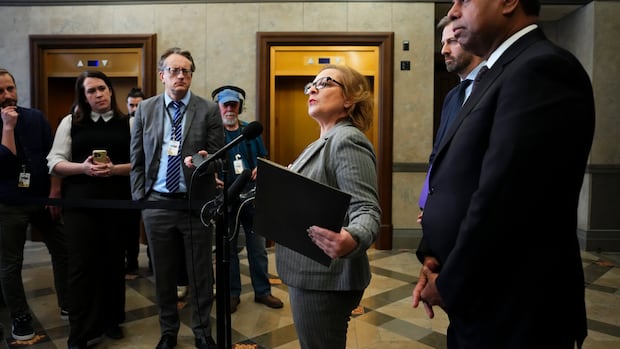
![]() Secretary of State for Combatting Crime Ruby Sahota speaks here in February about other jurisdictions like the European Union implementing time limits for asylum applications. (Justin Tang/The Canadian Press)
“People entering the country wishing to claim asylum would have an adequate one-year timeframe if their lives are at risk,” she stated.
“If someone has been living in Canada for a year-whether studying or visiting-is there really a need for them to file for refugee status? It could clog up our system. I think the answer is no,” said Kevin Lamoureux who serves as parliamentary secretary for government House leader Steven Mac Kinnon.
The bill was ultimately passed with backing from both opposition Conservatives and Bloc Québécois members.
Secretary of State for Combatting Crime Ruby Sahota speaks here in February about other jurisdictions like the European Union implementing time limits for asylum applications. (Justin Tang/The Canadian Press)
“People entering the country wishing to claim asylum would have an adequate one-year timeframe if their lives are at risk,” she stated.
“If someone has been living in Canada for a year-whether studying or visiting-is there really a need for them to file for refugee status? It could clog up our system. I think the answer is no,” said Kevin Lamoureux who serves as parliamentary secretary for government House leader Steven Mac Kinnon.
The bill was ultimately passed with backing from both opposition Conservatives and Bloc Québécois members.
![]() Conservative MP Michelle Rempel Garner responds during questions from reporters at Parliament Hill on March 23. The CPC supported C-12 during discussions. (Sean Kilpatrick/The Canadian Press)
“Canada’s asylum system should provide compassionate refuge for genuinely vulnerable individuals within numbers we can sustainably support; however Canadians believe this system shouldn’t serve as an easy way around standard immigration processes,” commented Conservative immigration critic Michelle Rempel-Garner.
NDP representative Jenny Kwan voiced similar concerns raised by coalition members.
“There’s no evidence linking how quickly someone files their claim with its legitimacy. The introduction of a one-year limit is particularly concerning,” she remarked.
Conservative MP Michelle Rempel Garner responds during questions from reporters at Parliament Hill on March 23. The CPC supported C-12 during discussions. (Sean Kilpatrick/The Canadian Press)
“Canada’s asylum system should provide compassionate refuge for genuinely vulnerable individuals within numbers we can sustainably support; however Canadians believe this system shouldn’t serve as an easy way around standard immigration processes,” commented Conservative immigration critic Michelle Rempel-Garner.
NDP representative Jenny Kwan voiced similar concerns raised by coalition members.
“There’s no evidence linking how quickly someone files their claim with its legitimacy. The introduction of a one-year limit is particularly concerning,” she remarked.
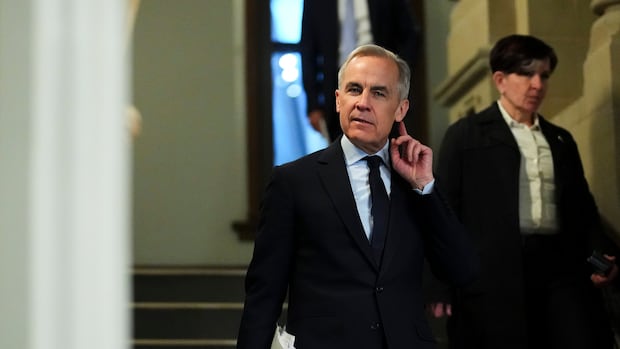 ‘We’re taking back control’ regarding immigration: Carney responded concerning auditor general’s reportPrime Minister Mark Carney faced inquiries related to integrity surrounding immigration systems after release Monday by Canada’s auditor general showing department failing keeping pace investigating individuals suspected holding fraudulent or expired student visas.
Source link
‘A dangerous path’
The coalition issued a statement warning that this bill sets “current and future governments on a dangerous path by limiting access to refugee protection in Canada [..] while enabling sharing personal information both domestically and internationally.” This law will lead to thousands of refugee claims being dismissed since it also retroactively prevents those who arrived in Canada more than one year ago from making claims with the Immigration and Refugee Board. Effective retroactively from June 24, 2020, applying to claims filed on or after June 3, 2025, this legislation is expected to result in around 19,000 applications being dismissed according to testimony from Immigration Minister Lena Diab before a Canadian Senate committee. The government has justified these mass-cancellation powers by citing potential scenarios beyond their control such as wars or pandemics. They’ve also mentioned possible fraud concerns under hypothetical circumstances. Nevertheless, internal IRCC documents reported last fall by indicated that there were worries about “country-specific challenges” stemming from fraudulent visitor visa applications originating from India and Bangladesh.Similar legislation elsewhere
During discussions in the House of Commons, Liberal MP Ruby Sahota-Secretary of State for Combatting Crime-mentioned that one-year limits on asylum claims are practiced globally including within the European Union and United States.This legislation called Charter-compliant
The Immigration Department informed through a statement claiming these new rules adhere strictly to Canada’s responsibilities under both the 1951 Refugee Convention and Canadian Charter of Rights and Freedoms. It referenced analysis conducted by Justice Department indicating limitations exist regarding information-sharing powers granted under C-12 while emphasizing decisions related to mass cancellations can only occur once cabinet agrees they serve public interest. The IRCC also reminded that individuals whose refugee claims get denied still possess rights to undergo pre-removal risk assessments. C-12 additionally progressed alongside Conservative efforts calling for parliamentary investigation into fraud associated with international student programs; stating federal authorities must examine recent auditor general findings involving potentially thousands of fraudulent cases yet unaddressed. WATCH | Carney asked about integrity surrounding Canada’s immigration system:
‘We’re taking back control’ regarding immigration: Carney responded concerning auditor general’s reportPrime Minister Mark Carney faced inquiries related to integrity surrounding immigration systems after release Monday by Canada’s auditor general showing department failing keeping pace investigating individuals suspected holding fraudulent or expired student visas.Source link