



LISTEN | The Firewall Letter – 25 years later: West of Centre31:58The Firewall Letter – 25 years later Alberta should leave the Canada Pension Plan and create its own. It ought to set up a provincial police force instead of relying on the RCMP. Twenty-five years after these ideas were presented in the “Alberta firewall” letter, they continue to be significant topics in provincial discussions today. In 2001, six notable Alberta conservatives wrote an open letter to then-premier Ralph Klein: Ted Morton, Ken Boessenkool, Andrew Crooks, Tom Flanagan, Rainer Knopff, and Stephen Harper, who was leading the National Citizens Coalition at that time. When it first came out, many dismissed it as a fringe concept that would never come to pass. But now, as Albertans prepare for a potential referendum on their future within Canada, its relevance has been renewed. This week, two of the letter’s authors – Morton and Boessenkool – chatted with West of Centre’s Kathleen Petty about how it originated and what it means for Alberta’s current situation.
The firewall’s beginnings
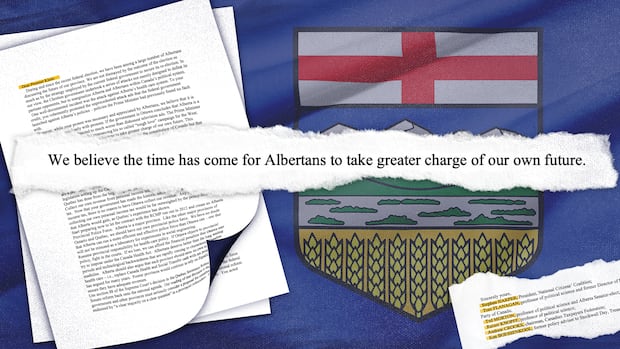
The letter appeared in January 2001, just months after Jean Chrétien’s Liberals won a third consecutive majority government in the federal election. It had been over ten years since the Reform Party formed and calls of “the West wants in” began circulating. Now some people were feeling disillusioned about having a conservative government in Ottawa that could truly represent Albertans’ voices, according to Morton. Votes on the right were being divided between the Canadian Alliance (previously known as the Reform Party) and the Progressive Conservatives. This led to discussions around what Alberta could achieve independently. “Instead of more Alberta in Ottawa, it would be less Ottawa in Alberta,” said Morton. A look at the firewall letter in the in Jan. 2021, taken from the CBC archives. (CBC) The letter directed at Klein proposed several policies including withdrawing from the CPP and creating an Alberta police force. It also suggested that Alberta should collect its own revenue through personal income tax and take greater responsibility for health care while pushing for Senate reform nationally. Some proposals already had examples elsewhere; Quebec had its pension plan and collected its own income tax revenue while also having its police force-Ontario did too. If they can do it there, why not here? Harper initiated conversations which eventually led to this letter coming together as both men recalled. This action ended up bothering Klein when he received it.Klein viewed letter as a ‘threat’
Morton believed Harper was aiming for provincial ambitions and thought this letter might serve as a “launching pad” for him to run within Alberta’s Progressive Conservatives. Klein shared similar sentiments according to Boessenkool but felt uneasy with this perspective since he was leading Alberta’s PCs at that time. <p“He came out quite aggressively against it because I think he saw it as a political threat instead of seeing it as a political opportunity,” Boessenkool mentioned. This resulted in Boessenkool and Harper traveling to Edmonton for discussions with Klein regarding their ideas while trying to reassure him about Harper’s focus being on federal matters. Klein initially rejected the concepts put forth but eventually warmed up to them later on..
2004.
Despite some assumptions when publicizing
the firewall letter,
Harper’s focus remained on federal politics.
(Tom Hanson/The Canadian Press) A few other factors discouraged support for this firewall letter; comparisons arose involving provinces where sovereignty referendums were still fresh memories among people.
“I think even though separatism was not on anyone’s agenda,
the fact that we kept mentioning Quebec’s already doing this,
it made it easy for critics
to say,’oh, this is apseudo or crypto separatist initiative’, whichitwasn’t,”Mortonsaid. Some individuals also reacted negatively towards using “firewall”-a term not included eveninitsfirstdraftaccordingto Boessenkool. “The word ‘firewall’ really waswhatpeoplepickedup. And sortof th toneofthewordiswhatpeopleobjectedto,”hesaid.
A look at today’s climate
The feelings surrounding western alienation along with complaints about Ottawa stepping over boundaries have persisted throughout subsequent decades. Finding waysto keep Ottawa outof Albertan affairs has continuedasatraditional sentiment, the mostrecently voicedby Premier Danielle Smithandher United Conservative Party government. The upcoming October referendum is generating expectationsamong Albertans where separation mightbeupfordiscussionornot. No questions regarding pulling outof CPPare plannedforvotethisfallthough Alberta Next panelhasrecommendedbringingthatinto province-wide voting discussions as well.”Pullingoutofthe Canada Pension Planwasabig advantagefor Albertain2001butover timethosebenefits havedecreased,”Boessenkoolsays. This change arises due tothe stateofprovincefinancesincomparisonwith2001andalthoughit’sstillyounger thanotherprovinces, theworkforceisnotasyoungas25yearsagoanymore.” He describessomecurrentreferendumquestions assimilar TOananti-firewall. Insteadprotectingagainst Ottawainterventiontheyrequirejustthat.ALBERTA PREMIER DANIELLE SMITH ANSWERS QUESTIONS AT A NEWS CONFERENCE IN CALGARY ON FEBRUARY 20TH ,2026, A DAY AFTER ANNOUNCING PLANS FOR A REFERENDUM IN OCTOBER.(TODD KOROL/THE CANADIAN PRESS)
} almost everyquestionthat Danielle Smith is asking inforthcomingreferendummattersissomething she can’tactually implementas Alberta’spremier, says Boessenkool.”If shereallywants todo these things, she should quit her joband takeover Pierre Poilievre’spositionandrunnationally.” Many Albertanshavegrievancesagainstfederalpolicies. Morton argues howeverthatseparationdoesn’t addresscentralissues.”Whatwe’reseeingnowseemsridiculous; one sideclaims‘let’sleave Canada,’whileanother insists‘no, no, we love Canada.’” “Thetruth liesinbetweenthoseextremes. Ithink80percentof Albertansfindthemselvessomewherewithinthat spectrum.”Source link

Related Posts