




Ontario Construction News staff writer
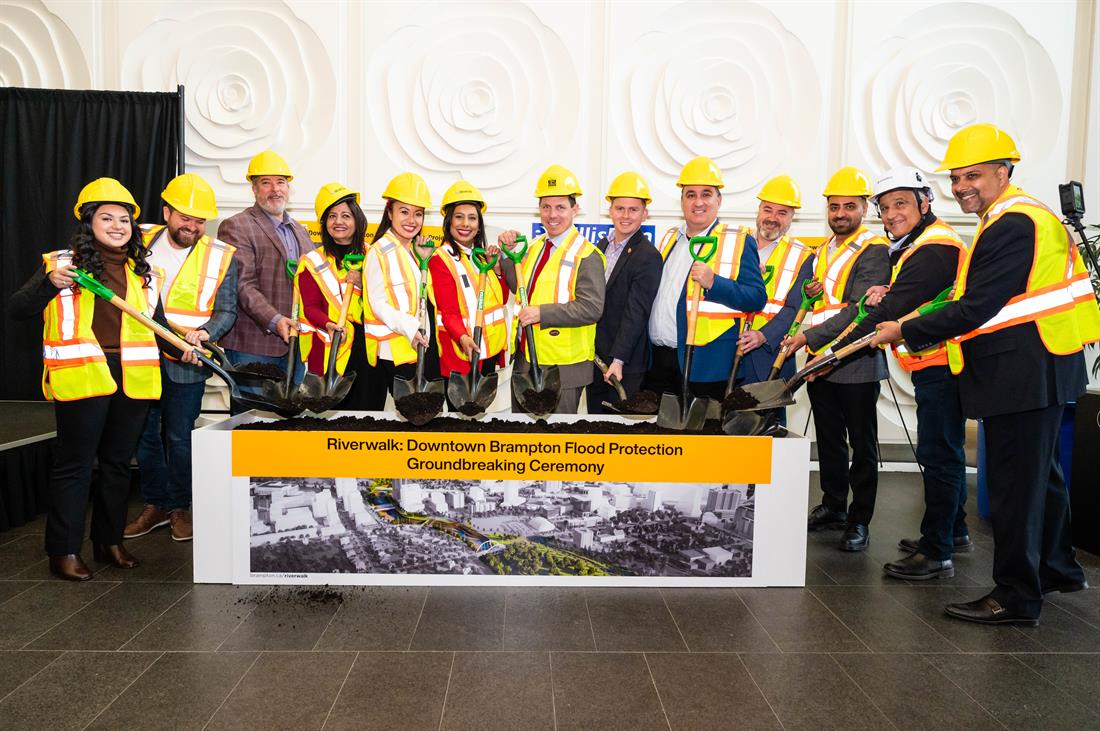
The City of Brampton has started construction on the Downtown Brampton Flood Protection Project, signaling the beginning of the first phase of its long-term Riverwalk plan.
This work aims to safeguard the downtown area from potential flooding and eliminate ongoing redevelopment challenges in the city’s historic center.
AECOM is in charge of the detailed design for this project. The city is also looking to hire a construction manager: Brampton issued RFP 2025-105 on July 11 and closed bids on Oct. 2, but a contract award hasn’t been announced yet.
Initial site preparation is expected to commence in the next few weeks. Full construction is set to kick off in early 2026 and run through spring 2028, marking the completion of the first phase of Riverwalk.
The flood protection system will upgrade and expand infrastructure along Etobicoke Creek. When finished, this new system should surpass Ontario’s regulatory flood standards and handle storm events comparable to or worse than Hurricane Hazel, including rainfall of up to about 285 millimeters over a span of 48 hours.
Downtown Brampton sits within the Etobicoke Creek floodplain, an area that has historically been prone to severe flooding. The worst incident occurred in March 1948 when over 1.8 meters of water flooded the intersection at Main and Queen Streets, causing nearly $500,000 in damage and leading to the construction of a diversion channel completed in 1952.
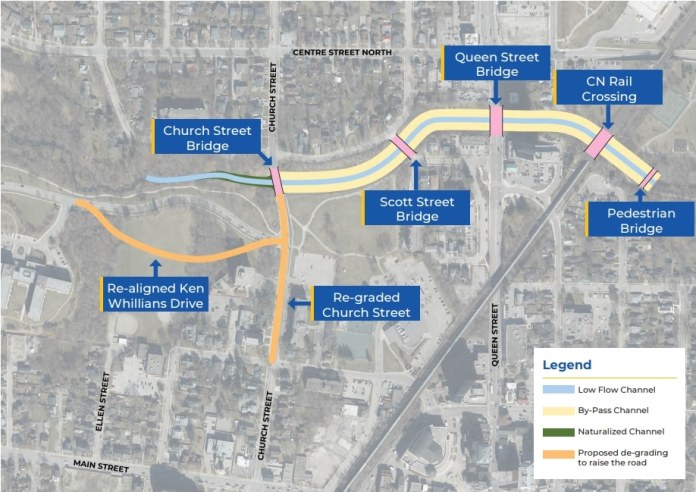
Phase One of Riverwalk will deepen and widen the creek channel to lessen flood risks and unlock new development opportunities. The city claims these improvements will support growth that could accommodate around 17,700 residents and create approximately 23,800 jobs, including about 2,200 construction roles. Additionally, it’s expected that this project will allow for 3.6 million square feet of residential, commercial, and retail space.
Phase Two is set to begin after 2030 and will bring an Urban Design Master Plan introducing new parks, public spaces, trails, homes, and business districts along the reconfigured corridor.
This initiative has backing from all three levels of government as well as the Toronto and Region Conservation Authority. Ottawa is contributing over $38.8 million through the Disaster Mitigation and Adaptation Fund while Ontario is providing nearly $50 million via its Municipal Housing Infrastructure Program.
Source link