




The Victoria Day long weekend is often seen as the kickoff for gardening season, and this year, gardeners have fresh insights on which plants might thrive outdoors in their region.
“The main reason for that is the climate is changing,” said John Pedlar, research scientist with the Canadian Forest Service.
Pedlar is among the researchers who recently refreshed Canada’s “plant hardiness zone map” for the first time in ten years.
This tool helps nurseries and everyday gardeners figure out which plants are most likely to survive in a specific climate.
The information comes as a map that considers factors like rainfall, winter temperatures, and wind conditions.
Natural Resources Canada (NRCan) the updated data in July last year.
Canada’s updated plant hardiness zone map. In eastern Ontario, places like Almonte increased by a full zone, while areas like Kemptville and Smiths Falls rose by half a zone. Ottawa and Kingston remained in zone 5A. (Natural Resources Canada)
Plant hardiness zones are regions that generally have “similar climate conditions,” Pedlar noted. They range from a harsh 0A, where hardly anything grows, to the flourishing 9A.
“Since plant survival and climate are so closely intertwined, it stands to reason those areas also have fairly similar plant composition as well,” he added.
While western Canada saw the largest changes on the map, places like Almonte in eastern Ontario increased by a full zone.
Other growing areas around communities such as Kemptville and Smiths Falls went up by half a zone.
This means gardeners might now be able to grow cherries, pears, and even some kinds of apricot that previously wouldn’t have survived, Pedlar mentioned.
Ottawa and Kingston did not change, staying in Zone 5A.
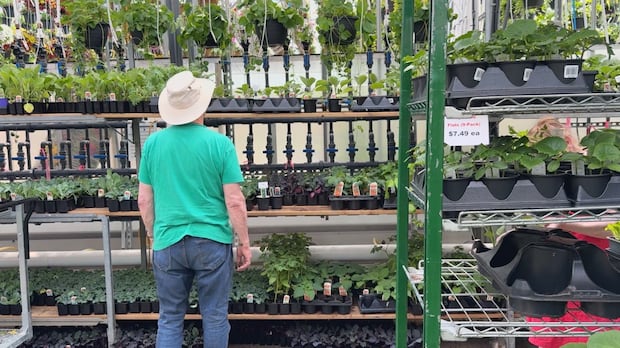
Colin Matassa is the manager of Robert Plante Greenhouses, and says it’s easy to figure out which plants are rated for which plant hardiness zone. (Cameron Mahler/CBC)
“We wanted to find a balance between the look that we were aiming for … but also being true to the climate that we live in,” Dobson remarked.
>John Pedlar is a research scientist with Natural Resources Canada. He and his colleagues updated Canada’s “plant hardiness zone map,” expanding the list of plants that will grow in certain regions. (Natural Resources Canada)> While these updated hardiness zones open new doors for gardeners to explore different options,
Pedlar stated it also mirrors larger trends related to climate change.
For now though,
the alterations made on this map aren’t drastic.> “It doesn’t mean Ontario is suddenly going to start growing bananas.”
Source link
Gardeners and greenhouses adapting
At Robert Plante Greenhouses in east Ottawa, staff has had to update inventory regularly to keep pace with changing climate conditions. “There are more and more types of plants that you can plant for sure in our area,” said manager Colin Matassa on Sunday. Matassa mentioned that staff members know which plants will thrive in each zone but it’s also straightforward for gardeners to find out themselves. “In all our perennials, shrubs and trees, they all have information tags on them. It’ll say the zone on the back, whether it’s Zone 5, Zone 4 or Zone 3,” he explained.> The May long weekend tends to be their busiest week at the greenhouse according to Matassa.> This past Sunday Ottawa’s Christine Dobson was among many browsing through their selection of planters and perennials after recently redesigning her family’s yard.“We wanted to find a balance between the look that we were aiming for … but also being true to the climate that we live in,” Dobson remarked.
>John Pedlar is a research scientist with Natural Resources Canada. He and his colleagues updated Canada’s “plant hardiness zone map,” expanding the list of plants that will grow in certain regions. (Natural Resources Canada)> While these updated hardiness zones open new doors for gardeners to explore different options,
Pedlar stated it also mirrors larger trends related to climate change.
For now though,
the alterations made on this map aren’t drastic.> “It doesn’t mean Ontario is suddenly going to start growing bananas.”
Source link