


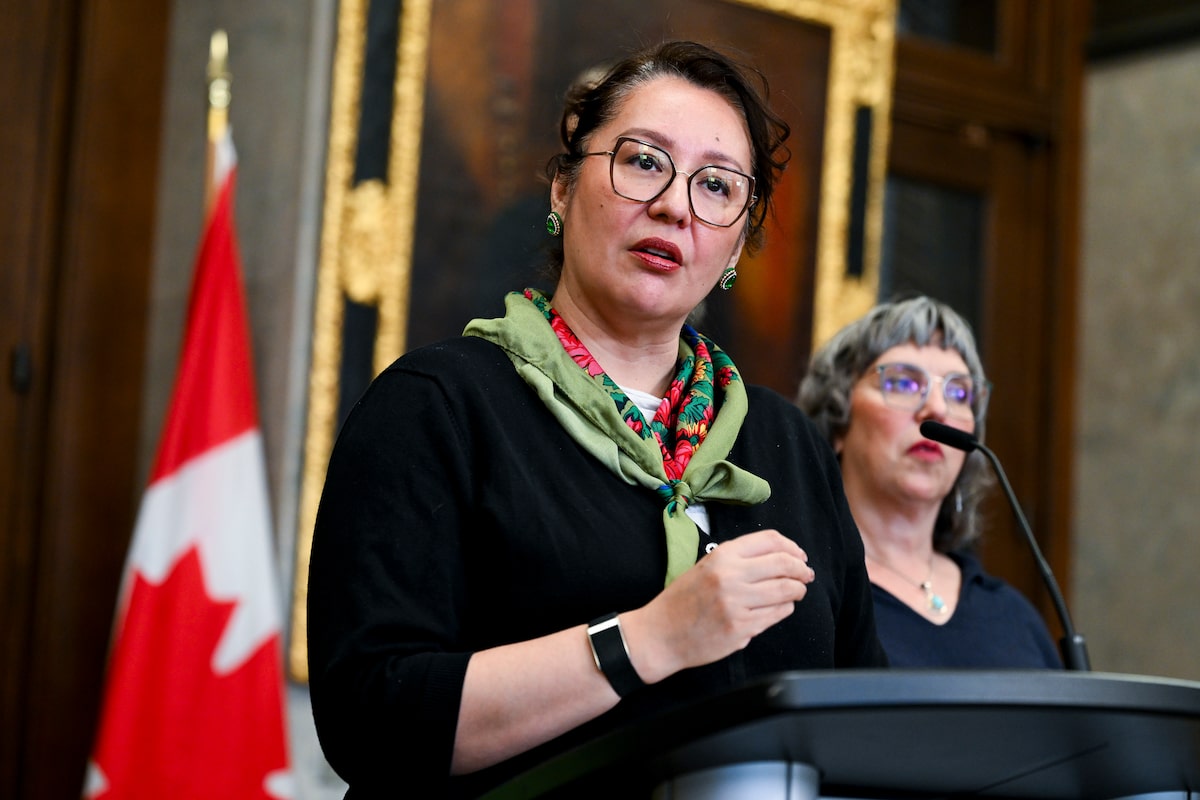
Open this photo in gallery: Minister of Indigenous Services Mandy Gull-Masty speaks on Parliament Hill in Ottawa on May 8. Spencer Colby/ First Nations across Ontario are set to start receiving financial support at the end of May from an $8.5-billion agreement with the federal government aimed at helping them take back control of their child welfare systems. However, some chiefs worry there might be delays since Ottawa requested a judicial review regarding part of the settlement just last week. The Ontario Final Agreement will come into effect on May 29, with $8.5 billion earmarked to be distributed over the next nine years. This could also pave the way for similar agreements in other areas of Canada aiming to finalize their own arrangements by this fall. This agreement is the outcome of extensive negotiations involving Indigenous Services Canada, the Assembly of First Nations, Chiefs of Ontario-representing 133 First Nations-and Nishnawbe Aski Nation, which advocates for 49 mostly remote communities in Northern Ontario. In March, the Canadian Human Rights Tribunal approved this agreement but noted that two out of the 133 First Nations would need separate deals because they opposed the OFA. The federal government has requested a judicial review concerning that specific point. The OFA is founded on a national agreement that was negotiated and ultimately turned down by the Assembly of First Nations in 2024. The federal government committed $47.8 billion for First Nations nationwide to reform their child welfare systems following a CHRT order from 2016 aimed at eliminating discrimination against First Nations children and families through inadequate funding. Federal government commits $1.55-billion for First Nations children “Long-term reform of First Nations Child and Family Services means fewer children taken from their families, stronger communities, and systems designed and led by First Nations themselves. This work will change lives – not just for this generation, but for generations to come,” Minister of Indigenous Services Mandy Gull-Masty said in a December press release. Leaders from Ontario’s First Nations have welcomed the tribunal’s approval of the agreement but express concern that Ottawa’s request for a judicial review may delay progress. Ontario Regional Chief Abram Benedict described this legal move as an unfortunate setback that could postpone implementing the agreement and urged Canada to “uphold this crucial commitment.” “We will continue to navigate these challenges and hold the Minister accountable to ensure the OFA is implemented for our children and families,” Ontario Regional Chief Abram Benedict said in a joint statement with Nishnawbe Aski Nation Grand Chief Alvin Fiddler earlier this month. Ms. Gull-Masty informed reporters last week that this court filing won’t affect the starting date for the agreement set on May 29. “This is going to be something historic for First Nations. I really want to give them the limelight and give them an opportunity to speak about it,” Minister Mandy Gull-Masty mentioned last week regarding this unprecedented agreement. The minister explained that their request pertains specifically to a “narrow” judicial review related to an order by CHRT exempting two particular First Nations from participating in OFA. “I’m aiming for a comprehensive agreement; that’s my goal-but one that reflects what these communities truly need,” Ms. Gull-Masty stated. Indigenous leaders say they’re an afterthought in Ottawa’s new sovereign wealth fund

Views: 614
Open this photo in gallery: Minister of Indigenous Services Mandy Gull-Masty speaks on Parliament Hill in Ottawa on May 8. Spencer Colby/ First Nations across Ontario are set to start receiving financial support at the end of May from an $8.5-billion agreement with the federal government aimed at helping them take back control of their child welfare systems. However, some chiefs worry there might be delays since Ottawa requested a judicial review regarding part of the settlement just last week. The Ontario Final Agreement will come into effect on May 29, with $8.5 billion earmarked to be distributed over the next nine years. This could also pave the way for similar agreements in other areas of Canada aiming to finalize their own arrangements by this fall. This agreement is the outcome of extensive negotiations involving Indigenous Services Canada, the Assembly of First Nations, Chiefs of Ontario-representing 133 First Nations-and Nishnawbe Aski Nation, which advocates for 49 mostly remote communities in Northern Ontario. In March, the Canadian Human Rights Tribunal approved this agreement but noted that two out of the 133 First Nations would need separate deals because they opposed the OFA. The federal government has requested a judicial review concerning that specific point. The OFA is founded on a national agreement that was negotiated and ultimately turned down by the Assembly of First Nations in 2024. The federal government committed $47.8 billion for First Nations nationwide to reform their child welfare systems following a CHRT order from 2016 aimed at eliminating discrimination against First Nations children and families through inadequate funding. Federal government commits $1.55-billion for First Nations children “Long-term reform of First Nations Child and Family Services means fewer children taken from their families, stronger communities, and systems designed and led by First Nations themselves. This work will change lives – not just for this generation, but for generations to come,” Minister of Indigenous Services Mandy Gull-Masty said in a December press release. Leaders from Ontario’s First Nations have welcomed the tribunal’s approval of the agreement but express concern that Ottawa’s request for a judicial review may delay progress. Ontario Regional Chief Abram Benedict described this legal move as an unfortunate setback that could postpone implementing the agreement and urged Canada to “uphold this crucial commitment.” “We will continue to navigate these challenges and hold the Minister accountable to ensure the OFA is implemented for our children and families,” Ontario Regional Chief Abram Benedict said in a joint statement with Nishnawbe Aski Nation Grand Chief Alvin Fiddler earlier this month. Ms. Gull-Masty informed reporters last week that this court filing won’t affect the starting date for the agreement set on May 29. “This is going to be something historic for First Nations. I really want to give them the limelight and give them an opportunity to speak about it,” Minister Mandy Gull-Masty mentioned last week regarding this unprecedented agreement. The minister explained that their request pertains specifically to a “narrow” judicial review related to an order by CHRT exempting two particular First Nations from participating in OFA. “I’m aiming for a comprehensive agreement; that’s my goal-but one that reflects what these communities truly need,” Ms. Gull-Masty stated. Indigenous leaders say they’re an afterthought in Ottawa’s new sovereign wealth fund
The tribunal ruled at its expedited summary decision late March indicated Georgina Island First Nation shouldn’t be included due its unique remoteness requiring reliable ferry service year-round along with icebreaker access.
The tribunal added Taykwa Tagamou Nation seeks its own deal with Canada due having already enacted its own child wellbeing law. Both communities were contacted by The Globe but were unavailable for comments. The tribunal stated Canada has 90 days from OFA’s effective date for consulting, establishing and implementing interim solutions while waiting on long-term resolutions.
Ms. Gull-Masty argues litigation serves as a tool “to access information” missing within summary decisions released “without final interpretation.” Canada’s court application claims exemption orders are unreasonable because previous evidence was improperly weighed during hearings while alleging misinterpretation under statutory authority outlined by Canadian Human Rights Act along with “unreasonable jurisdiction exercise.” The first discrimination case against Canada regarding underfunded reserve child welfare services originated back in 2006 launched by The First Nations Family Caring Society advocating safety/well-being among youth/children from those communities followed ultimately directing reforms through ordered changes surrounding both FN Child/Families Service Programs alongside ON welfare agreements established since ’65. Caring Society along with AFN/COO & NAN negotiated national arrangements overall voted down majority AFN chiefs October ‘24 leading COO/NAN shifting forward seeking alternative options directly pursuing unique collaboration instead.
Ms. Gull Masty confirmed ongoing discussions across regions including substantial efforts happening within Alberta alongside dialogues spanning Manitoba through Quebec extending toward Atlantic areas as well.Source link
Open this photo in gallery: Minister of Indigenous Services Mandy Gull-Masty speaks on Parliament Hill in Ottawa on May 8. Spencer Colby/ First Nations across Ontario are set to start receiving financial support at the end of May from an $8.5-billion agreement with the federal government aimed at helping them take back control of their child welfare systems. However, some chiefs worry there might be delays since Ottawa requested a judicial review regarding part of the settlement just last week. The Ontario Final Agreement will come into effect on May 29, with $8.5 billion earmarked to be distributed over the next nine years. This could also pave the way for similar agreements in other areas of Canada aiming to finalize their own arrangements by this fall. This agreement is the outcome of extensive negotiations involving Indigenous Services Canada, the Assembly of First Nations, Chiefs of Ontario-representing 133 First Nations-and Nishnawbe Aski Nation, which advocates for 49 mostly remote communities in Northern Ontario. In March, the Canadian Human Rights Tribunal approved this agreement but noted that two out of the 133 First Nations would need separate deals because they opposed the OFA. The federal government has requested a judicial review concerning that specific point. The OFA is founded on a national agreement that was negotiated and ultimately turned down by the Assembly of First Nations in 2024. The federal government committed $47.8 billion for First Nations nationwide to reform their child welfare systems following a CHRT order from 2016 aimed at eliminating discrimination against First Nations children and families through inadequate funding. Federal government commits $1.55-billion for First Nations children “Long-term reform of First Nations Child and Family Services means fewer children taken from their families, stronger communities, and systems designed and led by First Nations themselves. This work will change lives – not just for this generation, but for generations to come,” Minister of Indigenous Services Mandy Gull-Masty said in a December press release. Leaders from Ontario’s First Nations have welcomed the tribunal’s approval of the agreement but express concern that Ottawa’s request for a judicial review may delay progress. Ontario Regional Chief Abram Benedict described this legal move as an unfortunate setback that could postpone implementing the agreement and urged Canada to “uphold this crucial commitment.” “We will continue to navigate these challenges and hold the Minister accountable to ensure the OFA is implemented for our children and families,” Ontario Regional Chief Abram Benedict said in a joint statement with Nishnawbe Aski Nation Grand Chief Alvin Fiddler earlier this month. Ms. Gull-Masty informed reporters last week that this court filing won’t affect the starting date for the agreement set on May 29. “This is going to be something historic for First Nations. I really want to give them the limelight and give them an opportunity to speak about it,” Minister Mandy Gull-Masty mentioned last week regarding this unprecedented agreement. The minister explained that their request pertains specifically to a “narrow” judicial review related to an order by CHRT exempting two particular First Nations from participating in OFA. “I’m aiming for a comprehensive agreement; that’s my goal-but one that reflects what these communities truly need,” Ms. Gull-Masty stated. Indigenous leaders say they’re an afterthought in Ottawa’s new sovereign wealth fund
The tribunal added Taykwa Tagamou Nation seeks its own deal with Canada due having already enacted its own child wellbeing law. Both communities were contacted by The Globe but were unavailable for comments. The tribunal stated Canada has 90 days from OFA’s effective date for consulting, establishing and implementing interim solutions while waiting on long-term resolutions.
Ms. Gull-Masty argues litigation serves as a tool “to access information” missing within summary decisions released “without final interpretation.” Canada’s court application claims exemption orders are unreasonable because previous evidence was improperly weighed during hearings while alleging misinterpretation under statutory authority outlined by Canadian Human Rights Act along with “unreasonable jurisdiction exercise.” The first discrimination case against Canada regarding underfunded reserve child welfare services originated back in 2006 launched by The First Nations Family Caring Society advocating safety/well-being among youth/children from those communities followed ultimately directing reforms through ordered changes surrounding both FN Child/Families Service Programs alongside ON welfare agreements established since ’65. Caring Society along with AFN/COO & NAN negotiated national arrangements overall voted down majority AFN chiefs October ‘24 leading COO/NAN shifting forward seeking alternative options directly pursuing unique collaboration instead.
Ms. Gull Masty confirmed ongoing discussions across regions including substantial efforts happening within Alberta alongside dialogues spanning Manitoba through Quebec extending toward Atlantic areas as well.Source link
Previous ArticleRemembering Gordon Alexander, 82
Next Article Remembering Gillian Richardson