





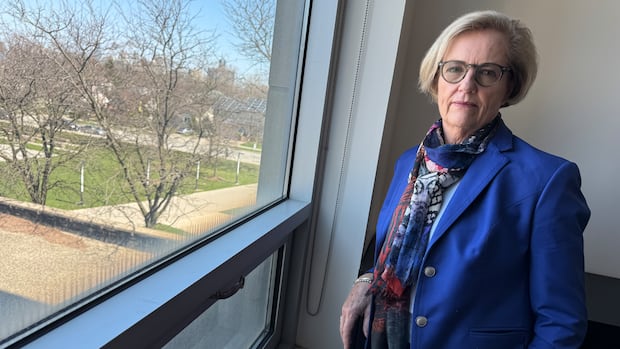
Canada has the highest rate of medical supply shortages globally, according to a researcher from Windsor who aims to improve the system.
Anne Snowdon is focused on enhancing the country’s medical supply chain and ensuring “patient safety” when accessing medications, devices, and supplies.
She’s a nurse who was on the front lines during the SARS outbreak in 2003 and currently serves as the scientific director and CEO at Supply Chain Advancement Network in Health.
Every year, Canada faces over 3,000 medical supply shortages, with Snowdon noting that these shortages tend to last longer than in other countries.
“In health care you can’t afford that disruption because patients can’t get care that they desperately need,” Snowdon said.
Health Canada informed that comparing medical supply shortages across countries is “challenging” due to varying reporting standards between nations.
For 2024-25, Health Canada reported nearly 2,600 drug shortages, which is a 20 percent drop compared to the previous year.
“Most reported shortages are successfully managed before they impact patients,” stated Health Canada spokesperson Marie-Pier Burelle.
Though Snowdon has been studying Canada’s medical supply system for over 15 years, she is now less than a year away from completing a five-year grant project.
The Social Sciences and Humanities Research Council, a federal research funding body, has tasked her with finding solutions. She collaborates with organizations like Health Canada, Public Health Agency of Canada, local health systems, and supply chain teams to put them into action.
Snowdon describes managing medical supplies in Canada as “challenging,” partly due to our smaller population and less market influence compared to the U. S.
Diving Into Domestic Capacity Building Discussions
Collaboration Over Competition Among Hospitals
A potential solution being explored in Atlantic Canada involves healthcare providers working together to obtain supplies. During the COVID-19 pandemic, each hospital competed against others for “precious few” supplies like N-95 masks, according to Snowdon. “We’re too small to compete against each other,” she said. An AI-driven platform has emerged from her research allowing healthcare organizations to search for specific Health Canada-approved products along with their manufacturing locations. This enables them to support Canadian suppliers while also providing options for alternative sourcing during times of shortage or disruption.A Call for a National Coordinated Strategy
The platform currently lacks information about supplies sourced from other regions worldwide. This is something Snowdon is addressing through collaboration with the University of Windsor’s Cross Border Institute. <p“So that when there’s geo-political conflict or a weather event… knowing what products rely on those logistics and distribution channels,” explained Snowdon. A stronger integration of information regarding Canada’s healthcare supply chain is also being advocated by Health PRO Canada’s CEO. Health PRO focuses on healthcare procurement – essentially sourcing supplies. Christine Donaldson previously worked as regional director of pharmacy at Windsor Regional Hospital and believes that patients would benefit greatly from a national coordinated strategy concerning medical supplies.Currently there isn’t an ability on a national scale to understand how major weather events in certain parts of the world could affect access to medical supplies here in Canada. “That’s exactly where we should have intelligence about how this impacts our critical medical supplies,” said Donaldson. Christine Donaldson is president and CEO of Health PRO Canada. (Jason Viau/ ) Another significant gap identified by Snowdon is the lack of digital infrastructure needed to monitor how many Canadians require specific medical supplies during shortages. Additionally , there’s a risk assessment tool under development meant to assist supply chain teams in determining the urgency of some products so they can “ensure that high-risk populations across the country have access”to whatever limited products are available.” “Is that product absolutely essential? Without it , will patients face life-threatening consequences? Or does it just matter but isn’t life-or-death?” Snowdon questioned. As national lead for procuring medical supplies , Donaldson at Health PRO acknowledges existing “vulnerabilities” within this sector.However , she states that efforts are underway towards building resilience within our medical supply chains. < img src="https://ontariochronicle. ca/wp-content/uploads/2026/05/1778518496_739_default. jpg" alt="" class="thumbnail" loading="lazy"/Health PRO Canada played an important role resolving children’s Tylenol shortage back in 2022. (Submitted by Kari Raymer Bishop)Instead of giving one company sole control over drug contracts , Donaldson mentioned these agreements are now split among two manufacturers. “This way if there happens any type disruptions each manufacturer can lend support-plus we actually include contractual obligations compelling them collaborate whenever facing shortages,” explained Donaldson.Moreover , they’ve established reserve stocks consisting critical drugs amounting up-to ninety days’ worth ; thus creating buffer periods should future challenges arise.WATCH | How Canada solved its children’s Tylenol shortage in 2022:<img src="https://ontariochronicle. ca/wp-content/uploads/2026/05/1778518496_739_default. jpg" alt="" class="thumbnail" loading="lazy"/ How Canada solved its children’s Tylenol shortage in 2022> Christine Donaldson serves as president & CEO at Healh PRO; she discusses organizational measures taken resolving kids’ tylenol deficits back during ’22. S snowden wants enhance tracking methods used regarding patient access towards different forms available out there when faced potential recalls affecting those items.The Weaknesses In Our Healthcare Supply Chain Compared To Automotive Systems
This could definitely be done – pointing automotive industry examples tracking faulty parts linked specific vehicles through recall notifications; similarly effective methods exist recalling food products pulled off grocery shelves.” ” We can’t do anything like this inside health sector ,” added snowdown If ever there were recalls enacted related healthcare commodities without proper structure informing which individuals might be vulnerable nor alerting citizens whose devices embedded could potentially face risks involved upon recall – no framework currently exists addressing such scenarios.” Pursuing instance breast implant cases particularly highlighted gaps needing improvement noticed immediately following announcement rollout earlier wednesday involving new voluntary registry aimed expressly sending alerts notifying recipients instances surrounding breast implant recalls pertaining safety issues concerned.br />Diving Into Domestic Capacity Building Discussions
For donaldon conversation continues strengthening canada’s own domestic capacities plays key role moving forward
“The ideal approach combines investing domestic infrastructures alongside maintaining strong relationships global supplier networks,” expressed donaldon
“Since we’re only contributing two percent worldwide pharmaceutical demands., unfortunately it means cannot solely dependably deliver everything ourselves”.
Health canada claims actively working alongside various federal partners identify ways government could help support canadian pharma industry amidst existing pressures felt today.
Supply ontario-a provincial agency responsible procuring necessary healthcare materials-highlights buy ontario procurement directive designed foster local suppliers ensuring growth opportunities remain open door policy encouraging purchase practices benefiting canadians alike. Snowden hopes findings derive lessons improving entire country’s health systems overall while learning mistakes made during covid pandemic experience experienced firsthand.
‘What Went Wrong Learning Lessons From SARS?’ Reflecting experiences gained nursing through past epidemics herself–sars –back then–she thought ontario would’ve already absorbed knowledge faster post-crisis’ outcomes SARS commission thoroughly assessed epidemic examining paths forward enacting recommendations advocating growth rooted learning failures recognized until further notice still awaiting responses needed prior long overdue action leading nowhere beneficially since only one recommendation out over two hundred got implemented. “When reviewing previous suggestions formulated-they mirror identical obstacles encountered recently throughout covid period posed challenges.” remarked snowden finally concluding “why haven’t these lessons been properly heeded ? If only knew answers!!” “I firmly believe brighter light shines ahead thanks ultimately stemming directly resultant covid era”.
Source link
Source link