



In response to Ontario’s family doctor shortage, the chief paramedic in Renfrew County believes he has found a solution through a hybrid care model.
This model makes a family doctor just one phone call away, typically requiring only a few hours of waiting.
“This is actually a new door into the health-care system that is connected to all other parts,” said Michael Nolan, who designed the eastern Ontario county’s latest innovative health-care initiative.
It’s known as the Renfrew County Virtual Triage Assessment Centre (VTAC), which began as a quick method for community paramedics to start testing some of the county’s roughly 100,000 residents during the COVID-19 pandemic.
Nearly three years and 80,000 visits later, the project recently received $3.2 million from the Ontario government with promises that funding will continue for the long haul, Nolan shared.
VTAC offers team-based care where anyone in need of a doctor can dial a 1-800 number to connect with a medical receptionist trained to assist them in finding the quickest access to care.
The receptionist will arrange an appointment with one of many VTAC doctors working remotely across Ontario. After that, either a paramedic or nurse will visit their home or meet them at a nearby clinic to conduct an assessment for the virtual doctor.
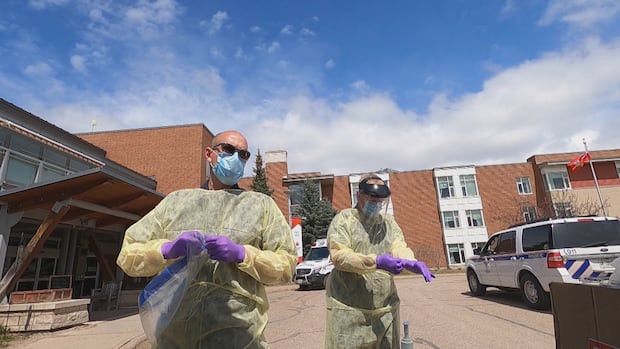
Paramedics and nurses use Bluetooth-connected medical devices to serve as eyes and hands for the doctor, who observes the assessment via video.
“If they come in and they’re running a [temperature], and we listen to their lungs and it’s symptomatic of possible pneumonia, we can get a requisition drawn up and circumvent going through the [emergency department] for hours and hours,” said paramedic Sean Plunkett.
The doctor can then request an X-ray and write out a prescription.
This model allows paramedics to free up doctors so they can see more patients. Nolan mentioned that most individuals using VTAC are able to see a family doctor on the same day. Unlike typical walk-in clinics, patient health information travels with them from one doctor to another until they find a permanent family physician.
Dr. Jonathan Fitzsimon, who leads medical efforts for VTAC in Renfrew County, noted that unlike some areas in Ontario there’s been no trouble attracting or keeping family doctors here.
“The only reason we’ve been able to recruit a pool of doctors to do this long-term and maintain them is because it’s professionally rewarding work they enjoy,” said Fitzsimon.
“We feel we’ve been able to tap into an unused pool of talent. We’re not poaching anyone from another community.”
The doctors include those who are semi-retired, others who have recently received their medical certification, along with family physicians willing to put in extra hours beyond their full-time jobs.
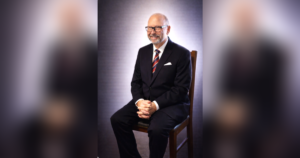
![]() Dr. Jonathan Fitzsimon, Chief of Medicine at Arnprior Regional Health and physician lead for Virtual Triage Assessment Centre (VTAC), expresses his desire for permanent improvements in primary care across Ontario. (Brian Goldman/CBC)
Dr. Jonathan Fitzsimon, Chief of Medicine at Arnprior Regional Health and physician lead for Virtual Triage Assessment Centre (VTAC), expresses his desire for permanent improvements in primary care across Ontario. (Brian Goldman/CBC)
 Medical researchers believe over 2.2 million people in Ontario lack access to a family doctor. Experts say this often leads many individuals neglecting their health issues until they escalate into emergencies requiring immediate attention.
Nolan stated VTAC serves as “a powerful tool” aimed at addressing this issue temporarily.
Medical researchers believe over 2.2 million people in Ontario lack access to a family doctor. Experts say this often leads many individuals neglecting their health issues until they escalate into emergencies requiring immediate attention.
Nolan stated VTAC serves as “a powerful tool” aimed at addressing this issue temporarily.
Source link
This isn’t ‘the end’, according to Fitzsimon
Fitzsimon won’t refer to VTAC as an ultimate fix for the shortage of family doctors. “This isn’t the final sort of endpoint that we want to be at,” he explained. “This isn’t … comprehensive team-based care. But it’s a bridge to that point as safety net.” Fitzsimon estimates this program has saved about $2 million annually on healthcare expenses within the county. Nolan remarked that these savings combined with increased provincial funding and positive feedback from residents indicate that this program works well enough that it should be expanded into neighboring towns and cities.Medical researchers believe over 2.2 million people in Ontario lack access to a family doctor. Experts say this often leads many individuals neglecting their health issues until they escalate into emergencies requiring immediate attention.
Nolan stated VTAC serves as “a powerful tool” aimed at addressing this issue temporarily.
A collaborative approach is essential
There’s general agreement among healthcare professionals suggesting team-based care presents one effective strategy against shortages-bringing together nurses , physiotherapists , social workers , dietitians , plus various specialists-aiming at lessening burdens on individual family doctors. A survey by Canadian Medical Association (CMA) also revealed physicians support pan-Canadian licensure-a single medical license valid nationwide-to help fill ongoing gaps when practitioners take time off. “When operating rooms run short because surgeons or anesthesiologists aren’t available , those could potentially remain open since people would now transition faster ,” Dr. Alika Lafontaine-CMA president-said. Ontario-and Canada overall -should look internationally for solutions according former federal health minister Jane Philpot -now dean faculty medicine Queen’s University Kingston , Ont. Philpot pointed out U. K. model National Health System may provide insights towards rethinking how we handle primary healthcare assigning each patient assigned local physician rather than searching themselves. “We’re actually paying more than necessary while spending resources unnecessary costly options could be avoided if had better access.” Philpot expressed her belief everyone Canada won’t have proper access by next decade. Nolan emphasized balancing future planning while ensuring immediate assistance provided needed avoiding worsening current situation facing family medicine challenges “. “It’s about saving lives prosperity Ontarians giving choices weren’t present before,” he stated.”Source link