



A year has gone by since Bob Allen lost his life on the streets of downtown St. Catharines, Ont., due to hypothermia in temperatures of -8 C.
Allen was homeless when he passed away on Jan. 26, 2025.
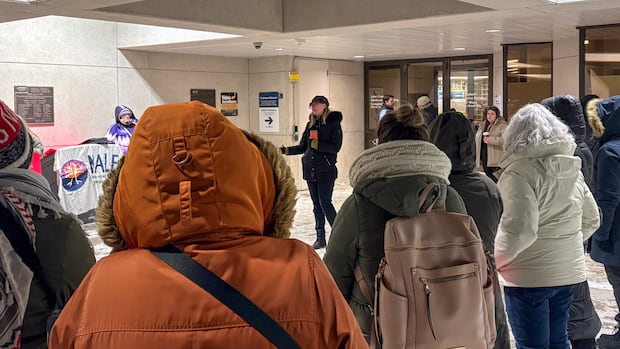
His friends, family, and the substance use support group Niagara Advocates with Lived/Living Experience (NALE) held a vigil last week to honor him and others who have died or suffered severe injuries due to the harsh winter conditions.
The vigil took place just as a council meeting for the Niagara Region was set to start in Thorold, Ont. During this meeting, a local councillor proposed a motion aimed at enhancing winter support for those facing homelessness and adjusting the temperature threshold that triggers the region’s winter emergency protocol.
Bob’s sister Elizabeth Allen drove six hours from her home in Temiskaming Shores, Ont., to participate in the vigil and address the meeting in favor of these changes.
Elizabeth Allen, far left, joins the vigil in front of Niagara Region’s council headquarters, to honour her brother Bob Allen and others who died in winter while experiencing homelessness. ( )
“I’m not usually one to speak up, but I feel this is important,” Elizabeth told . “My brother doesn’t have a voice anymore.”
St. Catharines regional councillor Haley Bateman put forth a motion aimed at lowering the temperature that activates the region’s winter weather emergency protocol from -10 C down to 0 C when factoring in wind chill.
The council mentioned that they had already reduced this threshold from -15 C to -10 C earlier this winter.
Once this protocol is activated, Niagara Region claims it alerts its network of shelters, outreach teams, transportation services, homeless agencies, emergency health services, Niagara regional police and partners to reach out and assist those without homes. It also leads to more beds being made available.
However, Bateman believes that even -10 C is still too cold for comfort.
“Speaking with residents over the past three years has shown me they think that’s too cold,” she stated. “[Allen]’s death was absolutely preventable.”
Scott Neufeld, an assistant professor of community psychology at Brock University and co-chair of NALE, feels that the current temperature limit set by the region seems arbitrary.
“It’s not related to real risks for individuals who can easily suffer frostbite or cold-related injuries leading to hypothermia or even death like we witnessed with Bob,” said Neufeld.
“If [the proposed protocol] had been implemented last year, perhaps my brother would still be here instead of having died in such a tragic way,” said Allen.
WATCH | Elizabeth Allen remembers her brother: Homeless advocate Elizabeth Allen on her fight for more policies and support during winter cold
“They often have no food or shelter; they’re completely exposed.” Councillor Laura Ip shared concerns about how resources will be allocated if such a system is put into place. Missing persons cases are treated as “Priority 1” responses which require deploying significant resources as many people might choose not stay at shelters or avoid interaction with law enforcement according Ip during their Jan.29 discussion. Ultimately Bateman’s proposal was postponed until further discussion at February 10th’s public health & social services committee meet. This situation also impacts local healthcare systems according Bateman speaking with CBC regarding it. The extreme weather places added strain on regional emergency departments since hospitals become fallback options when shelters reach capacity according report by Niagara Health officials citing that.
Emergency rooms within facilities under Niagara Health recorded over five thousand visits by patients identifying themselves as homeless throughout Winter months spanning from twenty twenty four through twenty twenty five seeing an increase nearing fifty-two percent compared past seasons. “Cold spells heighten respiratory illnesses exacerbate chronic medical issues present additional threats faced living outdoors unstable housing situations.” reported statements from niagara health provided within conversations held with , stating outcome statistics reflect realities faced under such conditions
Source link
 Homeless advocate Elizabeth Allen on her fight for more policies and support during winter cold
The motion postponed until Feb. 10 public health meeting
Councillor Bateman’s motion requests establishing a new winter protocol designed for “rapid outreach,” treating any unhoused individual who cannot be found during cold alerts “as a missing and endangered person.” This would lead outreach teams and emergency services to help track down those who may have checked into shelters but went outside without returning. Bateman has experience working with women’s shelters where it’s common for individuals to leave their belongings behind without formally exiting; this could indicate they are missing.</pp>St.>Catharines regional councillor Haley Bateman introduces a motion proposing changes to Niagara Region’s winter emergency response at Jan. 29’s regional council meeting. The motion has been deferred to Feb. 10’s public health meeting.<(Niagara Region) “That really worries me because these individuals are so vulnerable,” said Bateman.“They often have no food or shelter; they’re completely exposed.” Councillor Laura Ip shared concerns about how resources will be allocated if such a system is put into place. Missing persons cases are treated as “Priority 1” responses which require deploying significant resources as many people might choose not stay at shelters or avoid interaction with law enforcement according Ip during their Jan.29 discussion. Ultimately Bateman’s proposal was postponed until further discussion at February 10th’s public health & social services committee meet. This situation also impacts local healthcare systems according Bateman speaking with CBC regarding it. The extreme weather places added strain on regional emergency departments since hospitals become fallback options when shelters reach capacity according report by Niagara Health officials citing that.
Emergency rooms within facilities under Niagara Health recorded over five thousand visits by patients identifying themselves as homeless throughout Winter months spanning from twenty twenty four through twenty twenty five seeing an increase nearing fifty-two percent compared past seasons. “Cold spells heighten respiratory illnesses exacerbate chronic medical issues present additional threats faced living outdoors unstable housing situations.” reported statements from niagara health provided within conversations held with , stating outcome statistics reflect realities faced under such conditions
Source link


