

Back in 2015, when Gordon Wyant met with federal justice minister Peter Mc Kay to talk about an upcoming Supreme Court position, Wyant, who was serving as Saskatchewan’s justice minister at the time, didn’t directly say it was Saskatchewan’s turn to have a judge on the Supreme Court.
But he definitely had that thought on his mind.
“My argument wasn’t that it was our turn, even though that was the undertones of the conversation, but we had the best guy in western Canada to be appointed to the Supreme Court,” Wyant mentioned during a recent interview.
“Justice Russell Brown [from Alberta] was appointed. Fair enough. But I do think it is really time for the government to consider an appointment from Saskatchewan.”
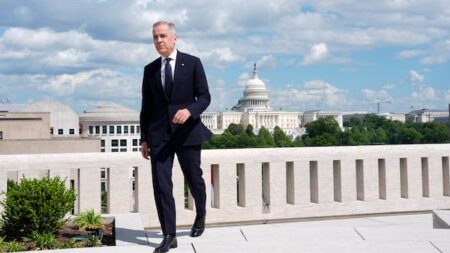
Last month, Ottawa began accepting self-nominations for the vacancy created by Justice Sheila Martin’s retirement on May 30. The new appointee must come from either western or northern Canada. An advisory board will compile a shortlist of candidates for Prime Minister Mark Carney to review.
Saskatchewan hasn’t had a representative on the Supreme Court since Emmett Hall, who was appointed by Prime Minister John Diefenbaker in 1962 and retired in 1973.
Two justices since then – Willard Estey (1977-88) and John Sopinka (1988-97) – were born in Saskatchewan but spent their legal careers elsewhere and aren’t considered judges from Saskatchewan.
Apart from regional representation, appointments also look at gender and race to maintain balance on the nine-member bench.
Wyant, now back practicing law at Mc Kercher LLP in Saskatoon after years in city and provincial politics, believes regional representation still holds value.
“Everyone that goes to the court takes with them their experiences, their relationships, and that’s what regional representation is all about,” Wyant said.
“So any judge that gets appointed from Western Canada would have relationships in Western Canada and perspectives from Western Canada.”
With rising feelings of alienation in western Canada, it’s vital that appointees reflect regional diversity so everyone across Canada feels represented by the court, according to Colton Fehr, an assistant professor at the College of Law at the University of Saskatchewan.
“If those cultures and values are not represented or even seem to be represented on the Supreme Court, then it can further that sort of alienation,” Fehr shared during an interview.
“It also can start impacting how legitimate people see the Supreme Court. If we start saying ‘The West doesn’t need any Supreme Court justices; let’s just replace them with people from Ontario,’ this could create some animosity whether rightly or wrongly.”
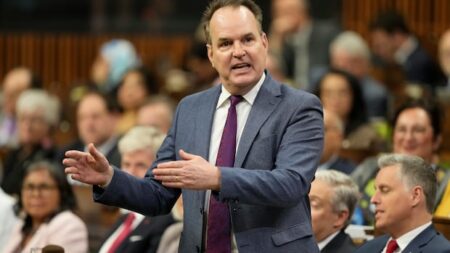
The current justice minister for Saskatchewan and attorney general, Tim Mc Leod, reached out to his federal counterpart Sean Fraser in March asking him to appoint a jurist from Saskatchewan.
The five-decade gap in appointments “risks undermining the regional balance that Canadians expect from a truly national institution,” Mc Leod wrote.
“Saskatchewan’s legal community has historically made outsized contributions to matters of national legal importance with deep grounding in common law principles shaped by our rural, northern Indigenous and resource-based communities-all significant parts of our federation,” Mc Leod stated via email to .
Source link
Speculation
In 2015, Wyant believed they had a strong candidate in Robert Richards who served as chief justice of the Saskatchewan Court of Appeal back then. However, he retired in 2023. So who else might be up for consideration? The Federation of Sovereign Indigenous Nations recently put forward a resolution during its spring assembly endorsing Saskatchewan federal judge Paul Favel as their preferred candidate. Favel is part of Poundmaker Cree Nation and became a federal court judge back in 2017. CBC couldn’t confirm if this resolution passed but it’s hard to believe FSIN would endorse Favel if they weren’t sure he intended to submit his name for consideration. The FSIN did not respond when asked for comments. Wyant chose not reveal what he knows about potential candidates. “There’s several names I’m aware have put themselves forward-each one would make excellent additions to the Supreme Court,” Wyant said. Before becoming a federal court judge , Paul Favel worked as legal counsel for various First Nations , guiding them through leases related commercial developments , land claims , negotiations regarding self-governance.(Submitted) Favel declined CBC’s request for an interview through an emailed statement sent by Federal Court office. One challenge with nominating someone from Saskatchewan is that Supreme Court judges are required to be functionally bilingual. “One comment I made once when speaking with Minister Mc Kay-and subsequent ministers-was that this requirement disadvantages some very qualified jurists from both Saskatchewan and other areas of Western Canada who aren’t functionally bilingual yet would make great appointments,” Wyant noted. In his statement , Mc Leod mentioned bilingualism is “an asset” which should be positively viewed when selecting candidates while also pointing out “the heads other branches government” don’t face similar requirements. “It’d be worrying if strict enforcement this requirement introduced only recently started limiting options available highly qualified jurists within Western Canada already lacking adequate representation among Justices,” wrote Mc Leod. The nomination window closes April 27.Source link