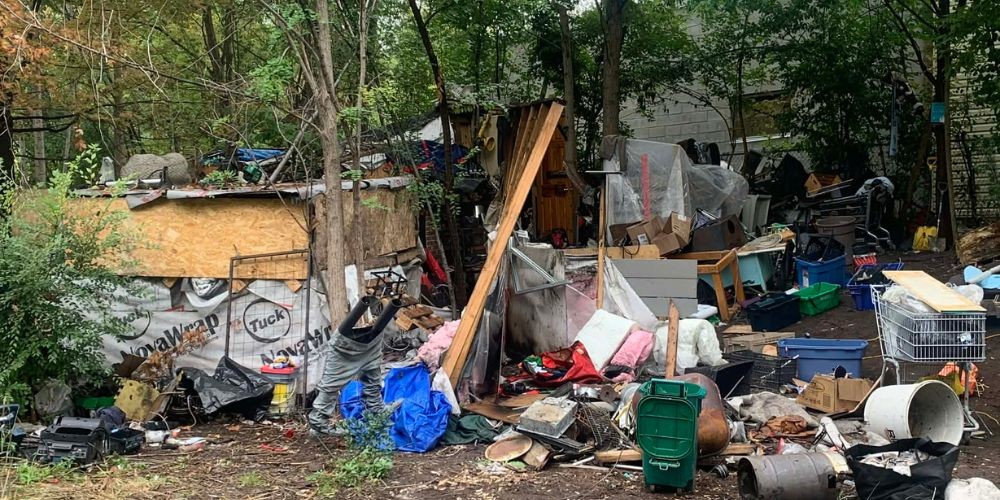
Homelessness is worsening across Ontario, with around 85,000 individuals lacking stable housing in 2025 and nearly 2,000 encampments spread throughout the province, according to a new report from Ontario’s municipalities.
Over half of these individuals are facing long-term homelessness lasting six months or more, as highlighted by the report from the Association of Municipalities of Ontario, the Ontario Municipal Social Services Association, and the Northern Ontario Service Deliverers Association.
Approximately 20,000 children and young adults are homeless in the province. The data indicates that northern and rural areas are contributing significantly to the rise in homelessness.
🎧 Local news stories that matter most to you
Subscribe on Spotify, Apple Podcasts and wherever you get your podcasts to stay updated on new episodes every day.
“Something’s clearly broken,” said Lindsay Jones, executive director of AMO.
“I think we’re seeing again the effects of substantial underfunding over years in social systems that provide support like income security, mental health services, addictions help, and affordable housing.”
The situation is expected to worsen under current economic conditions until 2035 when an estimated 177,000 people could be without homes. The report warned that if the economy takes a downturn-something Jones believes is likely due to its current status and ongoing trade tensions with the United States-the number of homeless could reach almost 300,000 by then.
The AMO followed up one year after publishing a crucial report that painstakingly gathered data from the province’s 47 service managers to create a clearer picture of homelessness statewide.
It was estimated that 84,973 people experienced homelessness last year-a rise of 7.8 percent compared to 2024.
Since the onset of the COVID-19 pandemic, homelessness has surged.
Between 2016 and 2020, there was a growth rate of 6.3 percent in homelessness. From 2021 through 2025 alone it skyrocketed by an astonishing 49.1 percent.
“Homelessness has not returned to pre-2020 levels even though funding for housing and homelessness has increased and services have expanded,” stated the report.
“This shows that available housing options and support systems haven’t kept up with either the scale or persistence of homelessness post-pandemic.”
Barrie’s News Delivered To Your Inbox
Stay informed about what Barrie’s talking about. Get daily updates delivered right to your inbox so you never miss out on important news..
Consent Info
By submitting this form you agree to receive marketing emails from: Central Ontario Broadcasting at431 Huronia Rd., Barrie , Ontario , CA , https://www. cobroadcasting. com. You can withdraw your consent at any time using Safe Unsubscribe® link found at every email’s bottom. Emails are serviced by Constant Contact
Northern and rural regions of Ontario have seen significant increases in homelessness. In just one year alone homelessness rose by 37 percent in northern Ontario while mostly rural communities saw an increase of31 percent. Since2021, housing insecurity has jumped by an alarming117percent in these northern areas.
“I believe Indigenous homelessness plays a major role here,” said Jones.
“This year we’re observing roughly a25percent rise concerning Indigenous homelessness measurements. It’s truly concerning.”
The count for Indigenous individuals without homes reached11,000in2025up from6 ,100in2021accordingto data findings.
Encampments continue increasing too , withnearly2 ,000 identified sites across Ontario.
The natureofencampmentshas shifted notedthe report less large clustersnow exist but insteadsmaller groups where six tot enpeople reside said Jones.
“Itreallyreflectsthe provincial response taken towardencampments which reliesmoreon enforcementapproaches ratherthanaddressing rootcauses “said Jones.” Thissimplydispersesthe issueand relocatesit somewhereelse.”
The challengeisthat morepeoplearebecominghomeless than thosewhoareableto transition offthestreetsoffrom shelters intohomes.
“In2025the waitlistfor communityhousing reachedanestimated301 ,340households withaveragewait timeof65monthsandsomehouseholdswaitingover16years ,” reportedthe study.
“Thus, manyindividualsremainhomelessfor extendedperiods.”
Despitepublic fundingforhousingand homelesssupportssignificantlyrising it hasn’t matchedthe growingproblemaccordingto thereport. Combinedgovernment investmentstotalledaround$4billionin2025.
Researchers argueanadditional$11billionover10 yearsisessentialto eradicatehomelessnesswhich entailsgreaterinvestmentin rent-geared-to-income optionsaffordablehousingemergency sheltersas well asmentalhealthaddictionsupportservices.
Source link
Funding allocatedtowardscommunityhousing hasactuallydeclinedby0.6percentsince2021althoughemergencyshelter fundinghasseenover50percentgrowth.
“We’rewitnessing substantialmoney directedtowardthemoreservice-intensiveelements becausethat’swhere urgentneeds liebutthiswon’tsolvechallenges overall,”said Jones.
Thisreportwasfirstby The Canadian Presson Jan13th ,2026.
Your thoughts onthis article?
Source link