





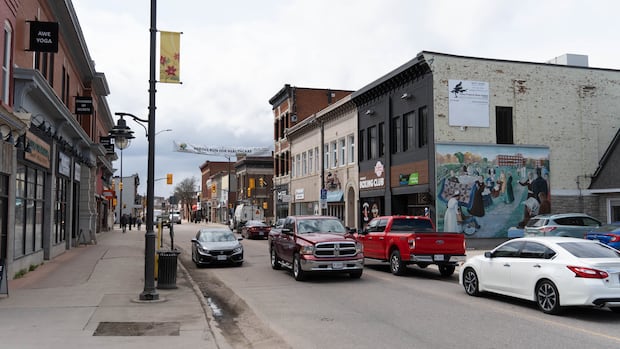
Renfrew County is introducing its version of Ontario’s HART Hub treatment model: a network of agencies and services centered around the Pembroke waterfront.
The intake centre located at 156 John St. operates 24/7 and can connect individuals seeking housing, employment, or mental health support, including help for addictions, to various available resources.
This includes ten supportive treatment beds at a local motel, as well as twelve short-term beds at the Carefor Mackay Centre retirement home and support centre that have been available since October.
Participating organizations include the Pembroke hospital, The Grind non-profit café, and nearby Algonquins of Pikwakanagan First Nation. The province is investing $6.3 million over three years into this project.
County and provincial officials held the hub’s official opening on Thursday, but getting to this point took many months of effort.
Renfrew County launched its Mesa project in 2024 to develop a coordinated approach to tackle mental health issues and substance use problems. Its HART Hub received approval last January.
WATCH | CBC follows the mesa project in its early months: In its bid against fentanyl, one Ontario town is taking its fight to the streets
In a small town with just 14,000 residents, every opioid overdose hits close to home. CBC’s Omar Dabaghi-Pacheco visited Pembroke, which is trying out a new strategy to address the growing drug crisis. CBC went behind the scenes with paramedics during critical calls and observed their approach in action.
Eighty-four residents of Renfrew County lost their lives due to opioid toxicity from 2020 through the end of 2024, according to Public Health Ontario. There were also 316 emergency room visits during that same period for similar reasons.
These figures do not include health emergencies related to other drugs or other addiction-related challenges that the county aims to address.
Regarding housing needs, Renfrew County currently has more than 2,000 households waiting for community housing assistance.
The ruling Progressive Conservatives in Ontario have opted for HART Hubs instead of supervised drug consumption sites, claiming they provide a better way for individuals to receive treatment. However, these hubs do not offer supervised drug consumption or needle exchange programs.
The hub in Renfrew County is now the fifth one established in eastern Ontario alongside Belleville; a joint location between Brockville-Smiths Falls; and two others in Ottawa.
In its bid against fentanyl, one Ontario town is taking its fight to the streets
In a small town with just 14,000 residents, every opioid overdose hits close to home. CBC’s Omar Dabaghi-Pacheco visited Pembroke, which is trying out a new strategy to address the growing drug crisis. CBC went behind the scenes with paramedics during critical calls and observed their approach in action.
Eighty-four residents of Renfrew County lost their lives due to opioid toxicity from 2020 through the end of 2024, according to Public Health Ontario. There were also 316 emergency room visits during that same period for similar reasons.
These figures do not include health emergencies related to other drugs or other addiction-related challenges that the county aims to address.
Regarding housing needs, Renfrew County currently has more than 2,000 households waiting for community housing assistance.
The ruling Progressive Conservatives in Ontario have opted for HART Hubs instead of supervised drug consumption sites, claiming they provide a better way for individuals to receive treatment. However, these hubs do not offer supervised drug consumption or needle exchange programs.
The hub in Renfrew County is now the fifth one established in eastern Ontario alongside Belleville; a joint location between Brockville-Smiths Falls; and two others in Ottawa.
Source link
In its bid against fentanyl, one Ontario town is taking its fight to the streets
In a small town with just 14,000 residents, every opioid overdose hits close to home. CBC’s Omar Dabaghi-Pacheco visited Pembroke, which is trying out a new strategy to address the growing drug crisis. CBC went behind the scenes with paramedics during critical calls and observed their approach in action.
Eighty-four residents of Renfrew County lost their lives due to opioid toxicity from 2020 through the end of 2024, according to Public Health Ontario. There were also 316 emergency room visits during that same period for similar reasons.
These figures do not include health emergencies related to other drugs or other addiction-related challenges that the county aims to address.
Regarding housing needs, Renfrew County currently has more than 2,000 households waiting for community housing assistance.
The ruling Progressive Conservatives in Ontario have opted for HART Hubs instead of supervised drug consumption sites, claiming they provide a better way for individuals to receive treatment. However, these hubs do not offer supervised drug consumption or needle exchange programs.
The hub in Renfrew County is now the fifth one established in eastern Ontario alongside Belleville; a joint location between Brockville-Smiths Falls; and two others in Ottawa.
Source link