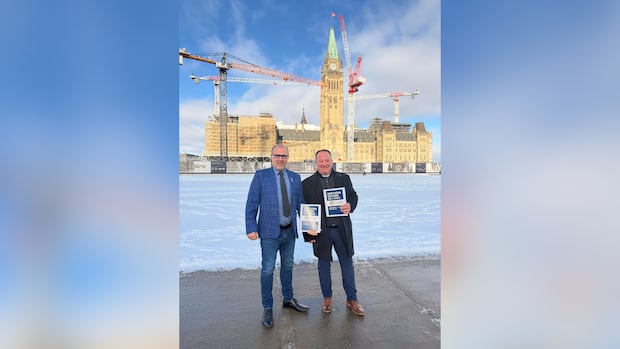
As both the provincial and federal governments focus on mining possibilities in northern Ontario, regional leaders are prioritizing support for local businesses and safer highways this year. The Northwestern Ontario Municipal Association (NOMA) represents the region at both provincial and federal levels. It collaborates closely with the Federation of Northern Ontario Municipalities, which speaks for communities in the northeast. After a year filled with uncertainty due to the Canada-U.S. trade war, NOMA has welcomed recent initiatives designed to speed up development, like the valuable Ring of Fire mineral deposit located in the James Bay lowlands. This includes the new One Project, One Process, One Decision model introduced by the Ontario and federal governments in mid-December. With this new approach, projects in Ontario that used to need both federal and provincial approvals now only require approval from Ontario’s environmental assessment process. “We gotta keep bringing the message to southern Ontario and Queen’s Park and of course to Ottawa, talking about how important the north is to Ontario and Canada for that matter,” said Rick Dumas, president of NOMA and mayor of Marathon, in an interview with on Wednesday. “Everything in [a] home, including the electronics we’re talking on today, come from either a mine or the forest – so without those two industries and their significant economic impact on our regions, we’re really in rough shape.” While some environmental advocates and First Nations leaders have raised concerns about efforts to hasten development approvals-especially concerning the Ring of Fire-Dumas emphasized it’s crucial for people to see how much potential there is for job creation and prosperity within smaller communities. One key area he focuses on is ensuring “we get some of those dollars back coming to our communities for the things we need from the resource sector that we supply,” he explained. We could put tens of thousands of workers to work and have a major project that increases the safety of our highways and also increases the economic opportunities for our region.- Rick Dumas, president of NOMA and mayor of Marathon The local forestry industry faced several challenges over last year; shutdowns at both Ear Falls sawmill and Kapuskasing paper mill were attributed to financial strains caused by U.S. tariffs. At present, residents are worried about what will happen with Terrace Bay pulp mill since it has been idling since January 2024. “People don’t realize that every part of their life every day is affected by mining or forestry sector-a resource-based industry,” Dumas stated.
Continued Push for Highway Upgrades
When it comes to highway safety improvements-particularly along Highway 11-17 corridor-Dumas remarked that while road maintenance has improved compared to previous years, there’s still a pressing need for upgrades. A few days before Christmas, three family members from Dryden lost their lives after a crash involving a pickup truck colliding with a tractor-trailer on Highway 11 in Opasatika Township east of Hearst. “A 41-year-old, a 15-year-old, and a 12-year-old were pronounced deceased at the scene. No injuries were reported for the driver of the tractor trailer,” stated James Bay OPP in a news release issued Dec. 21. Guy Bourgouin, MPP for Mushkegowuk-James Bay wrote an open letter addressing Premier Doug Ford shortly afterward stating “this loss is devastating-and it was preventable.”[Source](https://www.cbc.ca/news/canada/thunder-bay/northern-ontario-goals-2026-9.7031325)