




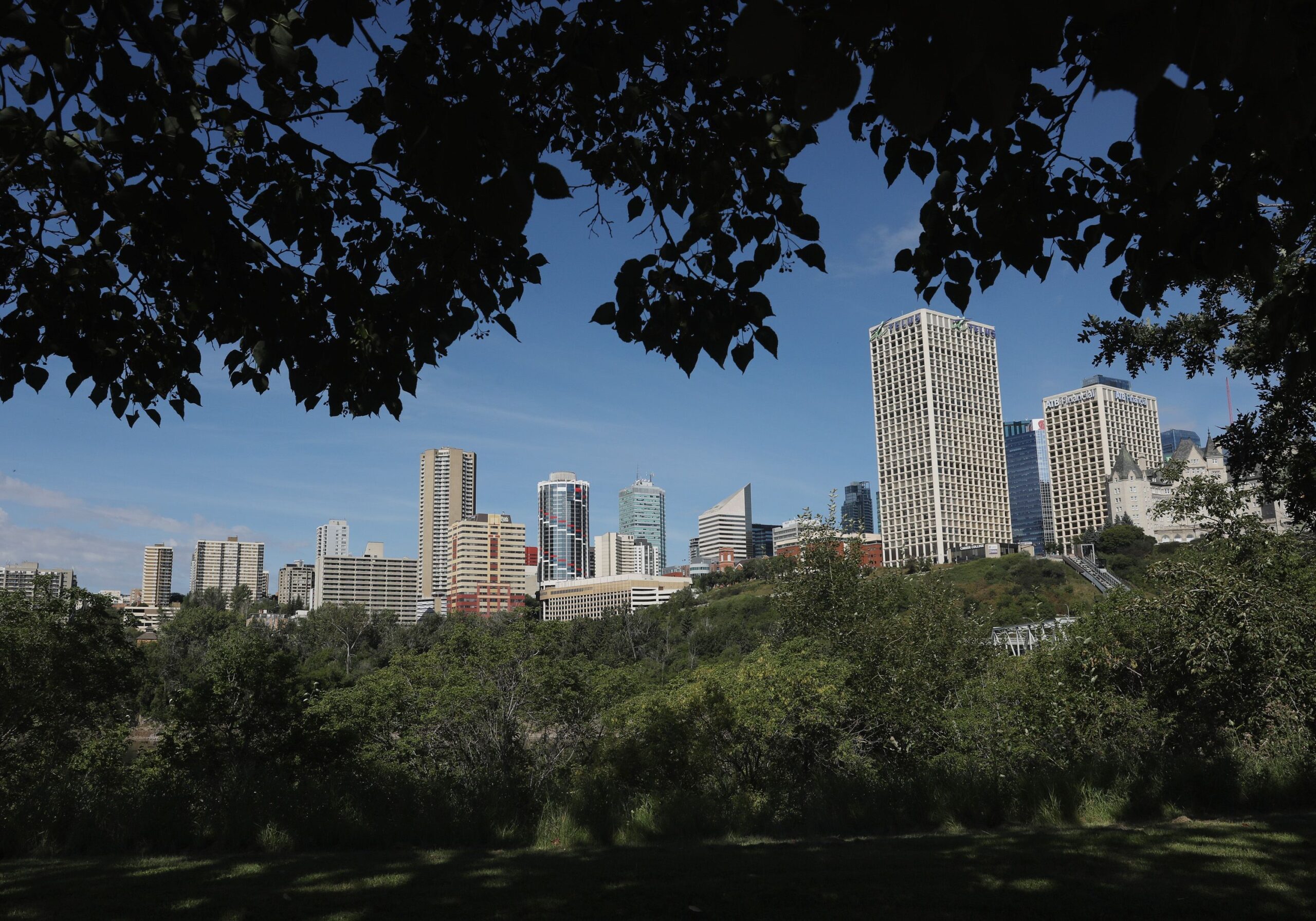
Today, residents of Alberta are going to the polls for a referendum that asks whether they want to stay part of Canada or consider independence, revealing a separatist feeling that isn’t always visible from the outside.
The outcome of this referendum won’t be binding and won’t give Alberta the power to declare independence. Instead, voters are deciding if the province should remain in Canada or take steps toward a future vote on separation. This process would involve complicated discussions with the federal government, other provinces, and Indigenous communities.
This vote comes after years of frustration among many people in Alberta regarding federal energy and climate policies that have impacted this oil-rich area significantly. These grievances have built up over decades, tracing back to the National Energy Program initiated by former prime minister Pierre Trudeau in the 1980s. More recently, pushback against strict climate measures under his son, Justin Trudeau, along with resistance to Covid-19 restrictions has fueled support for independence.
Alberta is home to some of the largest proven oil reserves worldwide and has been at the center of tensions between western Canada and the federal government. Supporters of separation argue that Alberta contributes more economically than it receives back and that federal policies have hindered its energy sector’s growth.
People in Alberta often lean more towards conservative political and social views compared to those held by Canada’s governing elites or major urban centers. There’s also a strong tradition linking them with the United States.
In recent years, pressure has increased on the right-of-center provincial government concerning this issue – including a petition that gathered 300,000 signatures – leading Premier Danielle Smith in May to say it was “time to have a vote, understand the will of Albertans on this subject, and move on.” Her strategy seems to be that if they lose the referendum, it will weaken support for separation.
Smith herself is against independence; most national and provincial parties share her stance though there are differing opinions within her United Conservative Party.
Canadian Prime Minister Mark Carney has cautioned about severe consequences if Alberta chooses to separate from Canada. For Carney, parallels can be drawn with Brexit in 2016 when he was governor of the Bank of England; then too it was an attempt to resolve an issue dividing their ruling Conservative Party. He acknowledges that “the frustrations that many Albertans have felt are real.”
Smith has indicated that separation would come at a high cost. In June she estimated transitioning could reach C$400 billion along with annual costs between C$25 billion and C$50 billion related to establishing new country operations.
The University of Calgary’s School of Public Policy projected separation might incur costs as high as C$170 billion over five years while warning about unpredictable long-term financial impacts.
As a diverse multicultural society, Canada’s history includes long-standing separatist tensions notably around Francophone Quebec. Indigenous groups exist with various levels of autonomy. The movement for Albertan independence seems driven by backlash against certain policies alongside resource nationalism within the province.
Alongside questions about separation, voters in Alberta are also facing inquiries related to constitutional matters and migration issues aimed at assessing whether more authority should rest at the provincial level.
Source link