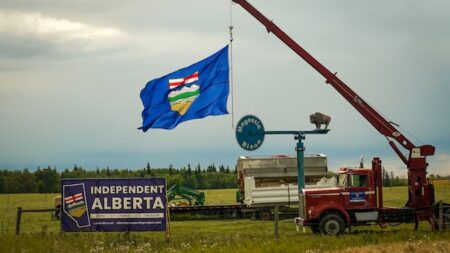


EDMONTON, Alberta (AP) – For many years, the idea of Alberta separating from Canada was seen as a fringe movement. However, on Monday, voters in this oil-rich province will make a decision that could lead to a referendum on independence.
Alberta, which has the fourth-largest proven oil reserves in the world, is not casting ballots to leave Canada on Oct. 19. Instead, citizens will choose whether the province should stay part of Canada or start the legal process for a future separation vote.
Alberta Premier Danielle Smith, who initiated this vote but supports staying in Canada, remarked that support for beginning the separation process-currently around 23% according to a recent poll-is “still too high for my liking.”
: Prime Minister Mark Carney says U. S. is trying to break Canada as Alberta votes on separation path
The province has had longstanding conflicts with the federal government over oil policies and federal authority. Liberal prime ministers Pierre Trudeau and his son Justin have both become quite unpopular in Alberta due to their energy policies.
Justin Trudeau’s administration introduced a national carbon tax and other climate initiatives that provincial leaders argue have harmed Alberta’s oil industry. Historically, separatist parties only garnered about 1% or 2% of votes, according to former Premier Jason Kenney.
Then came the pandemic along with the Freedom Convoy that disrupted parts of Ottawa and blocked significant Canada-U. S. border crossings.
“They needed a new cause,” Kenney told The Associated Press. “And it naturally morphed into separatism.”
Pandemic-era restrictions fueled separatism
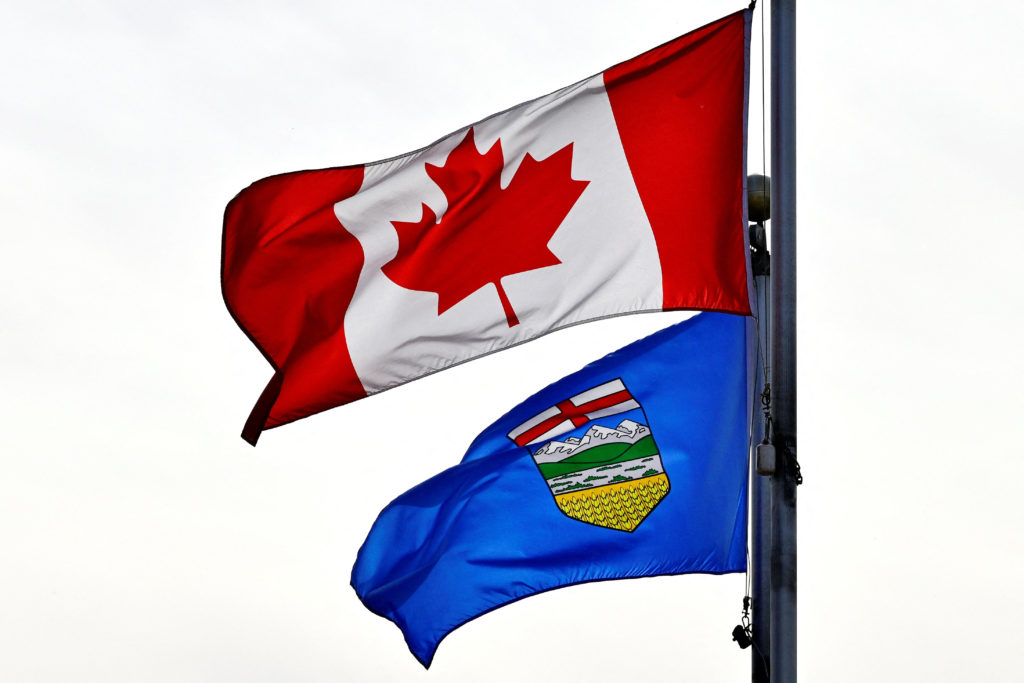
Men wave Alberta’s provincial flags before Canada’s Prime Minister Mark Carney attends a Forever Canadian Rally, ahead of a non-binding referendum on Alberta sovereignty, in Edmonton, Alberta, Canada, on Oct. 16, 2026. Photo by Jennifer Gauthier/Reuters
Jeff Rath, an advocate for independence, said federal vaccine mandates barring unvaccinated Canadians from flying were his tipping point.
“If Trudeau won’t let me leave Alberta, I’m just going to pick up my whole province and go,” Rath shared with a friend. “COVID was really the straw that broke the camel’s back.”
“A lot of people were radicalized by the convoy,” he added.
The Freedom Convoy started as opposition to vaccine rules for cross-border truckers but evolved into broader resistance against pandemic regulations.
Kenney noted that anger over globalization and vaccines helped rally people together while social media connected previously isolated activists who began organizing efforts.
: Carney and Macron deepen ties as Canada turns toward Europe and away from U. S. dependence
“They found each other and they found a cause,” Kenney explained.
The movement also became more organized as activists built groups, raised funds and attracted political strategists with experience in campaigning and fundraising.
He mentioned there’s significant overlap between separatist supporters and individuals who back Russian President Vladimir Putin or subscribe to conspiracy theories about Ukrainian President Volodymyr Zelenskyy.
Kenney emphasized he was referring specifically to activists-not typical voters seeking separation-whom he described as frustrated Albertans aiming to send Ottawa a message.
Kenney acknowledged that elements of the MAGA movement have inspired some separatist activists. He indicated they “tried to infiltrate with at least some success” into the United Conservative Party he founded before being succeeded by Smith in 2022 after appealing to members upset over COVID-19 restrictions.
“Literally, you can look at the players,” Kenney remarked about connections between these movements. “It’s the same people.”
Carney finds surprising backing in Alberta
Prime Minister Mark Carney has prioritized getting Alberta’s oil into new markets while supporting plans for pipelines leading to West Coast ports. His business-friendly stance on energy issues-and resistance against U. S. President Donald Trump’s trade war-has made him unexpectedly popular among conservatives in Alberta.
Kenney-one of Trudeau’s most vocal conservative critics regarding his approach towards Alberta-stated Carney “speaks as an Albertan,” understands local concerns and ambitions well while making progress on energy matters.
Rath labeled Carney as a “formidable opponent” since nearly every prominent politician across both Alberta and Canada stands against separatism; he admitted they face an uphill battle ahead. He mentioned he’d be “thrilled” if they managed more than 30% support-a far cry from majority status.
“Canada is facing real threats to our economy, to our security, to our way of life,” Carney stated firmly. “We have to be strong-and we are stronger together.”
Activists head south for support
An estimated 90% of Alberta’s crude oil exports go directly into U. S. markets; therefore supporters have taken their campaign straight into Washington D. C.
Rath confirmed he along with other advocates met three times with officials from the U. S State Department where they presented proposals detailing what an independent Alberta could offer America.
S
%%%!!!______________!!_0000___99___9999_____00______!!!____!!________!!_______________________!*/ _____//?+++???????????///*___________——–_________–__/////////————+///—-++?%%//+///////??———******************//