





The most valuable lesson I learned about politics came from growing up in Florida. For the 18 years I lived there, it was a purple state that supported Barack Obama twice. Although my community wasn’t particularly diverse, the range of political beliefs was significant. I had a close friend who kept a life-sized cutout of George W Bush in her bedroom and another who organized Amnesty International fundraisers against landmines. When the state shifted heavily Republican in 2016 and stayed that way, I couldn’t shake the feeling that there was more to the story.
However, nothing could have prepared me for the surprise when Angie Nixon – a state legislator associated with the Democratic Socialists of America running against Alex Vindman, a centrist with national recognition – won the Democratic primary for Senate in Florida. That shock has lingered as we see Democratic gubernatorial candidate David Jolly neck-and-neck with Republican Byron Donalds, who seemed like a guaranteed win just weeks ago. While Nixon is trailing her Republican opponent Ashley Moody, the contest is much tighter than anyone following Florida politics anticipated. So much so that senior progressive senator Bernie Sanders has recently invested millions from his campaign funds into the state, and popular congresswoman Alexandria Ocasio-Cortez campaigned alongside Nixon last month.
This trend isn’t just happening in Florida. Democrats are doing well in several areas traditionally held by Republicans across the nation, whether it’s Kansas where a Democratic Senate candidate now has an advantage or Iowa where both the governor’s seat and congressional districts might flip. In solidly red Texas, attention has been on Democratic Senate candidate James Talarico; however, more recently party gubernatorial candidate Gina Hinojosa has also gained attention. Across the country, voters seem eager to exercise their political power at a time when Donald Trump’s approval ratings are hitting historic lows.
Senator Roger Marshall gestures as JD Vance speaks on 14 September in Olathe, Kansas. Photograph: Mark Schiefelbein/Pool AP/AP
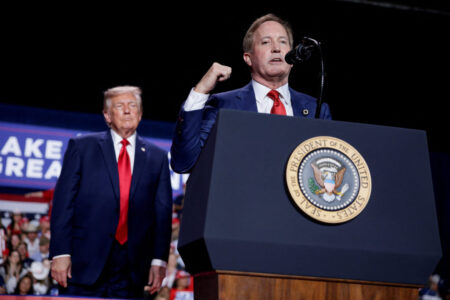
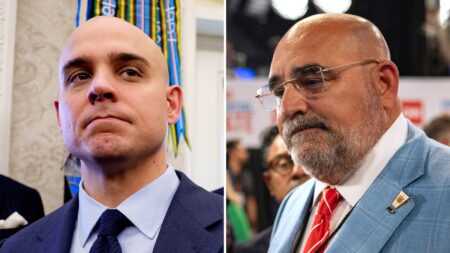
The deep frustration Americans feel with their government is becoming increasingly clear as election day approaches. Our reporters have noted this dissatisfaction at gas stations, schools, and rallies. People are tired of things staying as they are and are searching for change-even if it means choosing a party that hasn’t held onto certain seats for nearly a century like in Kansas. Adding to this discontent is the fact that Republicans have picked some openly corrupt candidates such as Roger Marshall running for Senate in Kansas-a doctor known for suing numerous patients-and Ken Paxton from Texas, whose history is filled with personal and financial scandals.
While all of this rings true right now, there’s still an important question about longevity that both parties will need to tackle moving forward. Midterm elections usually act as checks on whoever is occupying the White House; however, neither party seems to convert these moments into lasting gains effectively. Many polls indicate that both major parties face significant unpopularity issues. The upcoming election appears heavily reliant on particular candidates at specific locations delivering just the right message-whether that’s inviting Barack Obama to rally or steering clear of Kamala Harris altogether. Even if we see some kind of “blue wave” come November, sustaining enthusiasm through 2028 will require much more effort towards finding common ground.
With less than four weeks remaining until election day, we’ll find out if this Democratic lead holds up and how substantial their victory might be if it does occur. As someone from Florida myself, I’m reminded by this election cycle that even though Americans may be divided and caught up in filter bubbles-we still know how to make our voices heard.
🗣️ Ask our reporters
The US politics team is hosting a series of reader Q& As leading up to midterms. Our next live conversation will take place on 15 October 2026 at 12pm EDT with our panel made up of business labor and consumer rights reporters discussing how economic conditions might influence midterm election results. Send us your questions here.
Quoted
double quotation mark Here in Michigan , we know that Canada is not our enemy. We need to end this tariff war now.
– Mike Rogers , the Republican Senate candidate in Michigan , in his newest campaign .
skip past newsletter promotion Free newsletter |Weekly , plus breaking news alerts
Sign up to The Stakes 2026
A weekly guide to what really matters during US midterms , plus breaking news alerts.
after newsletter promotion
It’s quite telling when several prominent Republican candidates speak out directly against Donald Trump.
Watch this race: The Minnesota Senate
Minnesota’s lieutenant governor Peggy Flanagan speaks at a campaign rally in Minneapolis on July 20th. Photograph : Tim Evans /Reuters
While much of this newsletter highlights Democrats thriving even within Trump territory , it’s worth mentioning areas where Republicans have surprised observers too. One such place is Minnesota where my colleague Rachel Leingang has closely followed state races. Despite Democratic Senate candidate Peggy Flanagan maintaining her lead , some have pointed out Republican Michelle Tafoya gaining traction within an otherwise blue state.
Tafoya , a former sports broadcaster, is branding herself as conservative while holding some views typically seen as moderate-like supporting certain abortion rights while also criticizing Trump’s actions during Iran conflicts. It’s interesting since national Republicans haven’t backed her campaign financially yet.
Minnesota’s experienced significant political upheaval over recent years-from federal immigration enforcement raids resulting tragically killing two American citizens, to beloved leaders being murdered. It’s also been targeted by Trump administration efforts leveraging recent statewide fraud investigations. This leads indicators suggesting Flanagan should keep her support intact-but we’ll keep an eye on how rural GOP voters affect outcomes here.
Source link