

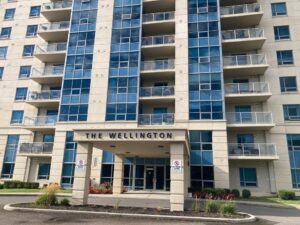


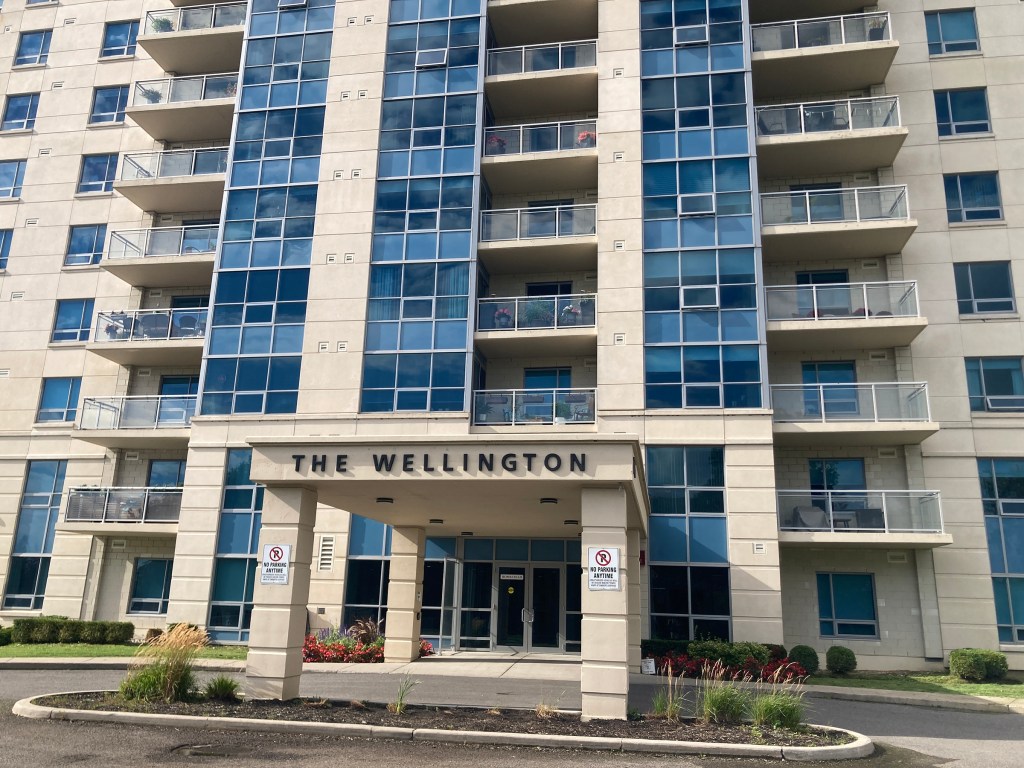
Richard Brown has strong feelings about Homestead Land Holdings implementing paid visitor parking at The Wellington.
“This is our home. If somebody wants to visit us – like my daughter, for example, who comes quite frequently – the idea that she’s going to have to pay to come up and visit me is appalling,” he said.
Starting on Sept. 14, visitors to the Kingston apartment building that Richard Brown and his wife Marilyn have called home for nine years will need to pay for parking.
For the 88-year-old couple and many of their neighbors, this issue goes beyond just parking.
Residents appealed to Homestead to rethink the change, arguing that free visitor parking has always been a part of living at The Wellington, located at 745 Highway 15, and is especially important for the many seniors residing there.
For these residents, visits from adult children, friends, caregivers, and other supports are often essential for independent living – not merely occasional social calls.
Kingstonist reviewed the petition which contains 128 signatures opposing the change. Marilyn stated that nearly all residents approached agreed to sign.
Homestead turned down their request.
In a notice sent out in July to Kingstonist, Homestead mentioned it was teaming up with parking management company Target Park to implement paid visitor parking. The company indicated that visitor spots can be limited due to misuse and that charging fees along with regular enforcement would help ensure spaces remain open for legitimate visitors.
When asked about this decision, Homestead said the program at The Wellington aims to “ensure visitor parking spaces remain available for their intended purpose and are used by legitimate guests of residents.”
“The aim of the program is to provide a consistent and effective approach to managing visitor parking and addressing unauthorized use,” stated the company.
The Browns argued that the problem described by Homestead simply doesn’t exist in their building.
“There isn’t a problem with parking,” Richard explained, noting that visitor spaces are typically available.
Kingstonist questioned Homestead about what specific problems or unauthorized use had been documented at The Wellington. However, the company did not provide any examples.
More than social visits
A major concern for the Browns is how this policy could impact older residents who rely on others coming into their homes.
The notice from Homestead indicated that residents who regularly receive assistance from personal support workers or family members can apply for a digital visitor parking pass.
Marilyn shared that building management told residents they could get a pass for regular caregivers if they provided a doctor’s letter – something she noted might also incur costs. She also questioned how practical it would be when different workers from home care providers show up or when help is informal and unpredictable.
“We don’t need home care, but we do need help on occasion with lifting or moving carpets or just if we’re sick (for someone) to come and assist us,” Marilyn said.
Richard wondered how an approval process would function when those needs arise unexpectedly.
“Let’s say next week… we need someone to come in and give us a hand,” he said. By the time a pass gets approved, he suggested, “the person’s come and gone and done everything they needed to do while we had to pay at the meter.”
Homestead acknowledged some residents depend on family members or support workers but added:
“Accommodations are available..”
“.. and residents with specific accessibility or accommodation needs are encouraged..”
“.. to contact their site office who will be more than happy..”
“.. to assist them.”
When asked specifically how they would accommodate situations where residents require occasional help from people who may not qualify for regular passes, Homestead did not clarify its approach.
Issues raised elsewhere among Homestead buildings
The Wellington isn’t alone; it’s not the first property owned by Homestead in Kingston facing pushback regarding paid visitor parking.
In April 2025 , long-time resident David White reached out after learning of plans replacing free visitor parking with a paid system managed by Target Park at The Forsythe , located at 42 Leroy Grant Drive. White expressed worries over impacts on those relying on visits from loved ones.
The next month , Amanda Babcock echoed similar concerns after seeing paid options introduced where her elderly parents live at 200 Queen Mary Rd. Now over one year later , Babcock stated her concerns revolve more around “accessibility and equity.”
“The system assumes everyone has smartphones , mobile data , credit cards , plus confidence using QR codes or digital payment systems,” she pointed out. “That simply isn’t true.”
Some seniors might lack smartphones ; others face challenges related financial situation , disabilities , or lack digital skills.
“A policy can look fair on paper but still have unequal effects in practice,” Babcock remarked.
This issue became personal for her as her mother battles cancer; family often visits bringing meals while helping around their apartment.
Additionally , her sister depends on their father ’s assistance getting her disabled son ready before school while working shifts in KGH emergency department. Babcock mentioned during one such visit her sister received $65 ticket.
“A few dollars may seem insignificant during one trip; however it adds up when an adult child , neighbor , friend , or caregiver comes several times each week,” Babcock observed.
While there’s now availability regarding caregiver passes according W homesteads policies ; she described navigating this system as “difficult” requiring forms along with documentation submissions via email access being necessary too.
em > blockquote >
em > blockquote >
em >h3 >< div class = ” row uncut-row-content-inner uncut-row-taglist col-sm-12 col-xs-12 uncut-title-content” > < div class = “hidden-title-div hidden-title-link-color hidden-title-class” > < h3 id = ” item-8 ” class = “item–8 “. > h3 > div > div >Also found were other designated caregivers responsible only sometimes depending upon necessity amongst families structure interactions etc such factors weighed heavily leading towards complications surrounding delivery methods available here altogether instead arising inconsistently overall without formal designation being met every day! Hence why Babcock suggested alternatives back then including temporary unpaid options coupled alongside various permits intended solely within residential communities themselves creating feasible systems assisting therein without unnecessary burdens placed either way! While awaiting responses shortly thereafter regarding broader accessibility inquiries themselves – no sufficient feedback arrived initially either way unfortunately thus prompting further outreach until finally engaged local officials sparking new insights sharing knowledge widely across respective areas leading again returning matters significantly closer resolving ongoing issues directly resulting beforehand paving pathways forward still needing closures considered afterward reflecting strongly present realities faced daily becoming improved gradually overtime stemming likewise positively aligning supportive measures emphasizing better quality life standards achievable together so therefore advocating clear open channels exists pave smooth transition involving increasing requirements needing fulfilled suitably assuredly enhancing security levels across board eventually improving reliability consistency matter currently engaging attention fostering positivity moving forward continually onward throughout remaining time ahead mutually beneficiality assuring positive growth goals established continue thriving enable changes ultimately.
Source link