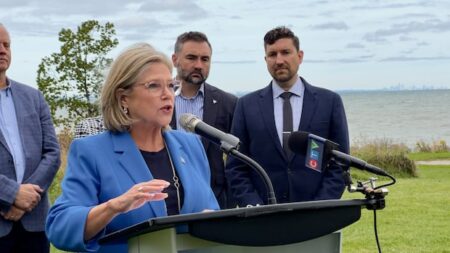




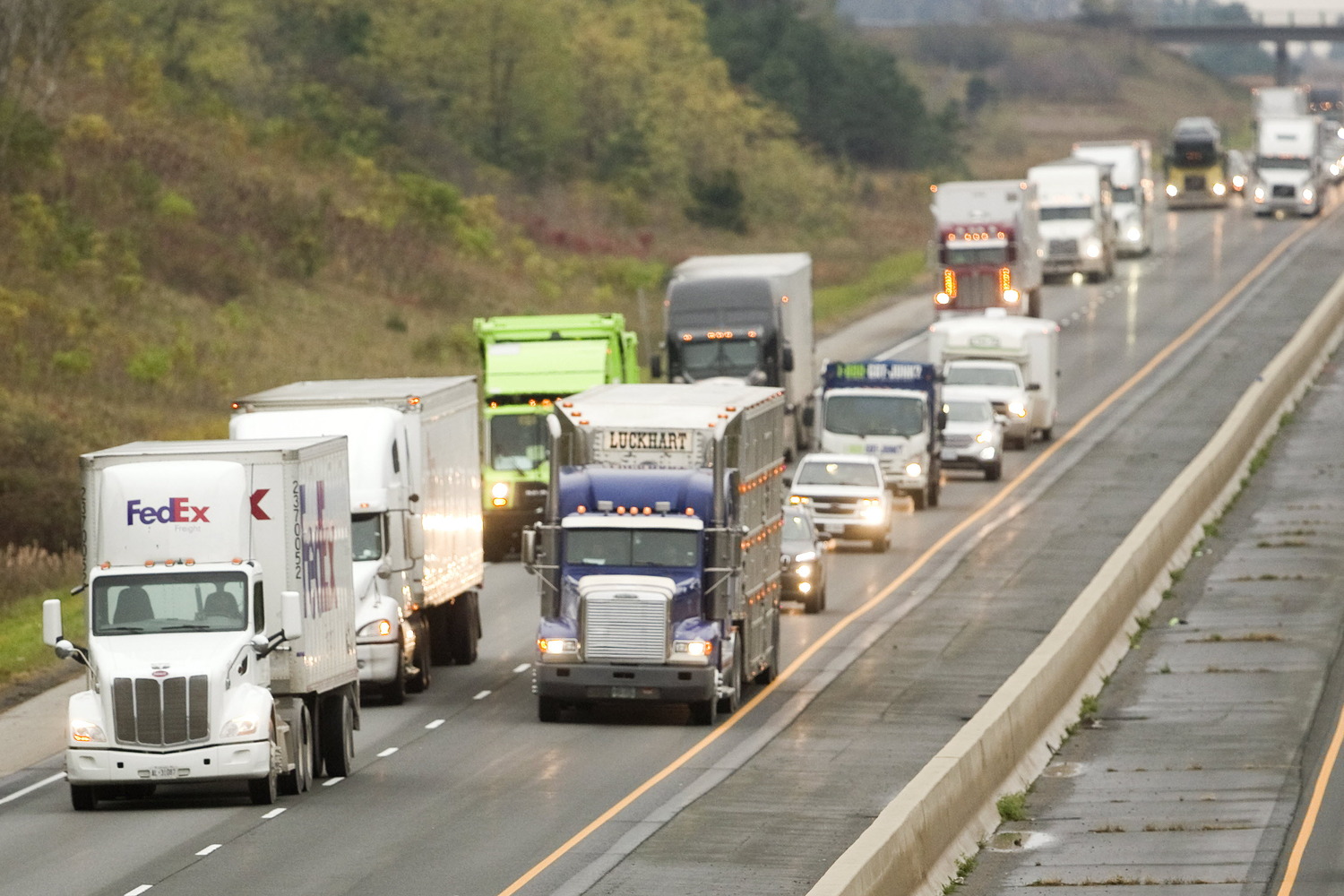
TORONTO – Ontario Transportation Minister Prabmeet Sarkaria revealed a new curriculum on Monday for transport truck driving schools throughout the province.
This is part of the latest effort to tackle issues highlighted in a critical auditor general’s report last spring about insufficient training for some truck drivers in Ontario.
What will be included in the standardized training?
While nothing has been finalized yet, much of what is suggested would make mandatory training that more reputable driving schools already offer.
Sarkaria mentioned that the curriculum will demand more than 103 hours of “clear, robust and consistent training” before someone can obtain the Class A driver’s license needed to operate a transport truck. However, that’s already the minimum requirement in Ontario.
Truck Training Schools Association of Ontario (TTSAO) president Philip Fletcher, who has been involved in discussions with the government regarding the new curriculum, told Postmedia there were talks about increasing training hours but ultimately, the province decided against it.
“We do a 200-hour program at TTSAO, which is about twice that and makes for a better entry program and a little safer,” he said. “We were hoping to bring the hours up a little bit, but they don’t think we will be moving it much.”
Sarkaria also indicated that mandatory training on fatigue management, rural and northern area driving, human trafficking awareness, and new air-brake techniques are under consideration. Many driving schools currently provide this kind of training.
A significant change already put into place requires driving schools to prepare detailed minute-by-minute lesson plans for students when they take trucks onto public roads. Those plans must then be submitted to provincial authorities.
Despite efforts towards standardizing curricula, road-training plans may still differ between schools as each one has access to different public roads.
“Everything is consistent regarding theory and how yard work is done … but variations would occur based on road courses,” Fletcher explained.
What findings did the auditor general report?
In a report released in May, Auditor General Shelley Spence raised concerns about inadequate government oversight concerning truck-driver training at private career colleges in Ontario. Students weren’t always meeting minimum standards before obtaining their Class A licenses.
For example, Spence’s team discovered that in 2025 two colleges provided only 59.5 and 81 hours of instruction-far below the mandated 103 hours-with instructors falsifying completion times. Some students weren’t even taught essential skills like making left-hand turns at major intersections or performing emergency stops properly.
The audit also found that 25 percent of these career colleges hadn’t been inspected by the Ministry of Colleges and Universities while transport trucks were responsible for 12 percent of accidents despite making up just three percent of vehicles on roads across Ontario.
Fletcher shared that many newcomers see truck driving as an excellent pathway toward securing stable employment necessary for gaining permanent residency-a factor contributing significantly to increased demand for truck-driver education leading hundreds of new driving schools being established which accounted for nearly half of all career colleges within Ontario.
What additional steps is the province taking?
Since releasing its report , the province has also introduced measures such as:Requiring commercial vehicle drivers demonstrate they are allowed work within Canada. Hiring public servants tasked with enhancing inspections across all driving institutions. Introducing financial penalties scaling upward with repeated offenses against non-compliant institutions alongside stricter sanctions targeted toward individual drivers. Mandating six-month waiting intervals from acquiring regular driver’s licenses until eligible applicants can apply trucking endorsements.
Will these changes resolve existing issues?