


In less than a week, four drug alerts have been issued in northwestern Ontario, one of which is connected to a rise of over 60 drug poisonings in the Kenora area within just two days.
The Northwestern Health Unit (NWHU) has released the following alerts:
On Thursday, an alert was made regarding a substance suspected to be fentanyl that was sold as down. On Friday, another alert was issued about clodesnitazene, which raises significant concern due to its unpredictable strength. This synthetic nitazene opioid was found in a sample resembling a rock-like solid and also tested positive for ethylbromazolam (a benzodiazepine), carfentanil, medetomidine (used as an animal tranquilizer), caffeine, and dimethylsulphone. Clodesnitazene was first identified by Toronto’s Drug Checking Service on April 28 and appeared in northwestern Ontario around mid-May. On Tuesday, there was an alert regarding an unknown substance being sold as cocaine and hydromorphone that impacted individuals in the Red Lake area. LISTEN | New substance causing rise in overdoses in Kenora:
6:30New substance causing rise in overdoses in Kenora
There’s currently a drug alert for the Kenora region, reportedly linked to a new substance spreading throughout the community. Reporter Sarah Law provides details about what’s known so far and what measures can be taken to minimize harm.
Although Kenora is experiencing the most severe impact, there has also been an increase in overdoses reported in Atikokan and Ignace according to the health unit.
Additionally, Nor West Community Health Centres (NWCHC) issued an alert on Tuesday after Oxy Contin pills tested positive for etonitazene. This high-potency synthetic nitazene opioid is approximately 50 times more potent than fentanyl.
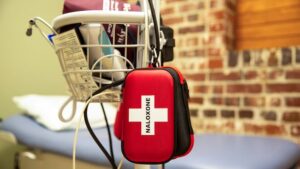
“Please get your substance tested and carry naloxone!” NWCHC’s alert emphasized.
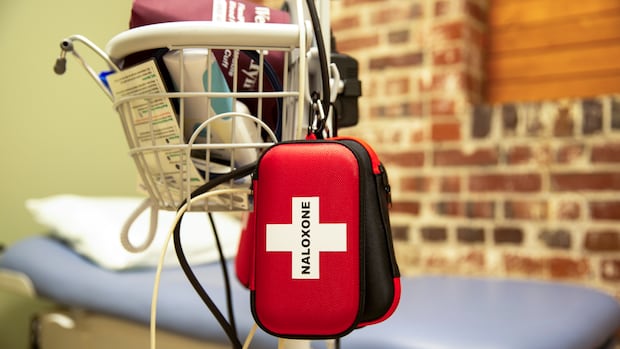
Naloxone can reverse the effects of an opioid overdose but isn’t effective against non-opioids. This creates challenges when various substances are mixed into street drugs people may buy, explained Shelly Mc Larty, who manages NWHU’s sexual health and outreach services program.
The Thunder Bay district continues to hold the highest rate of opioid-related deaths in Ontario-over five times higher than the provincial average for 2025, according to information from the Office of the Chief Coroner.
Meanwhile, last year NWHU had the fourth-highest rate of opioid-related deaths among public health units across Ontario.
WATCH | This mobile outreach van in Thunder Bay offers free drug checking services: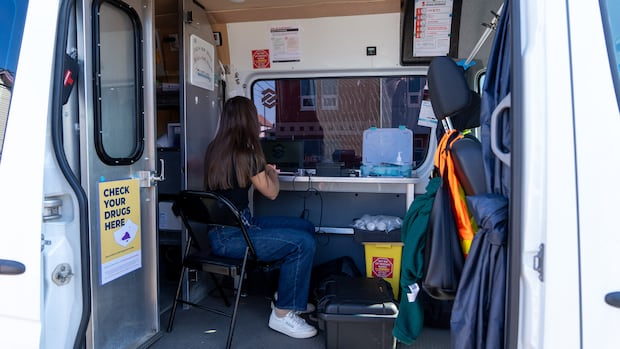 This mobile outreach van in Thunder Bay offers free drug checking services
Thunder Bay remains at the top with respect to opioid-related death rates province-wide. In light of recent increases in drug alerts caused by dangerously toxic street supplies, Nor West Community Health Centres has seen more people utilize its mobile drug checking services.
The health unit provides free drug test strips while naloxone kits can be obtained through local pharmacies or directly from them.
NWCHC runs a mobile drug checking service in Thunder Bay where they use a machine that conducts trace scans using small samples or bulk scans where lasers go through clear bags.
Samples along with used equipment are also sent off to Toronto for more detailed analysis.
While public health officials advise against using drugs alone, individuals can download Lifeguard Connect app on their smartphones.
This app allows users to set timers that will notify emergency medical services of their location if it’s not turned off-indicating a possible overdose situation.
This mobile outreach van in Thunder Bay offers free drug checking services
Thunder Bay remains at the top with respect to opioid-related death rates province-wide. In light of recent increases in drug alerts caused by dangerously toxic street supplies, Nor West Community Health Centres has seen more people utilize its mobile drug checking services.
The health unit provides free drug test strips while naloxone kits can be obtained through local pharmacies or directly from them.
NWCHC runs a mobile drug checking service in Thunder Bay where they use a machine that conducts trace scans using small samples or bulk scans where lasers go through clear bags.
Samples along with used equipment are also sent off to Toronto for more detailed analysis.
While public health officials advise against using drugs alone, individuals can download Lifeguard Connect app on their smartphones.
This app allows users to set timers that will notify emergency medical services of their location if it’s not turned off-indicating a possible overdose situation.
Source link
This mobile outreach van in Thunder Bay offers free drug checking services
Thunder Bay remains at the top with respect to opioid-related death rates province-wide. In light of recent increases in drug alerts caused by dangerously toxic street supplies, Nor West Community Health Centres has seen more people utilize its mobile drug checking services.
The health unit provides free drug test strips while naloxone kits can be obtained through local pharmacies or directly from them.
NWCHC runs a mobile drug checking service in Thunder Bay where they use a machine that conducts trace scans using small samples or bulk scans where lasers go through clear bags.
Samples along with used equipment are also sent off to Toronto for more detailed analysis.
While public health officials advise against using drugs alone, individuals can download Lifeguard Connect app on their smartphones.
This app allows users to set timers that will notify emergency medical services of their location if it’s not turned off-indicating a possible overdose situation.
Source link