



The City of Toronto has given an “order to remedy unsafe building” to Live Nation Canada regarding the condition of Rogers Stadium after it was damaged by Wednesday’s storm.
This order was issued on Thursday following the city’s inspection of the open-air venue that can hold 50,000 people in Downsview Park.
A sold out concert featuring heavy metal band AC/DC is set for September 16 at the stadium. So far, there’s been no cancellation or rescheduling announced.
Live Nation Canada, which manages the venue, reported late Wednesday that nobody was hurt during the severe weather but that Rogers Stadium suffered “significant damage.”
“Our teams are continuing to assess the extent of the damage. We will provide more information as it becomes available,” a spokesperson for Live Nation Canada stated in an email on Friday.
 Rogers Stadium seriously damaged by GTA storm
The storm caused serious damage to Rogers Stadium, a music venue with a capacity of 50,000 located in the northern part of the city. Live Nation confirmed no injuries occurred and they are evaluating how extensive the damage is.
According to the order, Live Nation Canada must take immediate action to secure the site, hire an engineer, and fix the damages.
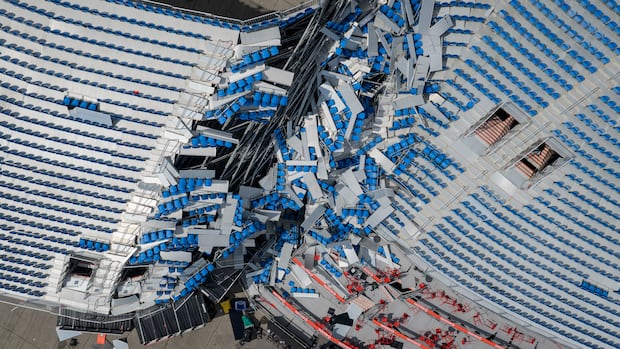
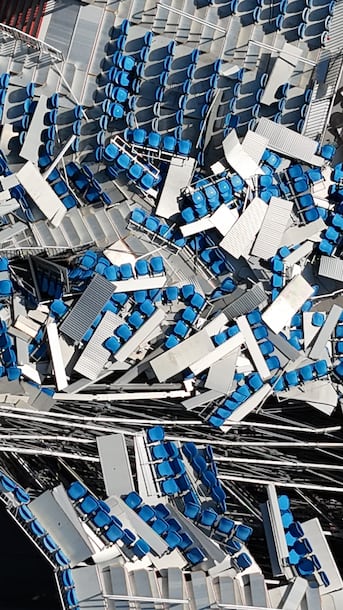
The order details various damages including “collapsed sections of the north stadium structure, damaged seating areas, and distorted, displaced or otherwise compromised structural framing associated with various temporary structures.”
“In addition, other structures and equipment within the stadium grounds were impacted by high winds, including overturned viewing stations, tents and shipping containers.”
The order further states that this damage “may pose a risk to health and safety due to displaced structural elements and potential instability.”
The city has instructed Live Nation Canada to:
Prevent access to all damaged structures, temporary structures and areas affected by the storm. Hire a licensed professional engineer to assess all structures including seating areas affected by the storm; identify unsafe zones; determine what measures need addressing. Prepare a report by September 8 outlining damage done along with proposed actions and work schedule. Carry out necessary repairs as identified by engineers. Submit another report by September 11 confirming repair status and whether affected structures are safe for use.
Rogers Stadium seriously damaged by GTA storm
The storm caused serious damage to Rogers Stadium, a music venue with a capacity of 50,000 located in the northern part of the city. Live Nation confirmed no injuries occurred and they are evaluating how extensive the damage is.
According to the order, Live Nation Canada must take immediate action to secure the site, hire an engineer, and fix the damages.
The order details various damages including “collapsed sections of the north stadium structure, damaged seating areas, and distorted, displaced or otherwise compromised structural framing associated with various temporary structures.”
“In addition, other structures and equipment within the stadium grounds were impacted by high winds, including overturned viewing stations, tents and shipping containers.”
The order further states that this damage “may pose a risk to health and safety due to displaced structural elements and potential instability.”
The city has instructed Live Nation Canada to:
Prevent access to all damaged structures, temporary structures and areas affected by the storm. Hire a licensed professional engineer to assess all structures including seating areas affected by the storm; identify unsafe zones; determine what measures need addressing. Prepare a report by September 8 outlining damage done along with proposed actions and work schedule. Carry out necessary repairs as identified by engineers. Submit another report by September 11 confirming repair status and whether affected structures are safe for use.
Source link
‘They may not be able to get AC/DC in’: councillor
Councillor James Pasternak, representing York Centre, emphasized that safety must be ensured before allowing any crowds back. “This stadium collapsed in a major storm event, and the question is, can they reconstruct it and repair it so that it’s satisfactory, so that it’s safe,” he said. “They may not be able to get AC/DC in this year.” Drone images of the stadium reveal bright blue bleachers twisted and scattered across grandstands that seem partially collapsed. WATCH | Rogers Stadium seriously damaged by GTA storm:
Rogers Stadium seriously damaged by GTA storm
The storm caused serious damage to Rogers Stadium, a music venue with a capacity of 50,000 located in the northern part of the city. Live Nation confirmed no injuries occurred and they are evaluating how extensive the damage is.
According to the order, Live Nation Canada must take immediate action to secure the site, hire an engineer, and fix the damages.
The order details various damages including “collapsed sections of the north stadium structure, damaged seating areas, and distorted, displaced or otherwise compromised structural framing associated with various temporary structures.”
“In addition, other structures and equipment within the stadium grounds were impacted by high winds, including overturned viewing stations, tents and shipping containers.”
The order further states that this damage “may pose a risk to health and safety due to displaced structural elements and potential instability.”
The city has instructed Live Nation Canada to:
Prevent access to all damaged structures, temporary structures and areas affected by the storm. Hire a licensed professional engineer to assess all structures including seating areas affected by the storm; identify unsafe zones; determine what measures need addressing. Prepare a report by September 8 outlining damage done along with proposed actions and work schedule. Carry out necessary repairs as identified by engineers. Submit another report by September 11 confirming repair status and whether affected structures are safe for use.Source link