




Energi Media journalism in video, audio, and essays
You Tube Channel: Video energy news
Substack Essays: Thoughtful Energy Journalism
Energi Talks Audio Podcast
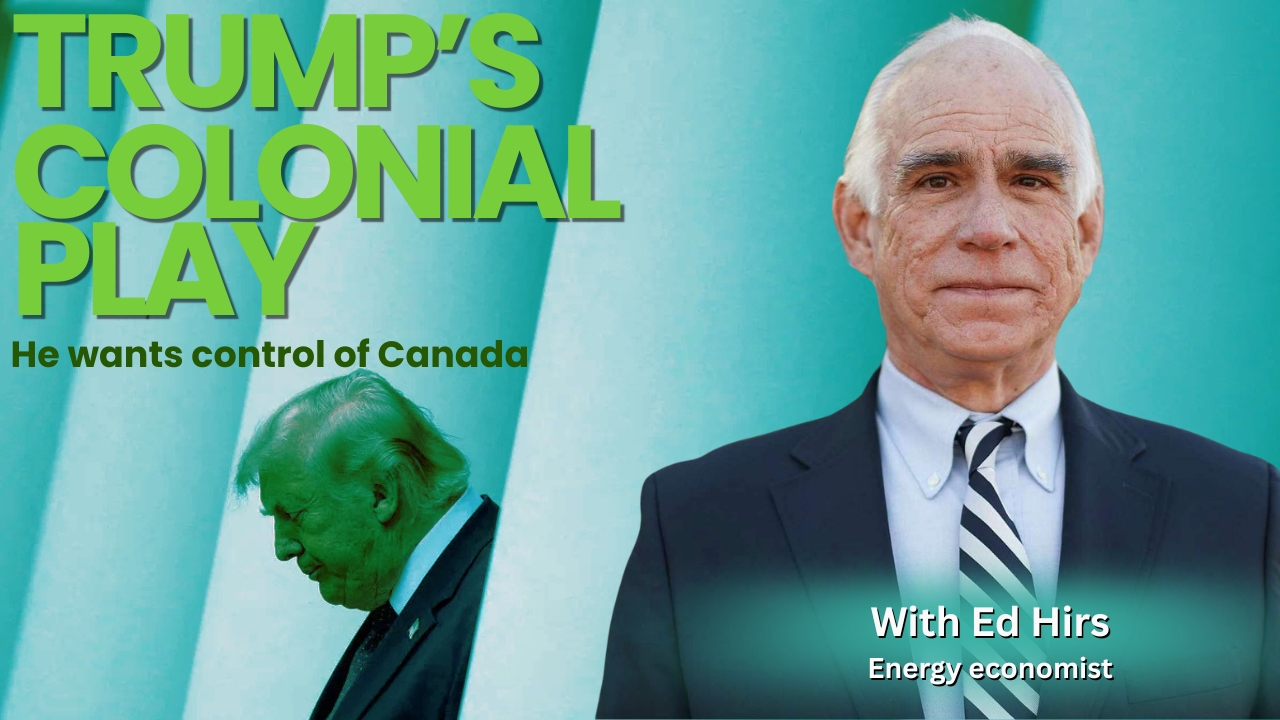
Website: Energy news University of Houston economist Ed Hirs believes Prime Minister Mark Carney is right to confront Donald Trump, even though the latest U. S. trade actions are minor compared to the broader economic ties between Canada and the U. S. In a chat with Energi Media, Hirs estimated that these new U. S. measures affect about $20 billion to $25 billion in goods and services, which is small compared to the hundreds of billions exchanged annually in both directions. He pointed out that the 50 percent tariffs on steel and aluminum have caused more significant economic damage, including increasing costs within the United States. Hirs still supported Canada’s overall resistance when the topic shifted to Washington’s influence over Canadian industrial policy, trade agreements, and natural resource exports. Energi Media has noted that Trump’s tariff strategy seems increasingly aimed at advanced manufacturing sectors like automobiles, electronics, and electrical equipment. The fear is that Canada might lose valuable industrial capabilities while being relegated to just exporting raw materials to the U. S. Hirs suggested this view “could very well be” accurate and connected Trump’s tariff policies to outdated economic thinking. He also backed efforts for Canada to diversify its exports by sending more oil to Asian markets and finding new buyers for Canadian-made goods. The conversation then shifted toward concerns in Canada regarding Washington’s desire for control over trade deals signed by Canada and where it sells its natural resources. This model has been labeled as neo-mercantilism in Canada: focusing high-value industries in a dominant country while turning a smaller partner into merely a resource provider. Hirs reacted strongly. “This is a colonial type of projection of power,” he said. “Canada is not going to put up with that. I don’t expect any sovereign nation to put up with that.” He mentioned that many Republicans might privately agree with Carney but are hesitant to oppose the White House openly. Hirs commended Carney as an effective and practical leader, contrasting his approach with what he described as confusion and weak economic logic within Trump’s administration. The economist argued that Trump’s trade policies are also causing political and economic issues domestically, such as rising prices impacting farmers and parts of the U. S. oil sector. He was particularly critical of administration advisers for making public statements often lacking data or logical support. When asked what advice he’d give Carney for handling relations over the next couple of years, Hirs simply said: “Stand your ground.” He advised Canada should be open to making deals if they’re reasonable while rejecting demands that undermine its economic sovereignty. For Canada, this dispute goes beyond just minimizing tariffs; it’s increasingly about maintaining control over investment decisions by Canadian companies, sales destinations for Canadian products, and how it develops its industrial economy. ! function(e, n, t){var o, c=e. get Elements By Tag Name(n)[0]; e. get Element By Id(t)||(o=e. create Element(n), o. id=t, o. src=”https://connect. facebook. net/en_US/sdk. js#xfbml=1&version=v24.0″, c. parent Node. insert Before(o, c))}(document,”script”,”facebook-jssdk”);! function(e, n, t){var o, c=e. get Elements By Tag Name(n)[0]; e. get Element By Id(t)||(o=e. create Element(n), o. id=t, o. src=”https://connect. facebook. net/en_US/sdk. js#xfbml=1&version=v24.0″, c. parent Node. insert Before(o, c))}(document,”script”,”facebook-jssdk”);
Source link
Substack Essays: Thoughtful Energy Journalism
Energi Talks Audio Podcast
Website: Energy news University of Houston economist Ed Hirs believes Prime Minister Mark Carney is right to confront Donald Trump, even though the latest U. S. trade actions are minor compared to the broader economic ties between Canada and the U. S. In a chat with Energi Media, Hirs estimated that these new U. S. measures affect about $20 billion to $25 billion in goods and services, which is small compared to the hundreds of billions exchanged annually in both directions. He pointed out that the 50 percent tariffs on steel and aluminum have caused more significant economic damage, including increasing costs within the United States. Hirs still supported Canada’s overall resistance when the topic shifted to Washington’s influence over Canadian industrial policy, trade agreements, and natural resource exports. Energi Media has noted that Trump’s tariff strategy seems increasingly aimed at advanced manufacturing sectors like automobiles, electronics, and electrical equipment. The fear is that Canada might lose valuable industrial capabilities while being relegated to just exporting raw materials to the U. S. Hirs suggested this view “could very well be” accurate and connected Trump’s tariff policies to outdated economic thinking. He also backed efforts for Canada to diversify its exports by sending more oil to Asian markets and finding new buyers for Canadian-made goods. The conversation then shifted toward concerns in Canada regarding Washington’s desire for control over trade deals signed by Canada and where it sells its natural resources. This model has been labeled as neo-mercantilism in Canada: focusing high-value industries in a dominant country while turning a smaller partner into merely a resource provider. Hirs reacted strongly. “This is a colonial type of projection of power,” he said. “Canada is not going to put up with that. I don’t expect any sovereign nation to put up with that.” He mentioned that many Republicans might privately agree with Carney but are hesitant to oppose the White House openly. Hirs commended Carney as an effective and practical leader, contrasting his approach with what he described as confusion and weak economic logic within Trump’s administration. The economist argued that Trump’s trade policies are also causing political and economic issues domestically, such as rising prices impacting farmers and parts of the U. S. oil sector. He was particularly critical of administration advisers for making public statements often lacking data or logical support. When asked what advice he’d give Carney for handling relations over the next couple of years, Hirs simply said: “Stand your ground.” He advised Canada should be open to making deals if they’re reasonable while rejecting demands that undermine its economic sovereignty. For Canada, this dispute goes beyond just minimizing tariffs; it’s increasingly about maintaining control over investment decisions by Canadian companies, sales destinations for Canadian products, and how it develops its industrial economy. ! function(e, n, t){var o, c=e. get Elements By Tag Name(n)[0]; e. get Element By Id(t)||(o=e. create Element(n), o. id=t, o. src=”https://connect. facebook. net/en_US/sdk. js#xfbml=1&version=v24.0″, c. parent Node. insert Before(o, c))}(document,”script”,”facebook-jssdk”);! function(e, n, t){var o, c=e. get Elements By Tag Name(n)[0]; e. get Element By Id(t)||(o=e. create Element(n), o. id=t, o. src=”https://connect. facebook. net/en_US/sdk. js#xfbml=1&version=v24.0″, c. parent Node. insert Before(o, c))}(document,”script”,”facebook-jssdk”);
Source link