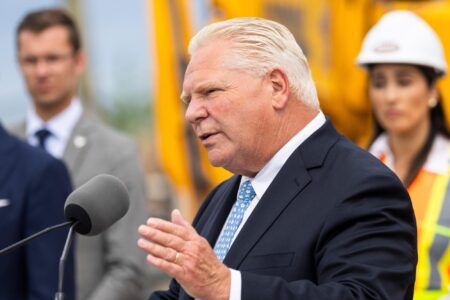





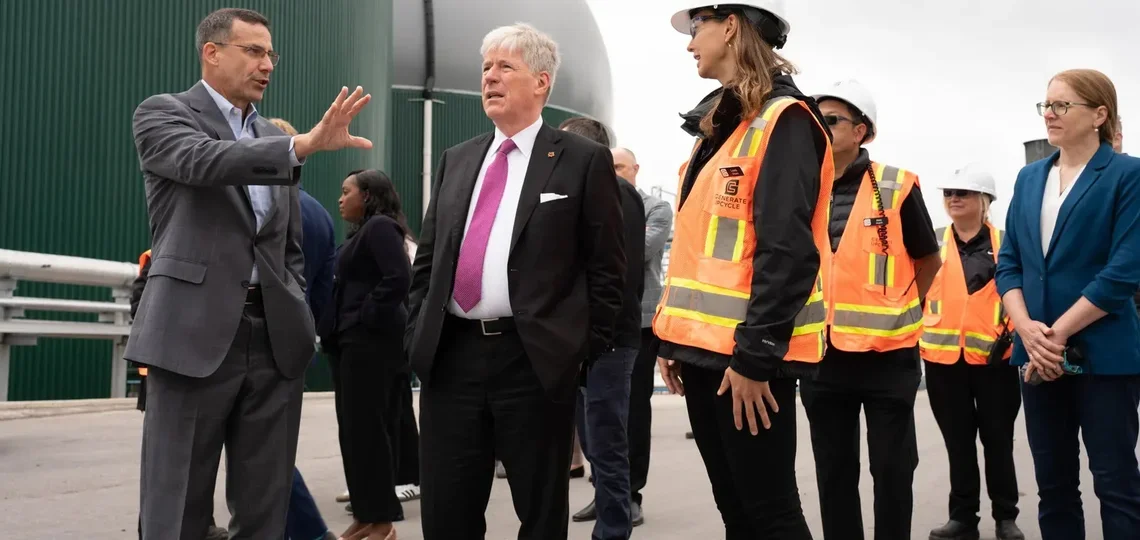
The federal government of Canada has declared its financial backing for the expansion of an existing anaerobic digestion facility focused on food waste, located in the London area of Ontario. This facility, called London Digester, transforms organic material from municipal, commercial, industrial, and institutional sources into renewable natural gas (RNG) and organic fertilizer. The Department of Energy and Natural Resources describes it as the largest site for food waste anaerobic digestion in the country. Minister Tim Hodgson made this announcement on August 24, 2026, in London; he has been in his role since May 2025.
Source link
Expansion amid global gas market fluctuations
The push to develop local renewable gas sources comes at a time when global gas markets are facing significant challenges. Equinor recently linked the ongoing conflict between Israel and Iran to its Tanzanian gas project, highlighting the geopolitical risks within this sector. Concurrently, the European Union has surpassed a 60% capacity for gas storage-an important indicator as winter approaches. Canada is positioning itself to enhance energy security through increased renewable gas production. This facility is owned by Storm Fisher Environmental Ltd., which operates under Generate Upcycle-a North American firm that focuses on sustainable infrastructure. Depending on documents and timelines, these names can vary and may lead to confusion about who benefits from federal funding. Bill Caesar, president of Generate Upcycle, views this expansion as proof that large-scale anaerobic digestion can work effectively at a municipal level. He mentions a model he believes could be adopted in other North American regions dealing with landfill restrictions and waste diversion goals.Funding sourced from the Clean Fuels Fund
This funding comes from the Clean Fuels Fund-a program managed by Natural Resources Canada aimed at minimizing risks associated with private investments in clean fuel production. It primarily supports feasibility studies, early engineering phases, biomass supply chain development, and regulatory alignment efforts. An agreement between Ottawa and the company was first signed on May 13, 2024; it was amended on March 13, 2025 before being publicly revealed on August 24, 2026. The expansion work is expected to wrap up in 2027. The federal contribution only covers part of the overall costs involved in this expansion project; the remaining expenses will be taken care of by the company itself. This distinction is essential because public contributions versus total investment costs represent different realities that aren’t clearly outlined in official statements. No reviewed primary document expresses these amounts using a currency suitable for reliable conversion; therefore caution should be exercised regarding any figures mentioned in media reports about this announcement.Generating value from both gas and organic materials
The economic strategy behind London Digester relies on two main outputs: producing renewable natural gas while also creating organic fertilizer intended for farms throughout Southwestern Ontario. This method aligns with circular waste management practices and provides an alternative to landfilling options available today. From an agricultural standpoint, fertilizer made from digestate could lessen dependence on synthetic fertilizers used by regional farms. This announcement fits into Canada’s broader energy policy goals focused on clean fuels and carbon neutrality targets. Authorities present this funding as an illustration of how public-private partnerships can enhance energy security while supporting circular economy initiatives. So far, there doesn’t seem to be any opposition recorded regarding this project-from community groups or competitors-challenging its environmental impact or how public funds are utilized.Source link